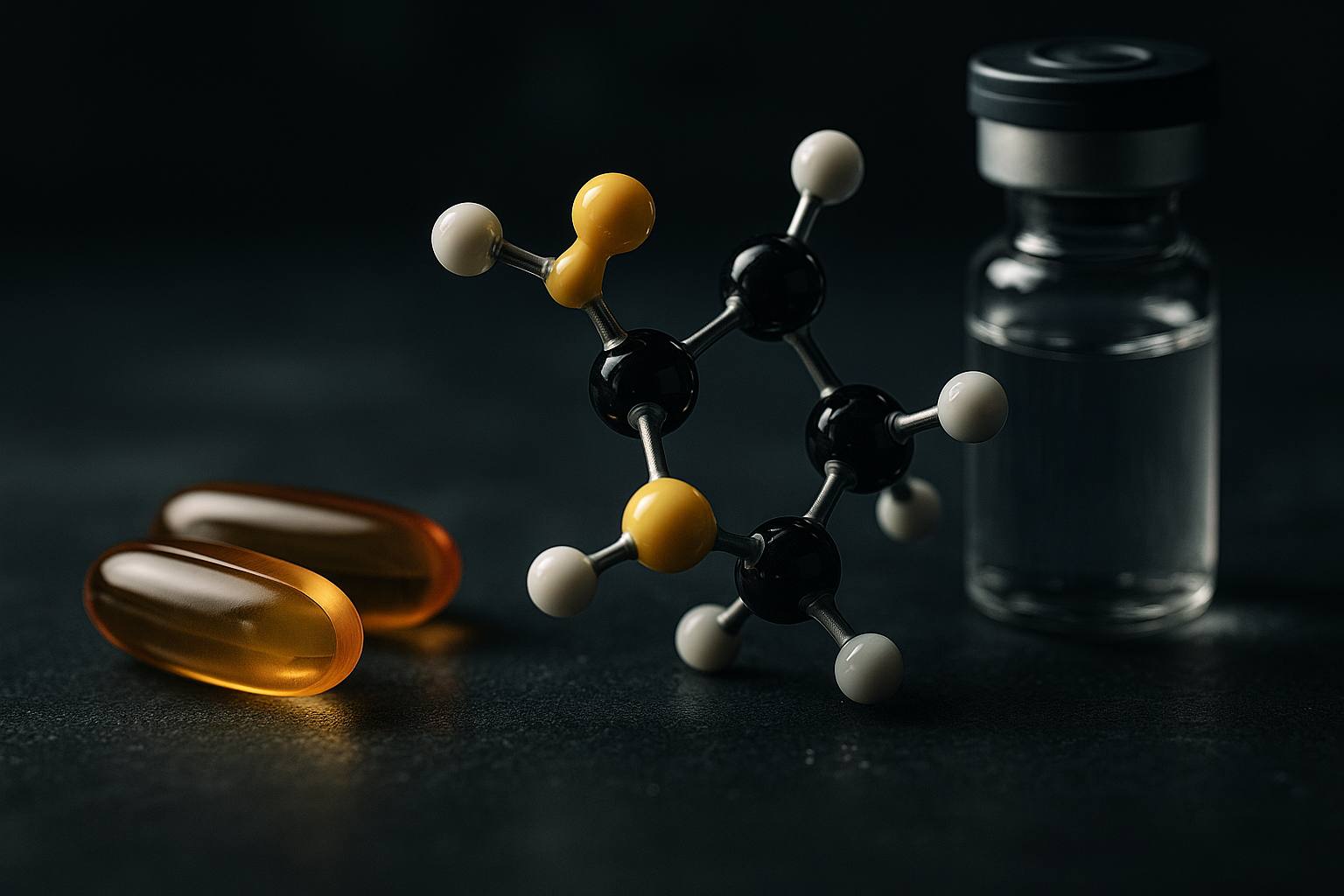
Alpha-lipoic acid
Alpha-lipoic acid (ALA; also called thioctic acid) is an endogenous molecule involved in mitochondrial energy metabolism. As a supplement, it is studied mainly for support of insulin sensitivity, oxidative stress, and, with stronger clinical evidence, for some symptoms of diabetic neuropathy. It is a chiral substance: the R-ALA form is the biologically active one, while many products contain a racemic mixture (R/S).
Mitochondrial cofactor and antioxidant with evidence in glycometabolic health and diabetic neuropathy
Alpha-lipoic acid (ALA; also known as thioctic acid) is an endogenous molecule involved in mitochondrial energy metabolism. As a supplement, it is studied primarily for supporting insulin sensitivity, oxidative stress, and, with stronger clinical evidence, certain symptoms of diabetic neuropathy. It is a chiral substance: the R-ALA form is the biologically active one, while many products contain a racemic mixture (R/S).
Mechanism of action
Proposed mechanisms (depending on dose, tissue, and metabolic context): (1) Mitochondrial cofactor: support for oxidative metabolic flux and the function of dehydrogenase complexes. (2) Redox modulation: ALA/DHLA can neutralize reactive species and contribute to the recycling of endogenous antioxidants (e.g. glutathione) and the chelation of certain metals under experimental conditions. (3) Insulin signaling and glucose transport: in cell/animal models, increased glucose uptake and modulation of pathways such as AMPK have been observed; in humans, the effects are on average small to moderate and variable. (4) Neurovascular effects: possible improvement of endoneurial perfusion and reduction of oxidative/inflammatory stress, relevant for neuropathic symptoms in diabetes.
Supported benefits
- Reduction of diabetic neuropathy symptoms (pain, burning, paresthesia), especially with specific clinical protocols (strong)
- Modest improvement in glycometabolic parameters (e.g. fasting glucose, insulin resistance) in some subjects with metabolic alterations (moderate)
- Reduction of certain markers of oxidative/inflammatory stress in selected contexts (limited)
- Support for weight loss or body composition as a primary effect (emerging)
Safety & side effects
- Gastrointestinal disturbances (nausea, dyspepsia, diarrhea), often dose-dependent
- Headache or dizziness in some individuals
- Skin rashes or itching (rare)
- Possible lowering of blood glucose, especially in combination with glucose-lowering medications
FAQ
What is the difference between ALA and R-ALA?
ALA is a chiral molecule: the R form is the naturally occurring and cofactor-active one. Many supplements contain an R/S mixture. Some data suggest better pharmacokinetics for R-ALA, but its clinical superiority over the mixture is not conclusive across all outcomes.
Does ALA “lower blood sugar” reliably?
On average, it may produce modest improvements in some glycometabolic parameters in subjects with insulin resistance or diabetes, but the response is variable and depends on diet, medications, and metabolic status. There is a risk of hypoglycemia, especially in combination with antidiabetic therapies.
Is it more useful as an antioxidant or as metabolic support?
The two aspects are connected: redox modulation can influence insulin signaling and mitochondrial function. However, the most consistent clinical evidence concerns diabetic neuropathy, while the effects on metabolic markers are on average smaller and less uniform.
Why is it often recommended to take it away from meals?
Because oral absorption may be reduced by food. In practice, the choice should balance bioavailability and gastrointestinal tolerability, without assuming the effect is identical for everyone.
Are there any particular warning signs to watch for?
Yes: symptoms of hypoglycemia (e.g. tremors, sweating, confusion), worsening neurological symptoms in contexts of possible thiamine deficiency, and persistent gastrointestinal disturbances. In these cases, medical evaluation is indicated.
The information provided is for informational and educational purposes only. It does not constitute medical advice. Use should be evaluated and authorized by a qualified healthcare professional.
Mechanism of action
Proposed mechanisms (dependent on dose, tissue, and metabolic context): (1) Mitochondrial cofactor: support for oxidative metabolic flux and the function of dehydrogenase complexes. (2) Redox modulation: ALA/DHLA can neutralize reactive species and contribute to the recycling of endogenous antioxidants (e.g. glutathione) and the chelation of certain metals under experimental conditions. (3) Insulin signaling and glucose transport: in cellular/animal models, increased glucose uptake and modulation of pathways such as AMPK have been observed; in humans, the effects are on average small to moderate and variable. (4) Neurovascular effects: possible improvement in endoneurial perfusion and reduction of oxidative/inflammatory stress, relevant to neuropathic symptoms in diabetes.
Scientific benefits
Contraindications
- Pregnancy and breastfeeding: insufficient safety data for non-medical use
- Pediatric age: use only in specialist clinical settings due to the lack of robust data for supplementation
- History of recurrent hypoglycemia or poor control of antidiabetic therapy (risk of hypoglycemia)
- Thiamine (vitamin B1) deficiency or high risk of deficiency (e.g. alcoholism): ALA may worsen neurological conditions in the presence of uncorrected B1 deficiency
Side effects
- Gastrointestinal disturbances (nausea, dyspepsia, diarrhea), often dose-dependent
- Headache or dizziness in some individuals
- Skin rashes or itching (rare)
- Possible lowering of blood glucose, especially in combination with glucose-lowering medications
Interactions
- Antidiabetic medications (insulin, sulfonylureas, metformin, and others): possible additive effect on lowering blood glucose; requires clinical monitoring
- Thyroid therapies: possible interference with thyroid parameters has been reported in some contexts; caution and monitoring if thyroid disorders are present
- Chemotherapy and radiotherapy: the use of antioxidants during cancer treatment is controversial; specialist evaluation is necessary
- Alcohol: increases the risk of thiamine deficiency and neuropathy; caution due to the potential ALA–B1 link
Regulatory status
Available as a dietary supplement in many countries; in some European countries there are also thioctic acid-based medicines for specific indications (e.g. diabetic neuropathy), with defined quality control and dosing. Wording and health claims are regulated and may vary by jurisdiction.
Supplements and peptides
 Metabolic health
Chromium picolinate
Chromium picolinate is a chelated form of chromium (Cr3+) with picolinic acid, used as a supplement for metabolic…
 Metabolic health
Cinnamon extract
Cinnamon extracts (from Cinnamomum spp.) are used as supplements to support metabolic health, particularly for glycemic…
 Metabolic health
D-chiro inositol
D-chiro-inositol (DCI) is a stereoisomer of inositol present in small amounts in the body and in some foods. It is…