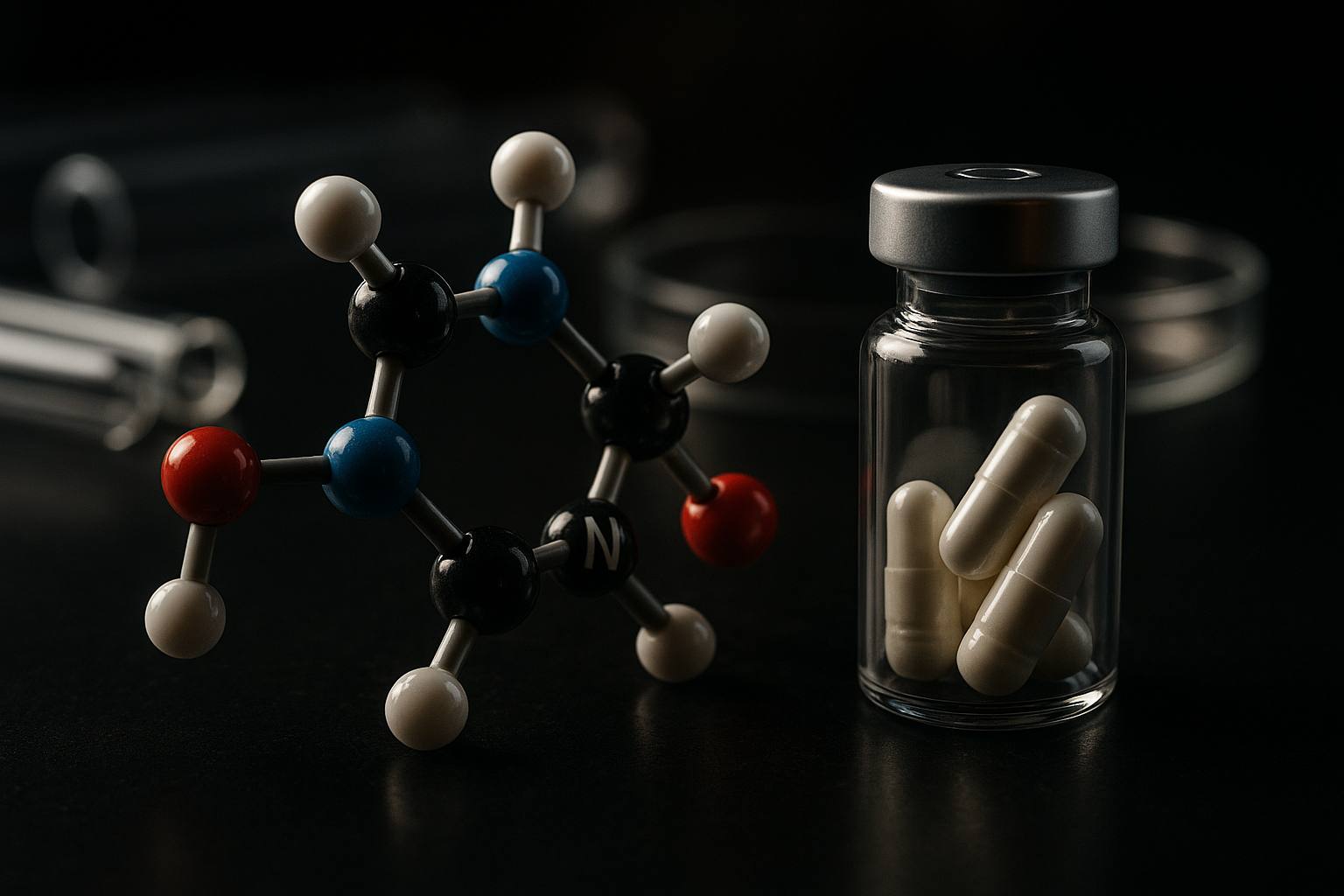
Anhydrous caffeine
Anhydrous caffeine is the dehydrated form of caffeine, used in supplements for its high concentration and dosing convenience. It acts primarily as an adenosine receptor antagonist, reducing the perception of fatigue and increasing alertness and attention. The effect is dose-dependent and varies among individuals due to genetics, tolerance, sleep status, and drug interactions.
CNS stimulant for focus, alertness, and cognitive performance (concentrated, water-free form)
Anhydrous caffeine is the dehydrated form of caffeine, used in supplements for its high concentration and dosing convenience. It acts primarily as an antagonist of adenosine receptors, reducing the perception of fatigue and increasing alertness and attention. Its effect is dose-dependent and varies between individuals due to genetics, tolerance, sleep status, and drug interactions.
Mechanism of action
Competitive antagonism of adenosine receptors (A1 and A2A) in the central nervous system, reducing the “sleep pressure” signal and indirectly modulating neurotransmitters (dopamine, norepinephrine, acetylcholine). At higher doses, it may contribute to increased catecholamine release and lipolysis; phosphodiesterase inhibition is considered less relevant at typical dietary doses. Peripherally, it may increase contractility and alertness, and influence perceived exertion.
Supported benefits
- Increased alertness and reduced sleepiness, with improved sustained attention and reaction times (strong)
- Improved performance on simple/monotonous cognitive tasks, especially under conditions of fatigue or sleep deprivation (strong)
- Reduced perceived exertion and improved physical performance (with possible carryover effects on focus during exercise) (strong)
- Possible benefit for working memory and executive functions in some contexts, with high interindividual variability (moderate)
- Potential support in headache (in combination with analgesics) thanks to vasoconstriction and analgesic synergy; not applicable as a standalone use (moderate)
Safety & side effects
- Insomnia, reduced sleep quality, increased sleep onset latency
- Anxiety, nervousness, irritability, psychomotor agitation
- Tachycardia, palpitations, transient increase in blood pressure
- Tremors, headache
- Gastrointestinal disturbances (nausea, reflux, stomach pain), increased urination
- Tolerance with repeated use; withdrawal symptoms (headache, drowsiness, irritability) upon reduction/discontinuation
- At high doses: risk of caffeine intoxication (vomiting, arrhythmias, confusion, seizures) and need for urgent evaluation
FAQ
Are anhydrous caffeine and coffee equivalent?
The molecule is the same, but anhydrous caffeine is more concentrated and allows for precise dosing; coffee also contains other compounds (e.g. polyphenols), and the caffeine content is more variable. The anhydrous form increases the risk of unintentionally exceeding safe intake if total daily consumption is not taken into account.
How long does the effect on focus last?
The acute effect may be perceived within ~30–60 minutes and last several hours. Duration depends on the half-life (typically ~3–7 hours) and individual factors such as genetics, smoking, medications, and pregnancy.
Why does it sometimes increase anxiety instead of focus?
Adenosine antagonism and increased catecholaminergic tone can raise arousal beyond the optimal threshold, especially with high doses, in anxious individuals, or under conditions of stress and insufficient sleep.
Does tolerance reduce the benefits?
With repeated use, partial tolerance may develop to some effects (e.g. the feeling of “energy”), while others (e.g. impact on sleep) may persist. Reducing or stopping use can cause transient withdrawal symptoms.
Is it true that caffeine dehydrates you?
At moderate doses, in habitual users, the diuretic effect is generally mild and does not necessarily imply clinically significant dehydration; however, it can increase urination, and sensitivity varies between individuals.
The information provided is for informational and educational purposes only. It does not constitute medical advice. Use should be evaluated and authorized by a qualified healthcare professional.
Mechanism of action
Competitive antagonism of adenosine receptors (A1 and A2A) in the central nervous system, reducing the “sleep pressure” signal and indirectly modulating neurotransmitters (dopamine, norepinephrine, acetylcholine). At higher doses it may contribute to increased catecholamine release and lipolysis; phosphodiesterase inhibition is considered less relevant at typical dietary doses. At the peripheral level it may increase contractility and alertness, and influence perceived exertion.
Scientific benefits
Contraindications
- Hypersensitivity to caffeine or a history of significant adverse reactions
- Anxiety/panic disorders or clinically significant insomnia (risk of worsening)
- Known arrhythmias or heart conditions in which stimulants may be problematic (professional evaluation required)
- Pregnancy and breastfeeding: particular caution is necessary due to slowed metabolism and potential risks; follow professional guidance
- Pediatric age/adolescence: greater caution due to effects on sleep and the nervous system; professional evaluation
- Ulcer/severe reflux: possible worsening of symptoms in some individuals
Side effects
- Insomnia, reduced sleep quality, increased sleep onset latency
- Anxiety, nervousness, irritability, psychomotor agitation
- Tachycardia, palpitations, transient increase in blood pressure
- Tremors, headache
- Gastrointestinal disturbances (nausea, reflux, stomach pain), increased urination
- Tolerance with repeated use; withdrawal symptoms (headache, drowsiness, irritability) upon reduction/discontinuation
- At high doses: risk of caffeine intoxication (vomiting, arrhythmias, confusion, seizures) and need for urgent evaluation
Interactions
- CYP1A2 inhibitors (e.g. fluvoxamine, ciprofloxacin, and others): may increase caffeine levels and prolong its effects
- CYP1A2 inducers (e.g. tobacco smoke): may reduce half-life; smoking cessation may increase exposure at the same dose
- Other stimulants/sympathomimetics (e.g. pseudoephedrine, some ADHD medications, stimulant pre-workouts): increased risk of tachycardia, anxiety, and hypertension
- Alcohol: may mask the perception of sedation and increase risky behaviors; it does not “neutralize” alcohol intoxication
- Benzodiazepines and sedatives: possible functional antagonism on alertness effects
- Anticoagulants/antiplatelets: evidence is inconclusive for clinically relevant interactions, but caution is advised in cases of polytherapy
- Oral contraceptives: may reduce caffeine clearance in some people, prolonging effects
Regulatory status
Widely available as an ingredient in supplements and foods; in many regions, warnings are required regarding caffeine content and sensitive populations (pregnancy, minors). In sports, caffeine is generally permitted but may be monitored; rules may change and should be verified with the relevant authority.
Supplements and peptides
 Focus & Nootropics
Agmatine sulfate
Agmatine is an endogenous metabolite produced by decarboxylation of L-arginine. In supplementation contexts it is…
 Focus & Nootropics
Alpha-gpc
Alpha-GPC is a choline-containing compound (a precursor of acetylcholine) and an intermediate in phospholipid…
 Focus & Nootropics
Bacopa monnieri
Bacopa monnieri (syn. Brahmi) is a plant used in Ayurvedic medicine. Standardized extracts, rich in bacosides, are…