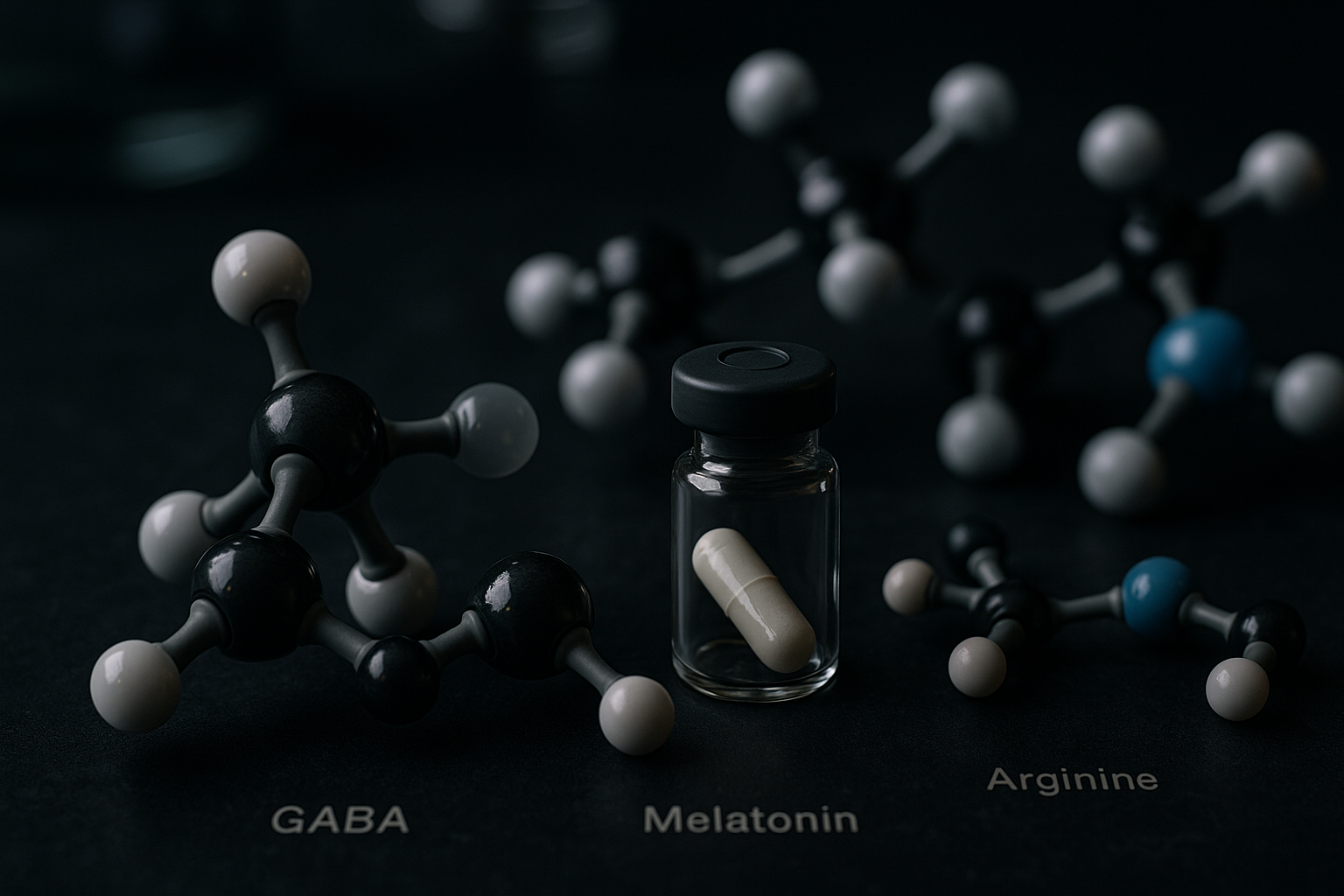
Gaba melatonin arginine glutamine
This combination brings together a neuromodulator (GABA), a chronobiotic hormone (melatonin), and two amino acids (L-arginine and L-glutamine) often used in sports settings. The typical goal is to promote falling asleep/sleep quality and support recovery. Scientific evidence is solid for melatonin on some sleep outcomes, more uncertain for GABA and for the impact of arginine/glutamine on sleep. In sports, usefulness depends on the context (jet lag, shifts, stress, training load, energy deficit) and individual tolerability.
A stack aimed at sleep quality, relaxation, and recovery: evidence varies and the safety profile should be assessed case by case
This combination brings together a neuromodulator (GABA), a chronobiotic hormone (melatonin), and two amino acids (L-arginine and L-glutamine) often used in sports settings. The typical goal is to promote falling asleep/sleep quality and support recovery. The scientific evidence is strong for melatonin on certain sleep outcomes, and more uncertain for GABA and for the impact of arginine/glutamine on sleep. In sport, its usefulness depends on the context (jet lag, shift work, stress, training load, energy deficit) and individual tolerability.
Mechanism of action
Melatonin: agonism at MT1/MT2 receptors in the CNS and peripheral tissues, modulation of circadian rhythm and sleep propensity; possible antioxidant and immunomodulatory action. GABA: modulation of inhibitory tone (GABA-A/GABA-B receptors); when taken orally, the effect may also be mediated by peripheral pathways (gut-brain axis, enteric nervous system) or by small amounts reaching the CNS under specific conditions. L-arginine: substrate for nitric oxide synthase (NO production), involved in vasodilation and endothelial function; precursor of creatine and polyamines; possible influence on stress response and thermoregulation, with potential effects on nighttime comfort. L-glutamine: fuel for enterocytes and immune cells; support for the intestinal barrier and nitrogen balance; possible indirect modulation of systemic stress and recovery, which may be reflected in sleep quality in stressed/overreaching individuals.
Supported benefits
- Reduced sleep onset latency and subjective improvement in sleep (especially melatonin, in insomnia and circadian misalignment) (strong)
- Support with jet lag and realignment of the sleep-wake rhythm (melatonin) (strong)
- Improvement in some sleep and relaxation parameters with oral GABA (results are not consistent; depends on population, dose, and measures) (limited)
- Possible improvement in comfort and recovery in athletes under high stress through gastrointestinal/immune support (glutamine), with indirect effects on sleep (emerging)
- Effects on vasodilation/perfusion and potential support for recovery (arginine), with impact on sleep not well demonstrated (limited)
Safety & side effects
- Melatonin: residual drowsiness, vivid dreams, headache, nausea, dizziness; possible worsening of alertness if taken at times that are not aligned
- GABA: drowsiness, tingling, mild dyspnea or a sensation of “warmth” in some individuals; possible GI disturbances
- L-arginine: gastrointestinal disturbances (cramps, diarrhea, nausea), headache; possible drop in blood pressure in sensitive individuals
- L-glutamine: generally well tolerated; possible GI disturbances at high doses
FAQ
Does this stack really improve sleep in athletes?
The most consistent evidence concerns melatonin for sleep onset latency and jet lag/circadian misalignment. For GABA, the evidence is less robust and inconsistent. Arginine and glutamine have rationales more closely linked to vascularization and recovery/intestinal metabolism; the effect on sleep is mainly indirect and not guaranteed.
Is immediate-release or extended-release melatonin better?
Immediate-release is better studied for reducing sleep onset latency; extended-release may be more suitable when the main problem is sleep maintenance. The choice depends on the pattern of insomnia and tolerability.
Does oral GABA cross the blood-brain barrier?
Penetration into the CNS is considered limited/controversial. Some reported effects may depend on peripheral mechanisms or individual conditions. For this reason, its effectiveness on sleep is less predictable than melatonin.
Can arginine or glutamine upset the stomach before sleep?
Yes, especially arginine at moderate to high doses is associated with GI disturbances. If taken close to bedtime, nausea or cramps may worsen sleep quality in sensitive individuals.
Are there risks for anti-doping tests?
The substances themselves are not typically prohibited, but multi-ingredient supplements may carry a risk of contamination. In tested sport, it is prudent to choose products with third-party certifications (e.g. quality testing programs) and transparent supply chains.
The information provided is for informational and educational purposes only. It does not constitute medical advice. Use should be assessed and authorized by a qualified healthcare professional.
Mechanism of action
Melatonin: agonism at MT1/MT2 receptors in the CNS and peripheral tissues, modulation of circadian rhythm and sleep propensity; possible antioxidant and immunomodulatory action. GABA: modulation of inhibitory tone (GABA-A/GABA-B receptors); when taken orally, the effect may also be mediated by peripheral pathways (gut-brain axis, enteric nervous system) or by small amounts reaching the CNS under specific conditions. L-arginine: substrate for NO synthase (NO production), involved in vasodilation and endothelial function; precursor of creatine and polyamines; possible influence on stress response and thermoregulation, with potential effects on nighttime comfort. L-glutamine: fuel for enterocytes and immune cells; support for the intestinal barrier and nitrogen balance; possible indirect modulation of systemic stress and recovery, which may be reflected in sleep quality in stressed/overreaching individuals.
Scientific benefits
Contraindications
- Pregnancy/breastfeeding: avoid unsupervised use (especially melatonin due to uncertainties about long-term safety)
- Complex mood or neurological disorders: caution with melatonin and sedative substances; professional evaluation recommended
- Hypotension or antihypertensive therapy: caution with arginine (potential vasodilatory effect)
- Uncontrolled asthma or history of reactivity: caution with supplements that can cause atypical respiratory sensations (if present with GABA, discontinue and evaluate)
- Significant kidney/liver disease: caution with high doses of amino acids (arginine/glutamine) and need for clinical evaluation
- History of recurrent herpes simplex: arginine may theoretically favor viral replication in predisposed individuals (evidence is not conclusive but caution is common)
Side effects
- Melatonin: residual drowsiness, vivid dreams, headache, nausea, dizziness; possible worsening of alertness if taken at times that are not appropriate
- GABA: drowsiness, tingling, mild shortness of breath or sensation of “warmth” in some individuals; possible GI disturbances
- L-arginine: gastrointestinal disturbances (cramps, diarrhea, nausea), headache; possible drop in blood pressure in sensitive individuals
- L-glutamine: generally well tolerated; possible GI disturbances at high doses
Interactions
- Melatonin: potential interactions with sedatives/hypnotics, alcohol, some antidepressants/anxiolytics; possible interaction with anticoagulants/antiplatelets (reports and biological plausibility), and with drugs that affect CYP1A2 (e.g. fluvoxamine may increase melatonin levels)
- GABA: potential additive effect with other CNS depressants (alcohol, benzodiazepines, Z-drugs, some sedating antihistamines)
- Arginine: possible additive effect with nitrates, PDE5 inhibitors, and antihypertensives (risk of hypotension); caution with drugs that affect potassium or kidney function in clinical contexts
- Glutamine: generally few known interactions; caution in chemotherapy/oncology settings without supervision (tumor metabolism and specific indications vary)
Regulatory status
Varies by country: melatonin may be sold as a supplement or as a medicine; GABA, arginine, and glutamine are commonly available as supplements. In the anti-doping context, these substances are not typically on the WADA list, but the risk of contamination with prohibited substances in uncertified products remains relevant.