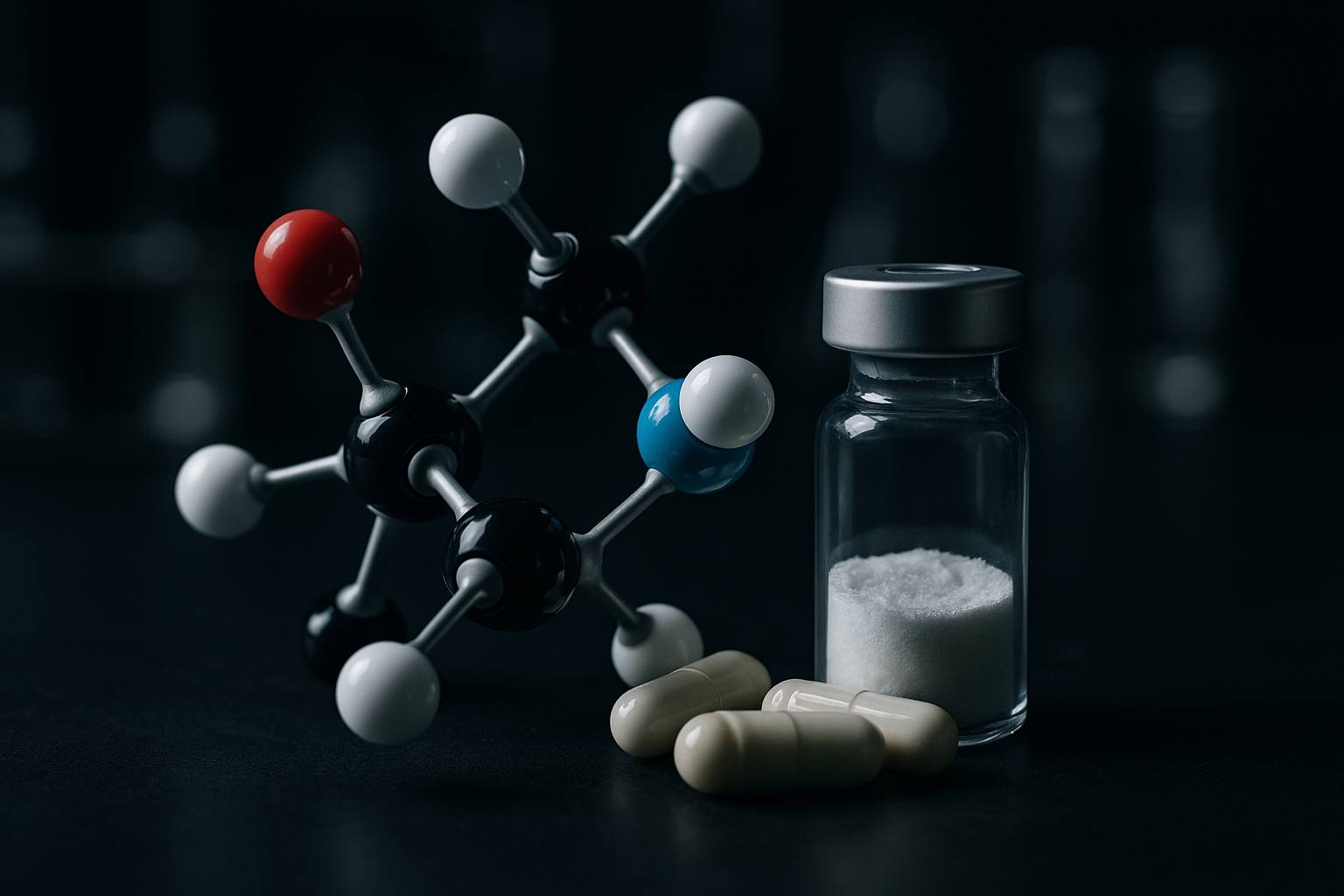
Isoleucine
Isoleucine is an essential branched-chain amino acid (BCAA) involved in muscle energy metabolism, the regulation of protein synthesis, and the maintenance of nitrogen balance. In the “recovery” field it is studied mainly as a component of essential amino acid (EAA) or BCAA mixtures, rather than as an isolated supplement.
Essential amino acid (BCAA) associated with protein synthesis and muscle recovery
Isoleucine is an essential branched-chain amino acid (BCAA) involved in muscle energy metabolism, the regulation of protein synthesis, and the maintenance of nitrogen balance. In the “recovery” field, it is studied mainly as a component of essential amino acid (EAA) or BCAA blends, rather than as a standalone supplement.
Mechanism of action
After absorption, isoleucine is taken up by tissues and can be transaminated (BCAT) and subsequently oxidized (BCKDH), processes that are particularly active in muscle. It contributes to the pool of amino acids required for protein synthesis and the maintenance of nitrogen balance. In synergy with other EAAs, it supports the postprandial anabolic response; it has also been studied for possible effects on glucose metabolism (e.g. modulation of glucose utilization and metabolic signaling), but these effects are variable and depend on the context (diet, metabolic status, composition of the amino acid blend).
Supported benefits
- Supports muscle protein synthesis when taken as part of EAAs/complete proteins post-exercise (moderate)
- Reduction in markers of muscle damage and DOMS in some studies on BCAA blends (not attributable with certainty to isoleucine alone) (limited)
- Possible contribution to the maintenance of lean mass under conditions of suboptimal protein intake, as a component of EAAs (limited)
- Effects on glucose metabolism observed in experimental studies (context-dependent; not conclusive for isolated supplementation) (emerging)
Safety & side effects
- Gastrointestinal disturbances (nausea, cramps, diarrhea), especially with high doses of free amino acids
- Headache or a feeling of fatigue in some individuals (non-specific)
- Possible imbalance in amino acid intake if used disproportionately relative to other EAAs (theoretical risk of limiting protein synthesis due to lack of other EAAs)
FAQ
Does isoleucine alone improve recovery?
Evidence on recovery comes mainly from complete proteins, EAAs, or BCAA blends. Since protein synthesis requires all essential amino acids, isolated isoleucine is unlikely to be the limiting factor; the specific benefit of isoleucine alone is poorly documented.
Are BCAAs or EAAs more sensible for recovery?
In general, EAAs (or complete proteins) provide all the substrates needed for protein synthesis and tend to be more consistent with the physiology of recovery. BCAAs may have effects in some contexts, but they do not replace a complete EAA profile.
Is it useful if I already get enough protein from my diet?
If total protein intake and protein quality are adequate, the margin of additional benefit from BCAAs/isoleucine tends to decrease. The effects observed in the literature are often more evident when protein intake is suboptimal or under specific conditions.
Are there metabolic risks associated with BCAAs?
Observational studies have associated high circulating BCAA levels with metabolic conditions (e.g. insulin resistance), but this does not prove causality and may reflect alterations in metabolism. Supplementation should be considered cautiously in individuals with metabolic problems and always within the context of the overall diet.
The information provided is for informational and educational purposes only. It does not constitute medical advice. Use must be evaluated and authorized by a qualified healthcare professional.
Mechanism of action
After absorption, isoleucine is taken up by tissues and can be transaminated (BCAT) and subsequently oxidized (BCKDH), processes that are particularly active in muscle. It contributes to the pool of amino acids needed for protein synthesis and to the maintenance of nitrogen balance. In synergy with other EAAs, it supports the postprandial anabolic response; it has also been studied for possible effects on glucose metabolism (e.g. modulation of glucose utilization and metabolic signaling), but these effects are variable and depend on the context (diet, metabolic state, composition of the amino acid mixture).
Scientific benefits
Contraindications
- Maple syrup urine disease (MSUD): relevant contraindication for BCAAs (impaired metabolism)
- Liver or kidney disorders: clinical evaluation is necessary for any protein-amino acid supplementation
- Pregnancy and breastfeeding: insufficient data for isolated supplementation; professional evaluation recommended
- Pediatric age: use is not appropriate without clinical supervision
Side effects
- Gastrointestinal disturbances (nausea, cramps, diarrhea), especially with high doses of free amino acids
- Headache or feeling of fatigue in some individuals (nonspecific)
- Possible imbalance in amino acid intake if used disproportionately compared with other EAAs (theoretical risk of limiting protein synthesis due to deficiency of other EAAs)
Interactions
- Antidiabetic drugs/insulin: possible indirect interactions if supplementation alters the glycemic response (evidence inconclusive; caution in subjects on glucose-lowering therapy)
- Levodopa: neutral amino acids may compete for intestinal transporters and for passage across the blood-brain barrier; clinical relevance depends on timing and diet
- Other amino acids in free form: competition for transporters may affect relative absorption (effect generally modest in a mixed diet)
Regulatory status
Essential amino acid commonly present in foods and used in supplements. Generally permitted as an ingredient in food supplements; not classified as a doping substance. Allowed health claims and labeling limits depend on local regulations (e.g. EU/EFSA, USA/DSHEA).
Supplements and peptides
 Recovery
Bcaa
BCAAs (branched-chain amino acids) are three essential amino acids—leucine, isoleucine, and valine—particularly…
 Recovery
Complete electrolytes
“Complete electrolytes” refers to formulations that mainly combine sodium (Na+), potassium (K+), chloride (Cl−),…
 Recovery
EAA (essential amino acids)
EAAs (Essential Amino Acids) are the 9 amino acids that the human body cannot synthesize in sufficient quantities and…