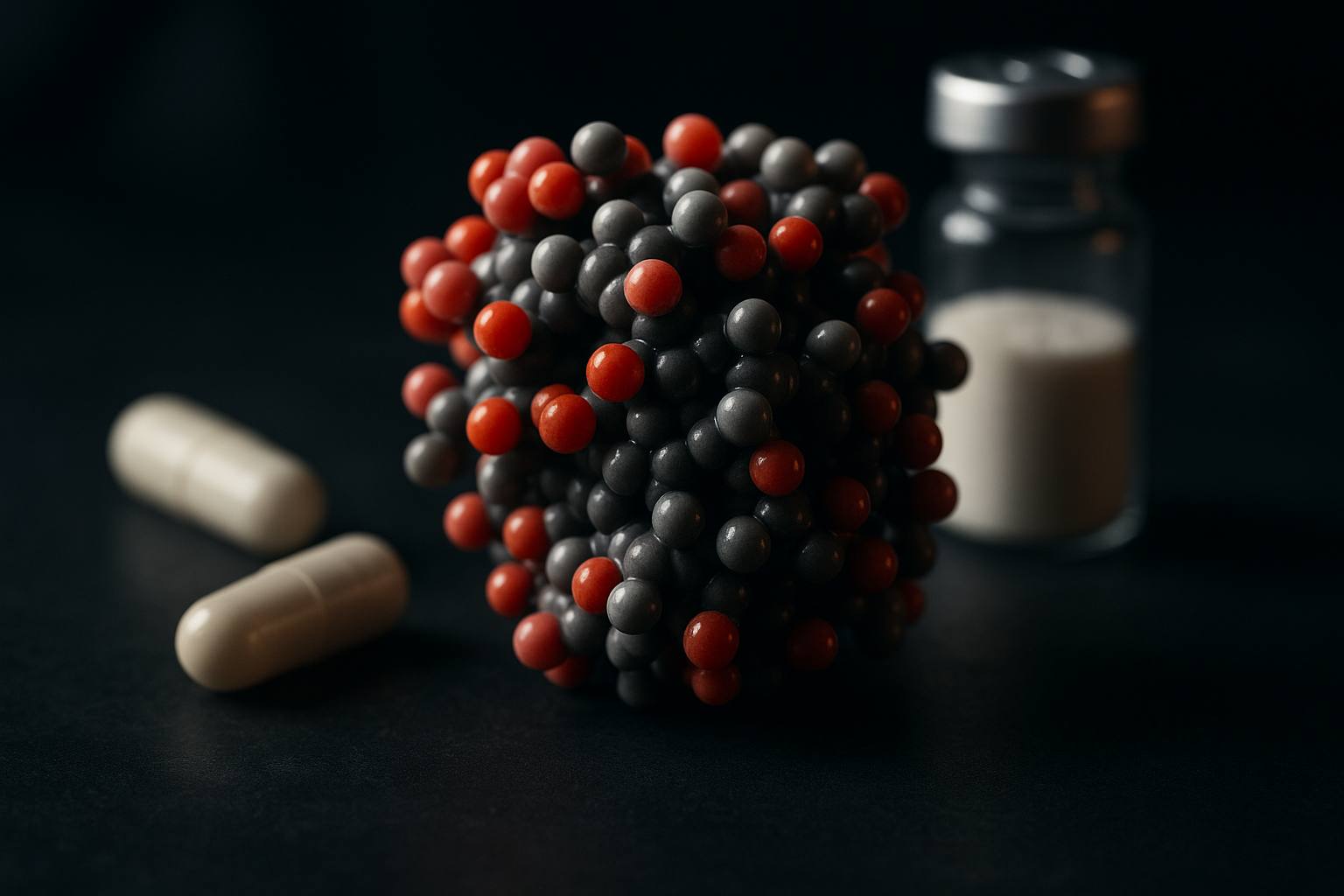
Lactoferrin
Lactoferrin (LF) is a glycoprotein of the transferrin family, present in mucosal secretions (milk, saliva, tears) and in neutrophil granules. It binds iron with high affinity and contributes to host defense by modulating iron availability, inflammatory response, and interactions with microbes and mucosae. In supplementation, bovine lactoferrin (bLF) is used above all, structurally similar to human lactoferrin, and studied for effects on gastrointestinal infections, microbiota balance, and some immune markers.
Iron-binding glycoprotein with antimicrobial and immunomodulatory activity, relevant to intestinal barrier function and innate defenses
Lactoferrin (LF) is a glycoprotein in the transferrin family, found in mucosal secretions (milk, saliva, tears) and in neutrophil granules. It binds iron with high affinity and contributes to host defense by modulating iron availability, inflammatory response, and interactions with microbes and mucosae. In supplementation, bovine lactoferrin (bLF) is used most often, structurally similar to human lactoferrin, and studied for its effects on gastrointestinal infections, microbiota balance, and certain immune markers.
Mechanism of action
Proposed mechanisms (dependent on dose, apo/holo form, matrix, and context): (1) Iron sequestration: reduces the availability of free iron, limiting the growth of siderophilic bacteria and fungi. (2) Direct antimicrobial/antiviral action: interaction with membranes and glycans; derived peptides (e.g. lactoferricin) may increase the permeability of bacterial membranes. (3) LPS neutralization and TLR modulation: binding to LPS and possible attenuation of pro-inflammatory signals (e.g. via TLR4) in some models. (4) Effects on the intestinal barrier: support for tight junctions and reduced permeability in experimental models; possible reduction of mucosal inflammation. (5) Immunomodulation: influence on neutrophil and NK activity and cytokine profile (pro-/anti-inflammatory balance), with variable results across studies. (6) Effects on the microbiota: potential increase in commensal bacteria (e.g. Bifidobacterium/Lactobacillus) and reduction of pathogens in some contexts, also through competition for iron.
Supported benefits
- Reduction in the duration and/or severity of some infectious diarrheas (especially in pediatric age) and support for mucosal recovery in selected contexts (moderate)
- Support for the prevention/management of recurrent gastrointestinal and respiratory infections in specific populations (heterogeneous evidence; depends on endpoints and context) (limited)
- Modulation of inflammatory and immune markers (e.g. certain cytokines/CRP) in small or heterogeneous clinical studies (emerging)
- Improvement in some parameters of iron metabolism in selected contexts (e.g. pregnancy or iron deficiency) with non-uniform results and dependent on co-interventions (moderate)
- Possible reduction in colonization/recurrence in some urogenital infections (e.g. bacterial vaginosis) in combined protocols (limited)
Safety & side effects
- Gastrointestinal disturbances (nausea, cramps, bloating, changes in bowel habits) in a minority of subjects
- Hypersensitivity reactions in predisposed individuals (rare), especially in cases of allergy to milk proteins
- Headache or skin rash occasionally reported
FAQ
Are lactoferrin and lactoferricin the same thing?
No. Lactoferrin is the whole glycoprotein; lactoferricin is a peptide derived from its digestion/proteolysis, often with more pronounced antimicrobial activity in experimental models.
Is apo-lactoferrin or holo-lactoferrin better?
It depends on the goal and the context. Apo-lactoferrin (low in iron) may enhance iron sequestration in the lumen; holo-lactoferrin may behave differently in interactions with cells and microbes. Clinical studies do not define a universal winner.
Does it act like a natural antibiotic?
It has antimicrobial and anti-adhesion properties in in vitro/in vivo models, but it is not a pharmacological antibiotic and should not be considered a substitute for standard therapies.
Can it improve the microbiota?
Some studies show favorable changes in specific contexts (e.g. reduction of pathogens or increase in commensals), but the effects are variable and depend on diet, baseline microbiota, dose, and duration.
Can it affect iron and ferritin?
Yes, in some studies it has modified iron markers (ferritin, hemoglobin, hepcidin), especially in populations with deficiency or increased requirements. The effect is not uniform and should be interpreted together with laboratory tests and clinical context.
The information provided is for informational and educational purposes only. It does not constitute medical advice. Use must be assessed and authorized by a qualified healthcare professional.
Mechanism of action
Proposed mechanisms (depending on dose, apo/holo form, matrix, and context): (1) Iron sequestration: reduces the availability of free iron, limiting the growth of siderophilic bacteria and fungi. (2) Direct antimicrobial/antiviral action: interaction with membranes and glycans; derived peptides (e.g. lactoferricin) may increase the permeability of bacterial membranes. (3) LPS neutralization and TLR modulation: binding to LPS and possible attenuation of pro-inflammatory signals (e.g. via TLR4) in some models. (4) Effects on the intestinal barrier: support for tight junctions and reduced permeability in experimental models; possible reduction of mucosal inflammation. (5) Immunomodulation: influence on neutrophil activity, NK cells, and cytokine profile (pro/anti-inflammatory balance) with variable results across studies. (6) Effects on the microbiota: potential increase in commensal bacteria (e.g. Bifidobacterium/Lactobacillus) and reduction of pathogens in some contexts, also through competition for iron.
Scientific benefits
Contraindications
- Allergy to cow's milk proteins or known hypersensitivity to lactoferrin (especially if derived from bovine milk)
- Conditions in which altering iron availability could be problematic (e.g. some iron overload disorders): requires clinical evaluation
- Infants/preterm babies: use must be managed exclusively in a clinical setting (specific protocols)
Side effects
- Gastrointestinal disturbances (nausea, cramps, bloating, changes in bowel habits) in a minority of subjects
- Hypersensitivity reactions in predisposed individuals (rare), especially in cases of milk protein allergy
- Headache or skin rash reported occasionally
Interactions
- Iron supplements or iron-based medications: possible bidirectional interference with iron availability/absorption; the effect depends on formulation and timing
- Antibiotics: potential additive effect or indirect interference via the microbiota; it does not replace therapy and is not a pharmacological antimicrobial
- Immunosuppressants/immunomodulatory therapies: possible theoretical interaction on immune markers; limited clinical data
Regulatory status
Marketed as a dietary supplement in many countries (e.g. EU/USA) with varying safety and labeling requirements. Health claims are regulated and often limited; it is not authorized to treat or prevent diseases like a drug.
Supplements and peptides
 Gut and Immune System
Bovine colostrum
Bovine colostrum is the secretion produced by the cow in the first hours/days after calving, rich in immunoglobulins,…
 Gut and Immune System
Echinacea
The name “echinacea” mainly refers to Echinacea purpurea, Echinacea angustifolia, and Echinacea pallida. The extracts…
 Gut and Immune System
Multi-strain probiotics
Multi-strain probiotics are formulations that combine multiple species and/or strains (e.g. Lactobacillus,…