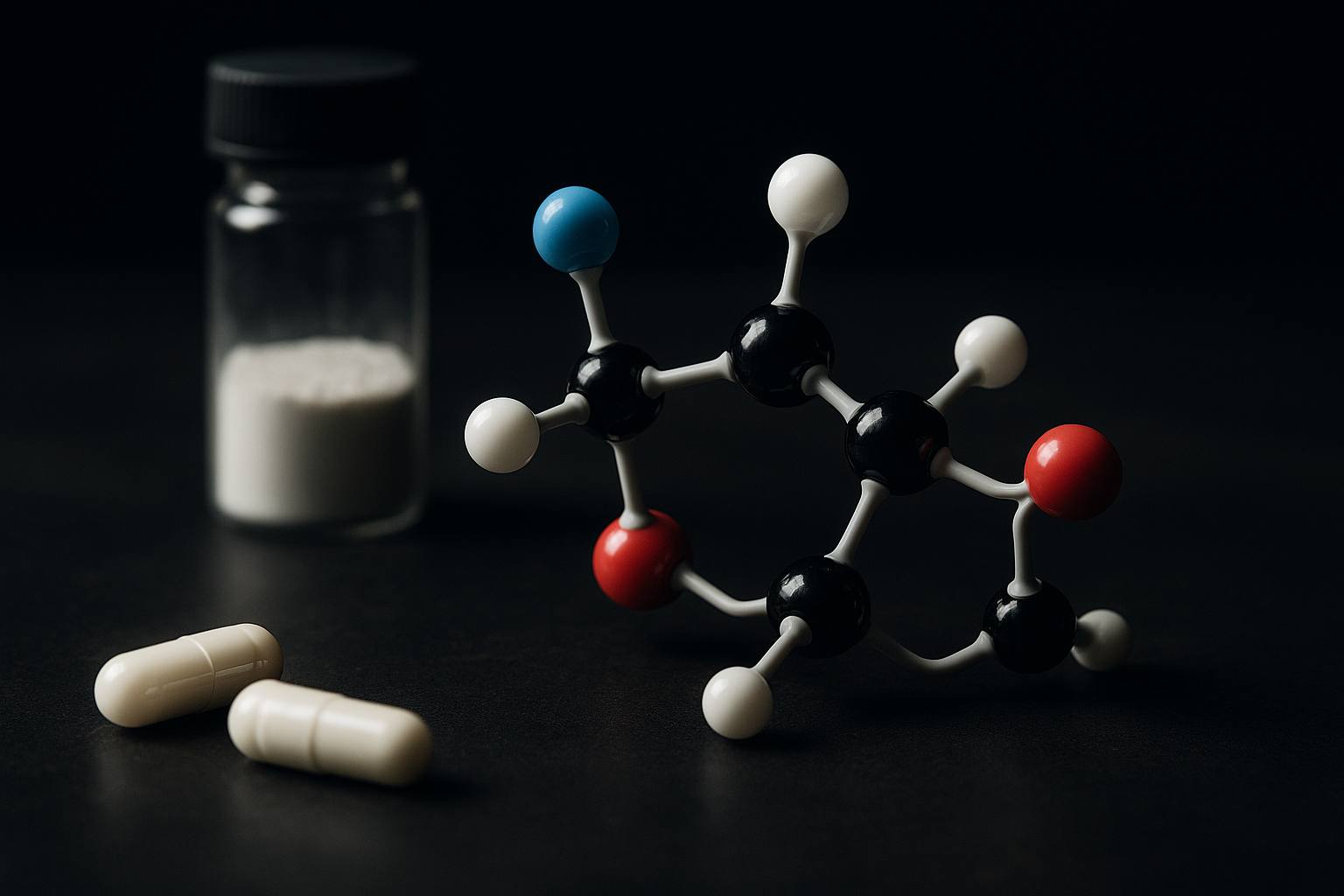
Leucine
Leucine is an essential amino acid (not synthesized by the body) and one of the three BCAAs. It is known for its role as a nutritional “signal” that activates cellular pathways linked to muscle protein synthesis, particularly after exercise and protein intake. In the recovery field, it is studied mainly for its ability to increase the postprandial and post-workout anabolic response, rather than as a primary energy source.
Essential branched-chain amino acid (BCAA) involved in anabolic signaling and muscle recovery
Leucine is an essential amino acid (not synthesized by the body) and one of the three BCAAs. It is known for its role as a nutritional “signal” that activates cellular pathways linked to muscle protein synthesis, particularly after exercise and protein intake. In the recovery field, it is studied mainly for its ability to increase the postprandial and post-workout anabolic response, rather than as a primary energy source.
Mechanism of action
Leucine activates the mTORC1 pathway (mammalian/mechanistic Target Of Rapamycin Complex 1), a central node in the regulation of protein synthesis. Proposed mechanisms include: (1) intracellular leucine sensing through sensor proteins (e.g., Sestrin2) and modulation of regulatory complexes (Rag GTPases) that facilitate mTORC1 activation; (2) increased phosphorylation of downstream targets (e.g., p70S6K, 4E-BP1) with enhanced initiation of protein translation; (3) possible reduction of proteolysis in some contexts. The anabolic effect is maximized when there is adequate availability of all essential amino acids together with a mechanical stimulus (strength training).
Supported benefits
- Increased muscle protein synthesis (MPS) response when added to a meal/protein, especially if the protein dose is low or moderate (moderate)
- Support for recovery and adaptation to strength training as part of adequate protein intake (effect more evident in individuals with suboptimal protein intake or at an older age) (limited)
- Possible attenuation of age-related “anabolic resistance” by increasing postprandial mTORC1 signaling (if combined with complete proteins) (moderate)
- Improved post-exercise MPS versus placebo in acute protocols (biochemical endpoints), with variable results on long-term clinical/performance outcomes (limited)
Safety & side effects
- Gastrointestinal disturbances (nausea, cramps, diarrhea), especially with high doses or when taken on an empty stomach
- Possible alteration of the plasma amino acid profile if taken in an unbalanced way relative to other amino acids (competition in BCAA transport/metabolism)
- In some individuals, it may increase blood urea/urea levels as a consequence of overall protein metabolism (clinical interpretation depends on the context)
FAQ
Does leucine alone “build muscle”?
Leucine can activate signals that initiate protein synthesis, but building new proteins requires all essential amino acids, as well as an adequate stimulus (training) and energy intake. On its own, it is an incomplete signal.
Is leucine or BCAAs better?
Leucine is the main anabolic trigger among the BCAAs, but the practical effect depends on total protein and EAA intake. In many contexts, a complete protein or an EAA mix is more rational than isolated BCAAs.
Is it needed if I already consume enough protein?
When protein intake and protein quality are already adequate, adding isolated leucine often shows only marginal benefits on long-term outcomes; the effects are more evident in conditions of insufficient protein intake or in some populations (e.g., older adults).
What is the concept of the “leucine threshold”?
It is the idea that a certain amount of leucine per meal helps maximize the protein synthesis response. The exact value varies according to age, lean mass, protein type, and context (training, energy availability).
Are there metabolic risks related to mTOR?
mTORC1 is an essential physiological pathway. Postprandial activation is normal; the clinical relevance of repeated stimulation through isolated supplementation is complex and depends on the overall metabolic context. For this reason, a balanced and personalized dietary approach is preferred.
The information provided is for informational and educational purposes only. It does not constitute medical advice. Use must be assessed and authorized by a qualified healthcare professional.
Mechanism of action
Leucine activates the mTORC1 pathway (mammalian/mechanistic Target Of Rapamycin Complex 1), a central node in the regulation of protein synthesis. Proposed mechanisms include: (1) intracellular leucine sensing via sensor proteins (e.g. Sestrin2) and modulation of regulatory complexes (Rag GTPases) that facilitate mTORC1 activation; (2) increased phosphorylation of downstream targets (e.g. p70S6K, 4E-BP1) with enhanced initiation of protein translation; (3) possible reduction of proteolysis in some contexts. The anabolic effect is maximized when there is both adequate availability of all essential amino acids and a mechanical stimulus (strength training).
Scientific benefits
Contraindications
- Maple syrup urine disease (MSUD): contraindication due to altered BCAA metabolism
- Liver or kidney disease: require individual clinical evaluation before significantly changing amino acid/protein intake
- Pregnancy and breastfeeding: limited specific data on isolated supplementation; caution and professional evaluation
- History of eating disorders or problematic supplement use: risk of unbalanced approaches
Side effects
- Gastrointestinal disturbances (nausea, cramps, diarrhea) especially with high doses or intake on an empty stomach
- Possible alteration of the plasma amino acid profile if taken in an unbalanced way relative to other amino acids (competition in BCAA transport/metabolism)
- In some individuals it may increase blood urea/urea levels as a consequence of overall protein metabolism (clinical interpretation depends on the context)
Interactions
- Antidiabetic drugs/insulin: leucine may influence insulin secretion and blood glucose in some contexts; clinical monitoring if therapy is present
- High-BCAA diets/supplementation: possible competition among leucine, isoleucine, and valine for transporters and metabolic pathways, with potential imbalance if intake is not harmonized
- Levodopa and other neutral amino acids: in general, neutral amino acids may compete for intestinal transporters and/or the blood-brain barrier; clinical relevance depends on the drug and timing (medical evaluation)
Regulatory status
Essential amino acid commonly marketed as a dietary supplement. Generally permitted; any limits, claims, and labeling requirements depend on national/EU regulations. It is not typically included on lists of substances prohibited as doping, but supplement contamination is a known risk in sport.
Supplements and peptides
 Recovery
Bcaa
BCAAs (branched-chain amino acids) are three essential amino acids—leucine, isoleucine, and valine—particularly…
 Recovery
Complete electrolytes
“Complete electrolytes” refers to formulations that mainly combine sodium (Na+), potassium (K+), chloride (Cl−),…
 Recovery
EAA (essential amino acids)
EAAs (Essential Amino Acids) are the 9 amino acids that the human body cannot synthesize in sufficient quantities and…