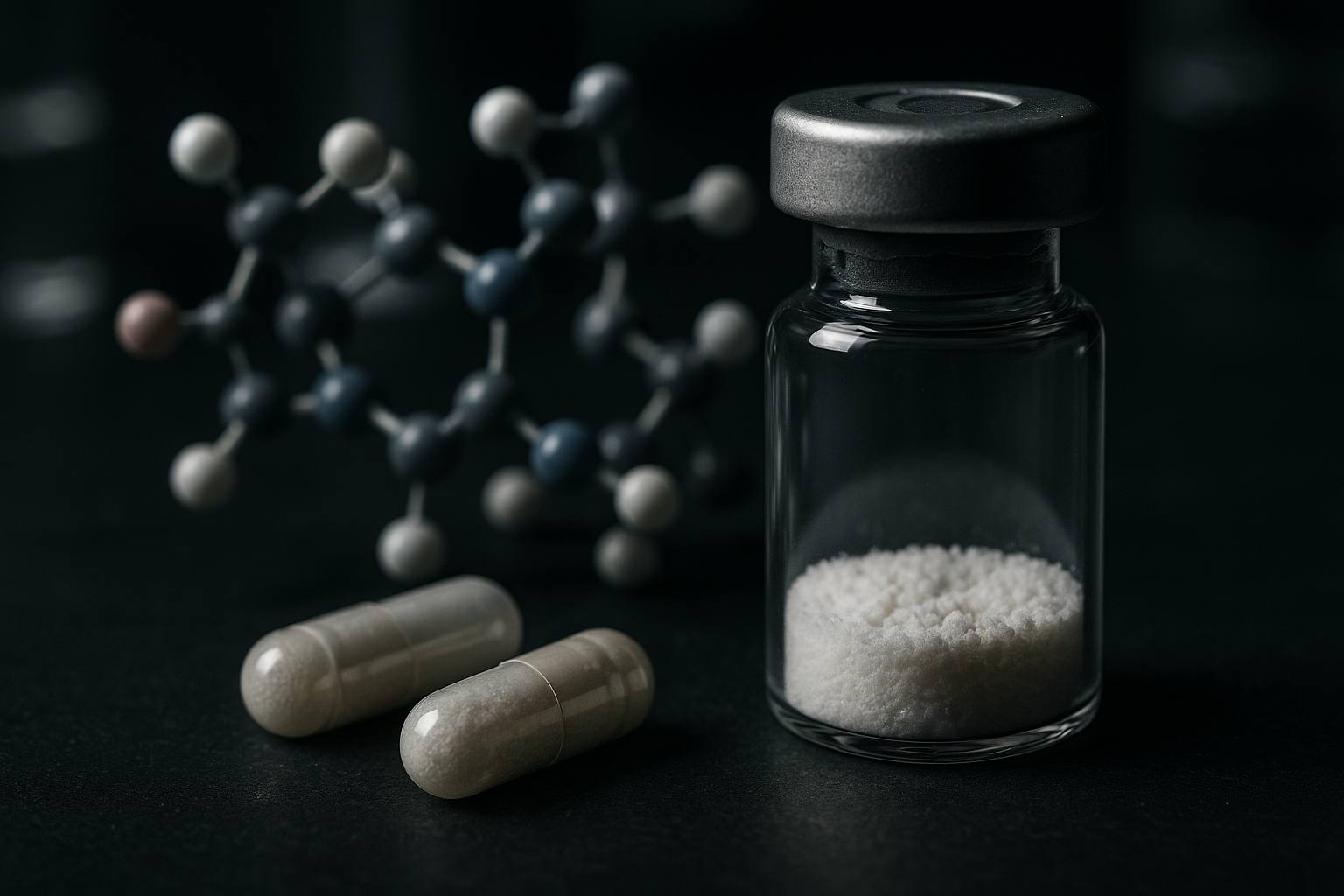
Melanotan ii
Melanotan II is a synthetic peptide developed in the research setting as an analogue of α-MSH (melanocyte-stimulating hormone). It acts on multiple melanocortin receptors, influencing melanogenesis (tanning), but also appetite, sexual function, and other neuroendocrine axes. It is not a dietary supplement, and its unsupervised use carries significant risks, including systemic adverse events and dermatological issues.
Synthetic peptide agonist of melanocortin receptors (MC1R–MC5R) with effects on skin pigmentation and neuroendocrine functions
Melanotan II is a synthetic peptide developed in the research setting as an analogue of α-MSH (melanocyte-stimulating hormone). It acts on multiple melanocortin receptors, influencing melanogenesis (tanning), as well as appetite, sexual function, and other neuroendocrine axes. It is not a dietary supplement, and its unsupervised use carries significant risks, including systemic adverse events and dermatological issues.
Mechanism of action
MT-II binds to and activates melanocortin receptors (GPCRs). Activation of MC1R in melanocytes increases eumelanin production through increased cAMP/PKA signaling and upregulation of melanogenic enzymes (e.g., tyrosinase), promoting pigmentation and potentially a greater pigmentary response to UV radiation. Central activation of MC3R/MC4R in the hypothalamus modulates satiety and energy expenditure and may influence circuits involved in sexual function. Activation of other subtypes (e.g., MC5R) may contribute to effects on exocrine secretions and other systemic phenomena. Its receptor non-selectivity explains the frequency of extra-cutaneous side effects.
Supported benefits
- Increased skin pigmentation (tanning) and melanogenesis, often even with reduced UV exposure compared with baseline (moderate)
- Pro-erectile effects and increased sexual response in some experimental settings (mediated by MC3R/MC4R) (limited)
- Reduced appetite/possible weight loss in experimental models and in some preliminary human studies (central melanocortin effect) (limited)
- Potential indirect photoprotection through increased eumelanin (does not replace sun protection; clinical evidence of reduced cancer risk has not been demonstrated) (emerging)
Safety & side effects
- Nausea and vomiting (common, dose-dependent)
- Headache, flushing, dizziness
- Increased blood pressure or changes in blood pressure/heart rate (variable)
- Diffuse and/or irregular hyperpigmentation; darkening of freckles and nevi
- Itching, injection-site reactions, risk of infection/inadequate sterility
- Priapism and/or prolonged erections (a potentially urgent event)
- Gastrointestinal disturbances (cramps, reduced appetite)
- Possible neuropsychiatric effects (anxiety/restlessness) reported anecdotally
- Risk related to uncontrolled products: contaminants, endotoxins, dosage not matching the label
FAQ
Is Melanotan II the same thing as afamelanotide?
No. They are related but different peptides: afamelanotide is more selective for MC1R and is a regulated drug for specific indications; MT-II is more non-selective (MC1R–MC5R) and is not approved for general clinical use.
Does the tan induced by MT-II protect against sunburn?
An increase in eumelanin may partially reduce susceptibility to sunburn in some individuals, but it does not eliminate UV damage or replace sunscreen, clothing, and limiting exposure. The protection is incomplete and variable.
Can it increase the risk of melanoma?
There is no conclusive proof that MT-II causes melanoma, but changes in nevi and hyperpigmentation have been reported that may complicate dermatological monitoring. Uncontrolled use, combined with UV exposure, may increase the overall risk of skin damage.
Why does it cause nausea and flushing?
Its non-selectivity at melanocortin receptors and its central/peripheral effects can activate neurovegetative and vascular circuits, causing symptoms such as nausea, flushing, and headache, often in a dose-dependent manner.
Is it detectable in anti-doping tests?
Peptides may be detectable using specific methods in anti-doping contexts, but detectability depends on the test, time window, and metabolites. In any case, the use of unauthorized substances may violate sporting regulations.
The information provided is for informational and educational purposes only. It does not constitute medical advice. Use must be evaluated and authorized by a qualified healthcare professional.
Mechanism of action
MT-II binds to and activates melanocortin receptors (GPCRs). Activation of MC1R in melanocytes increases eumelanin production through increased cAMP/PKA signaling and upregulation of melanogenic enzymes (e.g. tyrosinase), promoting pigmentation and potentially a greater pigmentary response to UV radiation. Central activation of MC3R/MC4R in the hypothalamus modulates satiety and energy expenditure and may influence sexual function circuits. Activation of other subtypes (e.g. MC5R) may contribute to effects on exocrine secretions and other systemic phenomena. Receptor non-selectivity explains the frequency of extra-cutaneous side effects.
Scientific benefits
Contraindications
- Personal or family history of melanoma or atypical skin lesions (theoretical/clinical risk of changes in nevi; dermatological evaluation required)
- Presence of multiple/atypical nevi or high-risk phototype without dermatological monitoring
- Pregnancy and breastfeeding (lack of adequate safety data)
- Pediatric/adolescent age (lack of safety data)
- Uncontrolled cardiovascular disease or predisposition to hypertensive crises (due to possible blood pressure effects)
- History of priapism or predisposing conditions (e.g. sickle cell anemia) due to the risk of prolonged erections
Side effects
- Nausea and vomiting (common, dose-dependent)
- Headache, flushing, dizziness
- Increased blood pressure or changes in blood pressure/heart rate (variable)
- Diffuse and/or irregular hyperpigmentation; darkening of freckles and nevi
- Itching, injection site reactions, risk of infections/inadequate sterility
- Priapism and/or prolonged erections (potentially urgent event)
- Gastrointestinal changes (cramps, reduced appetite)
- Possible neuropsychiatric effects (anxiety/restlessness) reported anecdotally
- Risk related to uncontrolled products: contaminants, endotoxins, dosage not matching the label
Interactions
- Medications for erectile dysfunction (e.g. PDE5 inhibitors): possible increased risk of prolonged erections/priapism and cardiovascular effects
- Antihypertensive drugs or vasoactive substances: possible interactions affecting blood pressure and heart rate
- Drugs that increase the risk of photosensitivity or affect pigmentation: potential alteration of the skin response
- Other non-prescribed peptides/hormones: increased unpredictability of effects and risk of contamination/polypharmacy
Regulatory status
Not approved by the FDA/EMA for cosmetic indications or as a supplement; sale for self-administration is often the subject of regulatory warnings. A related analogue (afamelanotide, selective for MC1R) is approved for specific rare indications (e.g. erythropoietic protoporphyria) in some countries, but it is not equivalent to MT-II in terms of receptor profile, safety, and quality control.
Supplements and peptides
 Peptides
Bpc-157
BPC-157 is a 15-amino-acid peptide derived from a sequence present in gastric juice (BPC). It is the subject of…
 Peptides
Cjc-1295
CJC-1295 is a peptide designed to stimulate the pulsatile secretion of growth hormone (GH) through activation of the…
 Peptides
Dsip
DSIP (Delta Sleep-Inducing Peptide) is a peptide originally described for its possible ability to modulate sleep…