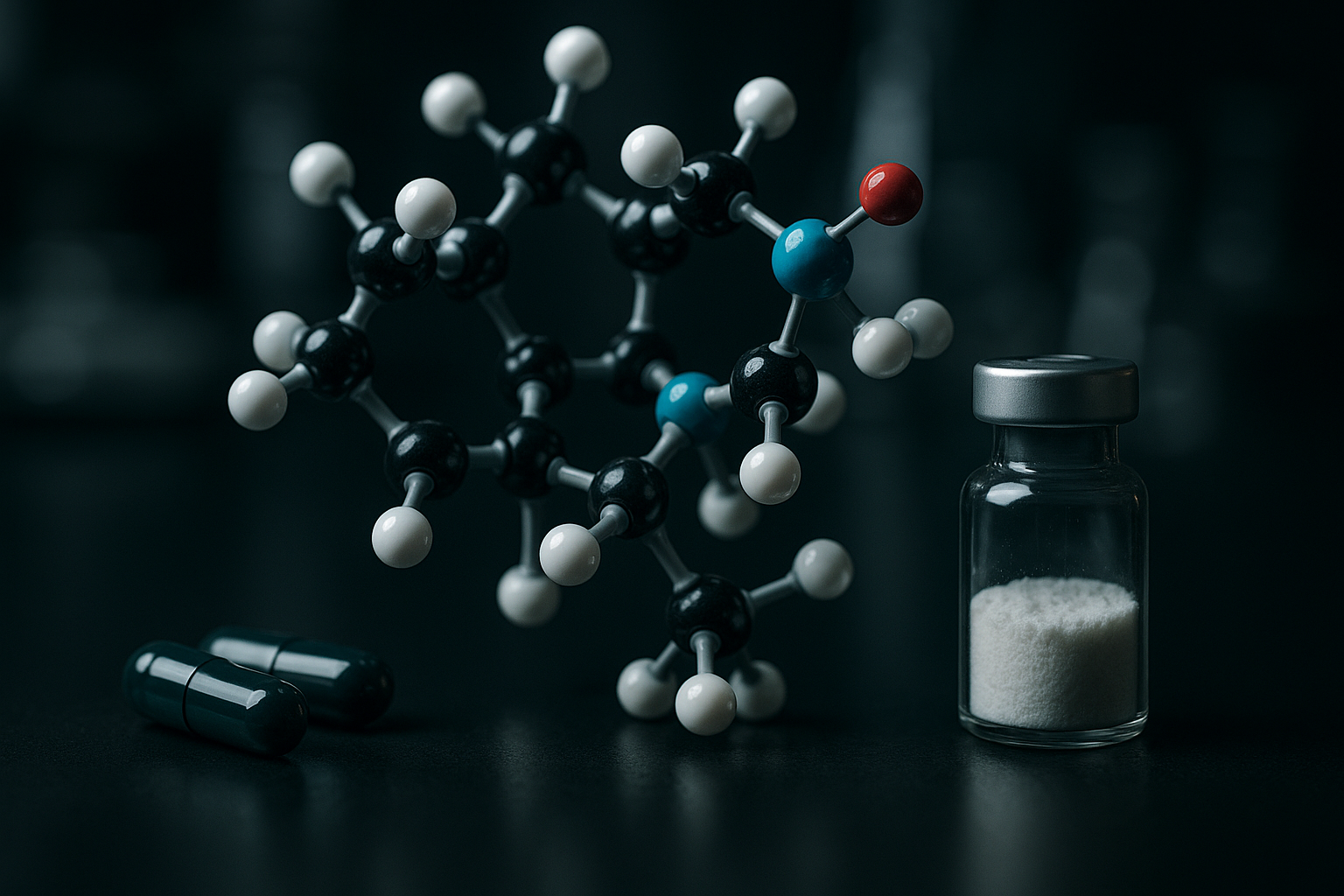
Mk-677 ibutamoren
MK-677 (ibutamoren) is a small non-peptide molecule that mimics the action of ghrelin at the GHS-R1a receptor, stimulating pulsatile growth hormone (GH) secretion and increasing IGF-1 levels. It has been studied in clinical contexts (e.g. frailty, sarcopenia, catabolism, sleep disorders) but is not approved as a drug for general use and carries significant risks (fluid retention, increased appetite, glycemic alterations). In sports, it is considered a doping substance.
Orally active growth hormone secretagogue (GHS): increases GH and IGF-1 without being a peptide
MK-677 (ibutamoren) is a small non-peptide molecule that mimics the action of ghrelin at the GHS-R1a receptor, stimulating pulsatile growth hormone (GH) secretion and increasing IGF-1 levels. It has been studied in clinical contexts (e.g. frailty, sarcopenia, catabolism, sleep disorders) but is not approved as a drug for general use and carries significant risks (fluid retention, increased appetite, altered blood glucose). In sports, it is considered a doping substance.
Mechanism of action
Agonism of the GHS-R1a receptor (ghrelin receptor) at the hypothalamic-pituitary level → increased pulsatile GH secretion → increased hepatic and peripheral IGF-1. Secondary effects consistent with the ghrelin/GH axis: increased appetite (orexigenic), possible fluid retention (via GH/IGF-1), sleep modulation (increased slow-wave sleep in some studies), and potential alterations in insulin sensitivity and blood glucose (likely reduced insulin sensitivity in some individuals).
Supported benefits
- Consistent increase in circulating GH and IGF-1 (strong)
- Increase in lean body mass in some studies in older adults/frailty; not always accompanied by a proportional increase in strength (moderate)
- Possible improvement in some sleep parameters (e.g. increased slow-wave sleep) in specific populations (limited)
- Possible support for markers of bone turnover and potential impact on bone mineral density with prolonged use (evidence not conclusive) (emerging)
Safety & side effects
- Increased appetite (frequent)
- Fluid retention/peripheral edema, weight gain due to fluids
- Paresthesia or carpal tunnel-like symptoms (reported with stimulation of the GH/IGF-1 axis in some individuals)
- Lethargy or drowsiness in some cases
- Increased fasting blood glucose and/or reduced insulin sensitivity; possible worsening of glycemic control
- Possible increase in blood pressure in predisposed individuals (often mediated by fluid retention)
- Joint or muscle pain (less common, but reported)
FAQ
Is MK-677 really a peptide?
No. It is often placed in the “peptides” category in fitness language, but chemically it is a small non-peptide molecule. The effect is similar to that of GH secretagogues because it activates the ghrelin receptor (GHS-R1a).
Does increasing GH and IGF-1 automatically mean more strength and performance?
Not necessarily. Studies show increases in GH/IGF-1 and sometimes lean mass, but the transfer to strength, power, and sport-specific performance is not guaranteed and depends on training, diet, sleep, and the individual risk profile.
Why can it increase blood glucose?
Stimulation of the GH/IGF-1 axis can reduce insulin sensitivity in some individuals, increasing blood glucose and insulin. This is a critical safety issue, especially in those predisposed to diabetes or metabolic syndrome.
Is it detectable in anti-doping tests?
Yes. It is considered a prohibited substance, and anti-doping laboratories can detect many substances and/or metabolites; moreover, unregulated products may contain additional doping compounds.
Are the effects on sleep certain?
There are data suggesting improvements in some sleep parameters (e.g. slow-wave sleep) in specific populations, but the evidence is not uniform and the effects can vary greatly between individuals.
The information provided is for informational and educational purposes only. It does not constitute medical advice. Use must be evaluated and authorized by a qualified healthcare professional.
Mechanism of action
Agonism of the GHS-R1a receptor (ghrelin receptor) at the hypothalamic-pituitary level → increased pulsatile GH secretion → increased hepatic and peripheral IGF-1. Secondary effects consistent with the ghrelin/GH axis: increased appetite (orexigenic), possible fluid retention (via GH/IGF-1), sleep modulation (increased slow-wave sleep in some studies), and potential alterations in insulin sensitivity and blood glucose (likely reduced insulin sensitivity in some subjects).
Scientific benefits
Contraindications
- Diabetes mellitus, prediabetes, or uncontrolled metabolic syndrome (risk of worsening glycemic control)
- Personal history of active or recent neoplasms: increased IGF-1 is a growth signal and requires extreme clinical caution
- Significant edema, heart failure, or conditions in which fluid retention is dangerous
- Untreated obstructive sleep apnea (fluid retention and weight changes may worsen the condition)
- Pregnancy and breastfeeding (lack of adequate safety data)
- Pediatric/adolescent age (not indicated; potential interference with endocrine axes)
Side effects
- Increased appetite (common)
- Fluid retention/peripheral edema, weight gain due to fluids
- Paresthesias or carpal tunnel-like symptoms (reported with stimulation of the GH/IGF-1 axis in some subjects)
- Lethargy or drowsiness in some cases
- Increased fasting blood glucose and/or reduced insulin sensitivity; possible worsening of glycemic control
- Possible increase in blood pressure in predisposed individuals (often mediated by fluid retention)
- Joint or muscle pain (less common, but reported)
Interactions
- Glucose-lowering drugs/insulin: possible need for clinical adjustments due to changes in blood glucose (only under medical supervision)
- Corticosteroids: potential worsening of the glycemic profile and body composition; functional interactions on metabolism
- Other agents that increase GH/IGF-1 (e.g. exogenous GH, other secretagogues): increased risk of adverse effects (edema, paresthesias, glycemic alterations)
- Alcohol and substances that worsen sleep/metabolism: may confound or amplify undesirable effects
Regulatory status
Not approved as a drug for general use; use limited to research/experimental settings in many jurisdictions. In sports, it is prohibited by WADA as a growth hormone secretagogue (category S2: peptide hormones, growth factors, and related substances; includes GH secretagogues). Sale as a dietary supplement is generally non-compliant.
Supplements and peptides
 Peptides
Bpc-157
BPC-157 is a 15-amino-acid peptide derived from a sequence present in gastric juice (BPC). It is the subject of…
 Peptides
Cjc-1295
CJC-1295 is a peptide designed to stimulate the pulsatile secretion of growth hormone (GH) through activation of the…
 Peptides
Dsip
DSIP (Delta Sleep-Inducing Peptide) is a peptide originally described for its possible ability to modulate sleep…