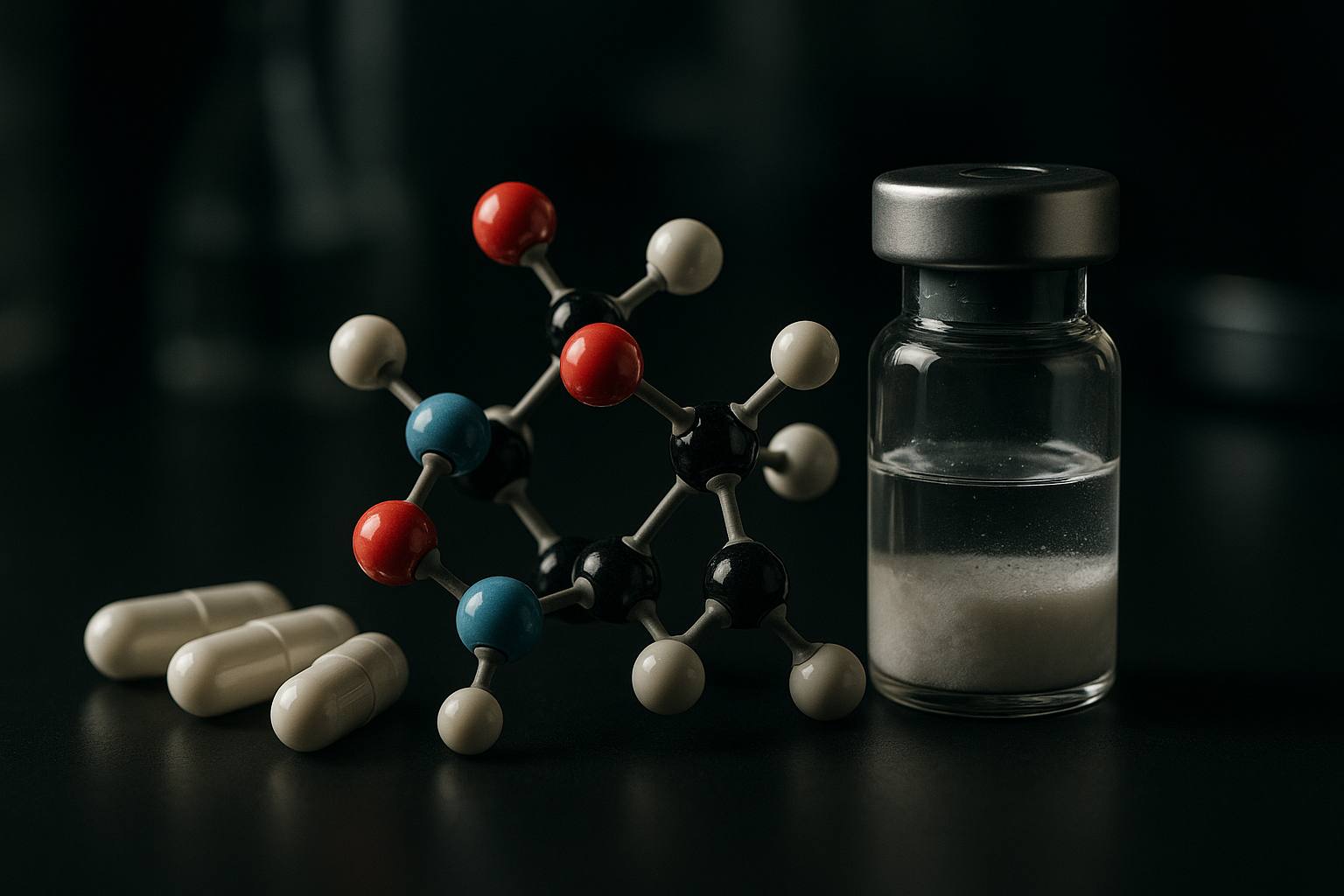
Thymosin alpha-1
Thymosin alpha-1 (Tα1) is a 28-amino-acid peptide derived from prothymosin-α, known for its immunomodulatory effects (especially on innate and adaptive immunity). It has been studied in various infectious and oncological conditions as an adjuvant, with variable results depending on the clinical context and protocols.
Immunomodulatory peptide of thymic origin, used clinically in some countries
Thymosin alpha-1 (Tα1) is a 28-amino-acid peptide derived from prothymosin-α, known for its immunomodulatory effects (especially on innate and adaptive immunity). It has been studied in various infectious and oncological conditions as an adjuvant, with variable results depending on the clinical context and protocols.
Mechanism of action
Proposed mechanisms (depending on the immunological context): (1) enhancement of antigen presentation and dendritic cell maturation; (2) modulation of the T-cell response (favoring Th1 profiles in some models) and support of T-lymphocyte function; (3) increased cytotoxic activity of NK cells and immune surveillance; (4) modulation of cytokine and chemokine patterns (e.g. interferons and pro-inflammatory/anti-inflammatory mediators) with possible improvement of the antiviral response; (5) possible functional interaction with innate recognition pathways (e.g. TLRs) and interferon signals, contributing to immune “priming.” The overall effect is immunomodulatory (not simply stimulatory) and may vary based on immune status, comorbidities, and concomitant therapies.
Supported benefits
- Immunomodulatory support as adjuvant therapy in some viral infections (e.g. hepatitis B and C in specific historical protocols; other viral contexts studied with variable results) (moderate)
- Possible reduction of some adverse clinical outcomes in selected subgroups of patients with sepsis or severe infections, as an adjuvant (evidence is not uniform; depends on immune phenotype and study design) (limited)
- Adjuvant in oncology (e.g. in combination with chemotherapy or immunotherapies in some cancers), with possible improvements in certain immunological endpoints and, in some studies, clinical outcomes (limited)
- Improvement of immunological markers (e.g. T/NK function, cytokine profiles) in conditions of secondary immunodeficiency or immunosenescence, in selected experimental/clinical contexts (emerging)
Safety & side effects
- Injection-site reactions (pain, erythema, induration).
- Flu-like symptoms (low-grade fever, asthenia, myalgia) reported in some contexts.
- Headache, nausea, or gastrointestinal disturbances (less common).
- Possible alterations in inflammatory/immunological markers (clinical significance depends on the context).
- Hypersensitivity reactions: rare but possible with peptides/injectable products.
FAQ
Is it a supplement to “boost the immune system”?
No, not in the common sense of the term: thymosin alpha-1 is a peptide studied primarily as a drug/immunomodulator in clinical settings. There is no solid evidence supporting generalized use in healthy people as a simple immune support.
Can it be taken orally?
Oral administration is generally ineffective for peptides like Tα1 because of degradation in the gastrointestinal tract; clinical studies typically use parenteral routes.
Which areas have the most data?
Historically: some viral infections (e.g. hepatitis in specific protocols), and as an adjuvant in oncology and in severe infectious conditions. However, the heterogeneity of the studies makes it difficult to generalize the results.
Is it considered doping or a performance-enhancing substance?
It is not an ergogenic substance with robust evidence for improving performance in healthy subjects. Anti-doping rules depend on the governing body and the updated list; for peptide and immunomodulatory substances, it is always prudent to check current regulations.
What is the main safety issue outside clinical use?
In addition to the immunological effects, the greatest risk is the quality/sterility of the products and the complications related to uncontrolled injectable administration (contamination, local infections, incorrect dosing).
The information provided is for informational and educational purposes only. It does not constitute medical advice. Use must be evaluated and authorized by a qualified healthcare professional.
Mechanism of action
Proposed mechanisms (dependent on the immunological context): (1) enhancement of antigen presentation and dendritic cell maturation; (2) modulation of the T-cell response (favoring Th1 profiles in some models) and support of T-lymphocyte function; (3) increase in the cytotoxic activity of NK cells and immune surveillance; (4) modulation of cytokine and chemokine patterns (e.g. interferons and pro-inflammatory/anti-inflammatory mediators) with possible improvement of the antiviral response; (5) possible functional interaction with innate recognition pathways (e.g. TLRs) and with interferon signaling, contributing to immune “priming.” The overall effect is immunomodulatory (not simply stimulatory) and may vary depending on immune status, comorbidities, and concomitant therapies.
Scientific benefits
Contraindications
- Known hypersensitivity to the active ingredient or excipients.
- Pregnancy and breastfeeding: insufficient data for a generally applicable risk/benefit profile.
- Pediatric age: use only in specific and regulated clinical settings (data and indications vary).
- Autoimmune diseases or conditions with immune dysregulation: potential theoretical risk of modulating immune activity; specialist evaluation required.
- Organ transplantation or immunosuppressive therapy: possible interference with immunosuppression goals; specialist evaluation required.
Side effects
- Injection site reactions (pain, erythema, induration).
- Flu-like symptoms (low-grade fever, asthenia, myalgia) reported in some settings.
- Headache, nausea, or gastrointestinal disturbances (less common).
- Possible changes in inflammatory/immune markers (clinical significance depends on the context).
- Hypersensitivity reactions: rare but possible with peptides/injectable products.
Interactions
- Immunosuppressants (e.g. high-dose corticosteroids, calcineurin inhibitors, antimetabolites): possible functional antagonism or alteration of the desired immune balance.
- Oncology immunotherapies (e.g. checkpoint inhibitors) and immunomodulatory biologics: potential immunological interaction (synergy or increased immune-related events) depending on the protocol.
- Interferons and antivirals: combinations studied in some settings; the effect depends on the indication and therapeutic regimen.
- Vaccinations: possible modulation of the immune response; data are inconclusive and depend on timing and population.
Regulatory status
Regulatory status is not uniform globally. In some countries it is authorized as a drug (specific indications, often for hospital use or by prescription). In many settings it is not approved as a dietary supplement, and sale as a “research chemical” does not equate to guarantees of quality, safety, or appropriateness of use.
Supplements and peptides
 Peptides
Bpc-157
BPC-157 is a 15-amino-acid peptide derived from a sequence present in gastric juice (BPC). It is the subject of…
 Peptides
Cjc-1295
CJC-1295 is a peptide designed to stimulate the pulsatile secretion of growth hormone (GH) through activation of the…
 Peptides
Dsip
DSIP (Delta Sleep-Inducing Peptide) is a peptide originally described for its possible ability to modulate sleep…