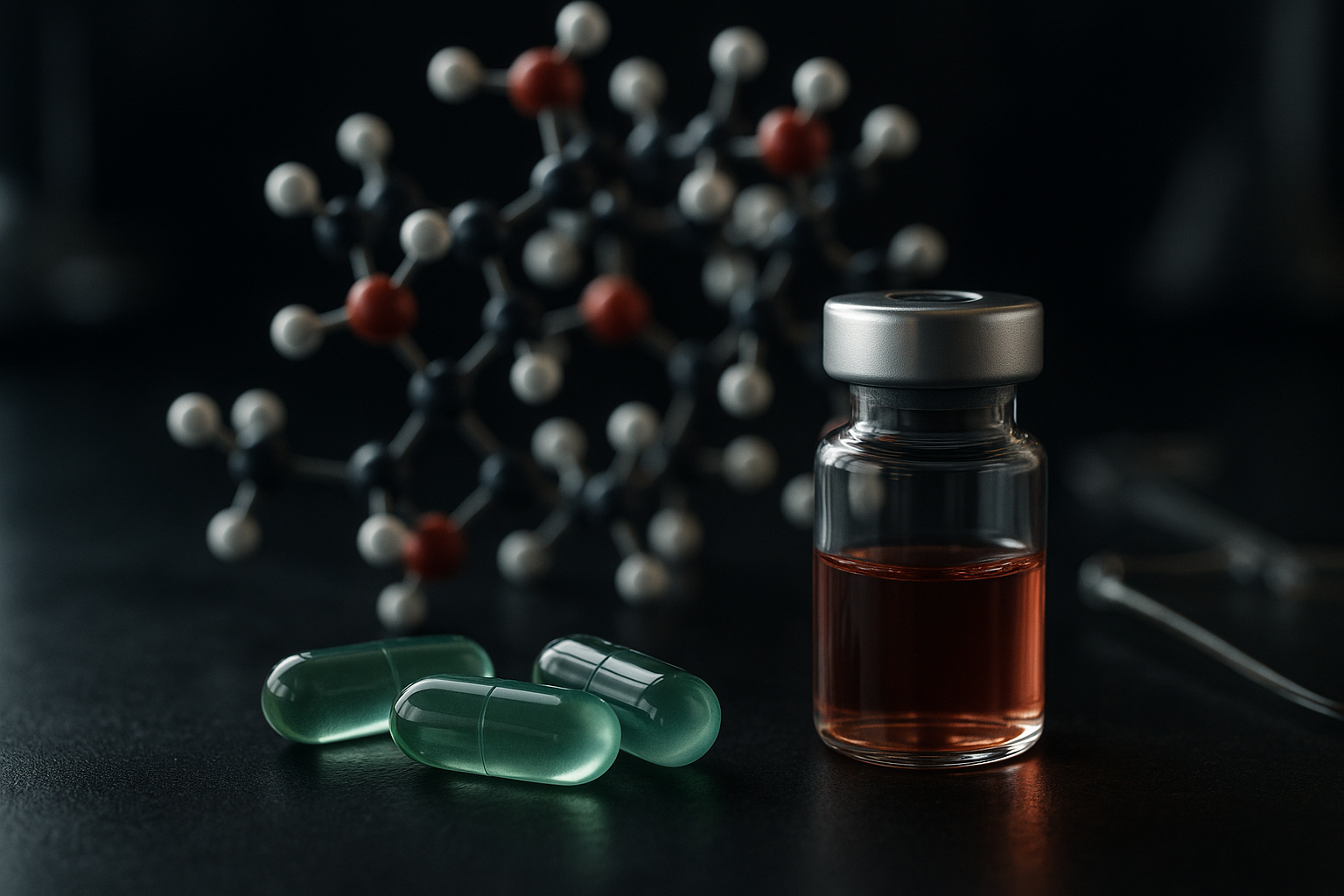
Vitamin B12
Vitamin B12 is a water-soluble vitamin essential for DNA synthesis, red blood cell maturation, and maintenance of myelin. In sports, interest in it is mainly linked to the prevention/correction of deficiencies (more common in vegan/vegetarian diets, malabsorption, or use of certain drugs), which can impair energy, training capacity, and recovery. In subjects with adequate levels, supplementation generally does not show additional performance benefits.
An essential micronutrient for erythropoiesis, the nervous system, and energy metabolism: relevant to recovery especially in cases of deficiency
Vitamin B12 is a water-soluble vitamin essential for DNA synthesis, red blood cell maturation, and the maintenance of myelin. In the sports context, interest in it is linked primarily to the prevention/correction of deficiencies (more common in vegan/vegetarian diets, malabsorption, or the use of certain medications), which can impair energy, training capacity, and recovery. In subjects with adequate levels, supplementation generally does not show additional performance benefits.
Mechanism of action
After ingestion, B12 is released from food proteins in the stomach, binds to haptocorrin, then in the duodenum binds to intrinsic factor (IF) and is absorbed in the ileum via receptors (cubilin). In the blood it is transported by transcobalamin (holo-TC, the biologically active fraction) and stored mainly in the liver. At the cellular level, B12 acts as a cofactor: (a) in methionine synthase it supports the regeneration of tetrahydrofolate and the synthesis of nucleotides (DNA) and methylation; (b) in methylmalonyl-CoA mutase it supports the production of succinyl-CoA (Krebs cycle) and the metabolism of lipids/amino acids. Recovery can be influenced indirectly through normalization of erythropoiesis, neurological function, and protein synthesis/cellular turnover when a deficiency exists.
Supported benefits
- Correction of vitamin B12 deficiency with normalization of biochemical markers (B12, holo-transcobalamin, MMA) and improvement of megaloblastic anemia (strong)
- Reduction of homocysteine when combined with folate (and sometimes B6), especially in subjects with suboptimal levels (strong)
- Improvement of neurological symptoms related to deficiency (paresthesia, neuropathy) if treated early (strong)
- Improvement in perceived energy/fatigue in the presence of deficiency (indirect effect through correction of anemia and neurological dysfunction) (moderate)
- Benefits for performance or recovery in subjects with adequate B12 status (limited)
Safety & side effects
- Generally well tolerated at commonly studied doses; possible gastrointestinal disturbances (nausea, diarrhea) in some subjects
- Headache or a feeling of restlessness rarely reported
- Skin reactions (rash, itching) are rare; severe allergic reactions are very rare
- In subjects with severe anemia undergoing rapid correction: possible hypokalemia during intense erythropoiesis (a clinical event to be monitored in healthcare settings)
FAQ
Does vitamin B12 improve performance if I am not deficient?
Evidence indicates that, with adequate B12 status, supplementation generally does not produce measurable improvements in strength, VO2max, or recovery. The benefits are mainly linked to correcting a deficiency or insufficiency.
Which athletes are at greater risk of deficiency?
Those following a vegan/vegetarian diet without fortified foods or supplementation, those with malabsorption (atrophic gastritis, celiac disease/IBD, ileal resections), those who have undergone bariatric surgery, and those who use metformin or acid-reducing drugs (PPIs/H2 blockers) long term.
Which tests are most useful for evaluating B12?
Serum B12 is a first step but may be insufficiently sensitive in some cases. More functional markers include methylmalonic acid (MMA), homocysteine, and holo-transcobalamin (active B12), interpreted in the clinical context.
Is methylcobalamin or cyanocobalamin better?
Cyanocobalamin is very stable and widely studied; methylcobalamin and hydroxocobalamin are common alternatives. In many situations, the practical difference depends more on dose, adherence, and the cause of the deficiency than on the form.
Is B12 present in non-fortified plant foods (e.g., spirulina)?
Some plant sources may contain inactive analogues (pseudo-B12) that do not reliably meet human requirements. For those who do not consume animal foods, the most reliable sources are fortified foods and/or supplementation.
How long does it take to “feel” effects on recovery?
If a deficiency with anemia exists, hematological parameters may improve within weeks; the perception of energy may improve progressively. Neurological symptoms may require more time and, if the deficiency has been prolonged, are not always completely reversible.
The information provided is for informational and educational purposes only. It does not constitute medical advice. Use must be evaluated and authorized by a qualified healthcare professional.
Mechanism of action
After ingestion, B12 is released from food proteins in the stomach, binds to haptocorrin, then in the duodenum binds to intrinsic factor (IF) and is absorbed in the ileum via receptors (cubilin). In the blood it is transported by transcobalamin (holo-TC, the biologically active fraction) and stored mainly in the liver. At the cellular level, B12 acts as a cofactor: (a) in methionine synthase it supports the regeneration of tetrahydrofolate and the synthesis of nucleotides (DNA) and methylation; (b) in methylmalonyl-CoA mutase it supports the production of succinyl-CoA (Krebs cycle) and the metabolism of lipids/amino acids. Recovery may be indirectly influenced through normalization of erythropoiesis, neurological function, and protein synthesis/cellular turnover when a deficiency exists.
Scientific benefits
Contraindications
- Known hypersensitivity to cobalamins or formulation excipients
- Leber's disease (hereditary optic neuropathy): risk of worsening has been reported with some forms (particularly cyanocobalamin) in clinical settings
- Suspected unexplained deficiency with significant neurological symptoms: requires professional evaluation to avoid diagnostic delays and to choose the appropriate route/dose
Side effects
- Generally well tolerated at commonly studied doses; possible gastrointestinal disturbances (nausea, diarrhea) in some subjects
- Headache or a feeling of restlessness rarely reported
- Skin reactions (rash, itching) are rare; severe allergic reactions are very rare
- In subjects with severe anemia undergoing rapid correction: possible hypokalemia during intense erythropoiesis (a clinical event to be monitored in healthcare settings)
Interactions
- Metformin: associated with reduced B12 levels over the long term (increased risk of deficiency)
- Proton pump inhibitors (PPIs) and H2 antagonists: may reduce absorption of dietary B12 over time (hypochlorhydria)
- Nitrous oxide (N2O): inactivates B12 and may precipitate neuropathy in predisposed subjects or those with low stores
- Chloramphenicol: may interfere with the hematological response to therapy in specific cases
- High doses of folate: may correct anemia while masking a B12 deficiency, with risk of neurological progression if B12 remains low
Regulatory status
Permitted as a dietary supplement in many jurisdictions; it is not a doping substance. Injectable formulations may be classified as drugs and require a prescription/medical use. Quality may vary between products: manufacturers with purity and compliance controls (GMP/third parties) are preferable.
Supplements and peptides
 Recovery
Bcaa
BCAAs (branched-chain amino acids) are three essential amino acids—leucine, isoleucine, and valine—particularly…
 Recovery
Complete electrolytes
“Complete electrolytes” refers to formulations that mainly combine sodium (Na+), potassium (K+), chloride (Cl−),…
 Recovery
EAA (essential amino acids)
EAAs (Essential Amino Acids) are the 9 amino acids that the human body cannot synthesize in sufficient quantities and…