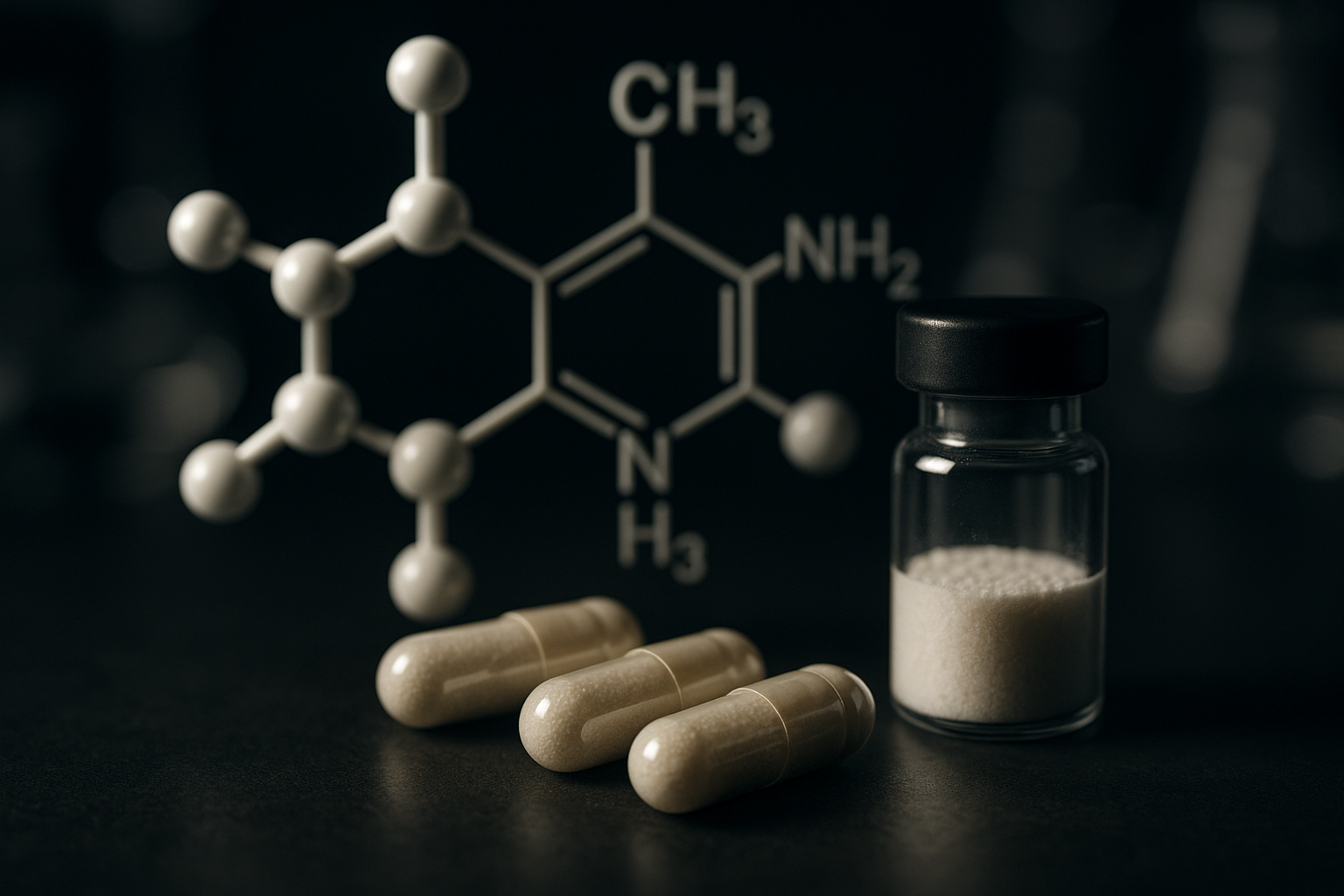
Vitamin B6
Vitamin B6 is a group of vitamers (pyridoxine, pyridoxal, pyridoxamine) converted into the active form pyridoxal-5’-phosphate (PLP). PLP is a cofactor for numerous enzymes involved in amino acid metabolism, glycogenolysis, and the synthesis of neuroactive molecules. In sports, interest is mainly linked to supporting protein and glycogen metabolism and managing deficiency states, rather than to a direct ergogenic effect in subjects who are already adequately nourished.
A key cofactor for energy metabolism, neurotransmitter synthesis, and protein turnover: relevant when training increases micronutrient requirements.
Vitamin B6 is a group of vitamers (pyridoxine, pyridoxal, pyridoxamine) converted into the active form pyridoxal-5’-phosphate (PLP). PLP is a cofactor for numerous enzymes involved in amino acid metabolism, glycogenolysis, and the synthesis of neuroactive molecules. In sports, interest is mainly linked to supporting protein and glycogen metabolism and managing deficiency states, rather than to a direct ergogenic effect in individuals who are already adequately nourished.
Mechanism of action
PLP acts as a coenzyme by binding to PLP-dependent enzymes and stabilizing reactive intermediates in amino acid transformations. The main mechanisms relevant to recovery and sport are: (1) amino acid metabolism and protein turnover (transaminases, decarboxylases), with an impact on the availability of precursors for protein synthesis and tissue repair; (2) support for glycogenolysis through a structural/functional role in glycogen phosphorylase, influencing the availability of glucose-1-phosphate during exercise and restoration; (3) neurotransmitter synthesis and neuroendocrine modulation, potentially relevant to fatigue perception, sleep quality, and stress; (4) homocysteine metabolism (transsulfuration pathway with cystathionine β-synthase and cystathionine γ-lyase), in synergy with folate and B12, with cardiovascular and general health implications.
Supported benefits
- Correction/prevention of vitamin B6 deficiency with improvement in functional markers (PLP) and related symptoms (e.g. deficiency neuropathy, skin changes, sideroblastic anemia in specific cases) (strong)
- Support for homocysteine metabolism (reduction/modulation in individuals with suboptimal status, often in combination with folate and B12) (moderate)
- Support for protein and amino acid metabolism in conditions of increased demand (intense training, high protein intake, energy restriction), primarily as prevention of insufficiency rather than enhancement beyond adequacy (moderate)
- Possible contribution to sleep quality/mood through neurotransmitter synthesis (heterogeneous evidence; effect more plausible in cases of insufficiency) (limited)
- Reduction of nausea in specific contexts (e.g. pregnancy) not directly related to sports performance (strong)
Safety & side effects
- Sensory peripheral neuropathy (paresthesia, numbness, altered sensation): risk associated with high doses and prolonged use.
- Photosensitivity and skin reactions (rare).
- Gastrointestinal disturbances (nausea) in some individuals.
- Headache or drowsiness (uncommon).
FAQ
Does vitamin B6 directly improve performance?
In individuals with adequate intake, there is no solid evidence of a direct increase in performance. The most plausible benefit is preventing declines in metabolic efficiency and well-being related to insufficiency/deficiency, which may be reflected in recovery and training quality.
Why is it associated with “recovery”?
Because PLP is central to amino acid metabolism and glycogen mobilization, processes involved in energy restoration and post-workout protein turnover. The impact is greater when baseline status is suboptimal.
What signs may suggest excess from supplementation?
Paresthesia, numbness, reduced sensitivity, difficulty with fine coordination. These signs require attention because they may indicate neuropathy from excess, especially with high doses and prolonged use.
What is the “best” form (pyridoxine vs P-5-P)?
Both can increase B6 status; pyridoxine is the most common form in supplements. The active form P-5-P is already phosphorylated, but practical effectiveness depends on absorption, transport, and individual metabolism. There is no consensus that one form is universally superior for healthy athletes.
Does it make sense to take it together with other B vitamins?
It may make sense when the diet is restrictive or monotonous, because many metabolic pathways are interconnected (e.g. B2 for B6 metabolism; folate and B12 for homocysteine). This does not imply that a “B-complex” automatically improves performance.
The information provided is for purely informational and educational purposes. It does not constitute medical advice. Use should be evaluated and authorized by a qualified healthcare professional.
Mechanism of action
PLP acts as a coenzyme by binding to PLP-dependent enzymes and stabilizing reactive intermediates in amino acid transformations. Main mechanisms relevant to recovery and sport: (1) amino acid metabolism and protein turnover (transaminases, decarboxylases), with an impact on the availability of precursors for protein synthesis and tissue repair; (2) support for glycogenolysis through a structural/functional role in glycogen phosphorylase, influencing the availability of glucose-1-phosphate during exercise and recovery; (3) neurotransmitter synthesis and neuroendocrine modulation, potentially relevant for the perception of fatigue, sleep quality, and stress; (4) homocysteine metabolism (transsulfuration pathway with cystathionine β-synthase and cystathionine γ-lyase), in synergy with folates and B12, with cardiovascular and general health implications.
Scientific benefits
Contraindications
- Known hypersensitivity to vitamin B6 or product excipients.
- History of peripheral neuropathy: requires particular caution and professional supervision if use is being considered.
- Complex clinical conditions (e.g. significant renal/hepatic insufficiency): micronutrient management should be personalized by a healthcare professional.
Side effects
- Sensory peripheral neuropathy (paresthesia, numbness, altered sensation): risk associated with high doses and prolonged use.
- Photosensitivity and skin reactions (rare).
- Gastrointestinal disturbances (nausea) in some subjects.
- Headache or drowsiness (uncommon).
Interactions
- Levodopa without a decarboxylase inhibitor (carbidopa/benserazide): B6 may reduce efficacy by increasing peripheral conversion; clinically relevant interaction.
- Isoniazid, cycloserine, hydralazine: may induce functional B6 deficiency; management should be clinically evaluated.
- Some antiepileptics (e.g. phenytoin, phenobarbital): possible bidirectional interactions on levels and seizure control; requires medical supervision.
- Oral contraceptives: associated in some cases with reduced B6 markers; clinical significance varies.
- Chronic alcohol use: may reduce B6 status and increase the risk of deficiency.
Regulatory status
Permitted dietary supplement; it is not on the WADA list of prohibited substances. Maximum daily limits and label warnings vary by country/regulatory body (e.g. definition of UL and safety levels).
Supplements and peptides
 Recovery
Bcaa
BCAAs (branched-chain amino acids) are three essential amino acids—leucine, isoleucine, and valine—particularly…
 Recovery
Complete electrolytes
“Complete electrolytes” refers to formulations that mainly combine sodium (Na+), potassium (K+), chloride (Cl−),…
 Recovery
EAA (essential amino acids)
EAAs (Essential Amino Acids) are the 9 amino acids that the human body cannot synthesize in sufficient quantities and…