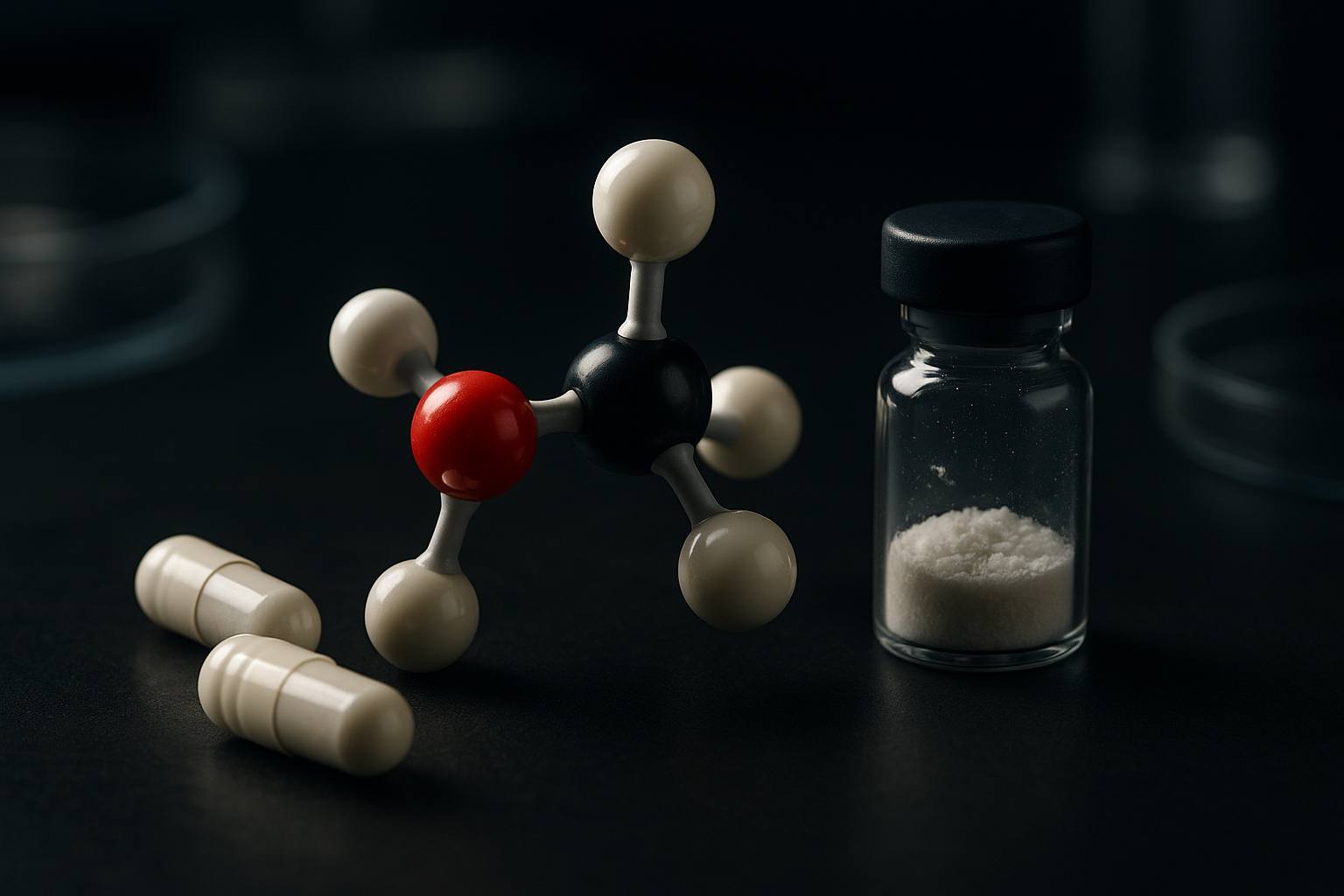
Glycine
Glycine is the simplest amino acid and participates in numerous biological processes: collagen synthesis, glutathione production (an endogenous antioxidant), bile acid conjugation, and modulation of the central nervous system as an inhibitory neurotransmitter. In the “recovery” context, it has been studied mainly for sleep quality, fatigue perception, and some markers of oxidative/inflammatory stress, with a generally good tolerability profile at the doses investigated.
Non-essential amino acid with key roles in collagen, glutathione, and neurotransmission; studied primarily for sleep and recovery
Glycine is the simplest amino acid and is involved in numerous biological processes: collagen synthesis, glutathione production (an endogenous antioxidant), bile acid conjugation, and modulation of the central nervous system as an inhibitory neurotransmitter. In the “recovery” context, it has been studied mainly for sleep quality, perceived fatigue, and certain markers of oxidative/inflammatory stress, with a generally good tolerability profile at the doses investigated.
Mechanism of action
1) Nervous system and sleep: glycine acts as an inhibitory neurotransmitter (glycinergic receptors) and as a co-agonist of the NMDA receptor; in sleep studies, it has been associated with subjective improvement in sleep quality and changes in thermoregulation (facilitation of peripheral heat dissipation), a mechanism compatible with falling asleep. 2) Endogenous antioxidants: it is a precursor of glutathione (GSH; together with cysteine and glutamate). Under conditions of oxidative stress or aging, glycine availability may help support GSH synthesis, especially when combined with other limiting precursors. 3) Connective tissue: being essential for collagen structure, it may support substrate availability for collagen synthesis when dietary intake is low. 4) Metabolism and inflammation: glycine may modulate inflammatory and metabolic signals (e.g. via glycinergic receptors on immune cells in some models), with human evidence still heterogeneous and dependent on the clinical context.
Supported benefits
- Subjective improvement in sleep quality and daytime sleepiness in people with insufficient sleep or sleep perceived as non-restorative (in some studies with evening intake) (moderate)
- Support for glutathione synthesis and potential improvement in markers of oxidative stress when glycine is a limiting factor (often assessed in combination with other precursors) (emerging)
- Theoretical/biological support for collagen synthesis (a glycine-rich substrate), with variable clinical transferability depending on diet and goal (limited)
- Possible reduction in perceived fatigue and improvement in subjective recovery in some contexts, with inconsistent results (limited)
Safety & side effects
- Gastrointestinal disturbances (nausea, cramps, loose stools), more likely at higher doses or with a single intake
- Drowsiness or subjective sedation in some people (especially if taken in the evening)
- Headache or non-specific sensations (reported occasionally)
FAQ
Is glycine “essential”?
It is classified as a non-essential amino acid because the body can synthesize it. However, in some conditions (high collagen turnover, oxidative stress, aging, diets low in glycine-rich sources) it may become relatively limiting for specific functions.
Why is it associated with sleep?
Glycine participates in inhibitory neurotransmission and may influence nighttime thermoregulation; in some studies, evening intake has been associated with subjective improvements in sleep quality and daytime alertness, without this implying universal effectiveness.
Is it useful for tendons and joints?
Biologically, it is a key component of collagen, so it contributes to the “building blocks” of connective tissue. However, the clinical benefit depends on the context (total protein intake, mechanical loading/rehabilitation, other nutrients), and the direct evidence for glycine alone on joint outcomes is limited.
Does glycine directly increase athletic performance?
There is no solid evidence of a direct ergogenic effect on strength or power. Any potential advantage is more plausibly indirect, mediated by sleep/recovery or by redox aspects in specific contexts.
Are there risks of taking too much glycine?
At the studied doses, the most common side effects are gastrointestinal issues and drowsiness. The safety of very high doses or prolonged use is not defined for all populations; in the presence of medical conditions or therapies, professional advice is appropriate.
The information provided is for informational and educational purposes only. It does not constitute medical advice. Use must be evaluated and authorized by a qualified healthcare professional.
Mechanism of action
1) Nervous system and sleep: glycine acts as an inhibitory neurotransmitter (glycinergic receptors) and as a co-agonist of the NMDA receptor; in sleep studies it is associated with subjective improvement in sleep quality and changes in thermoregulation (facilitation of peripheral heat dissipation), a mechanism compatible with falling asleep. 2) Endogenous antioxidants: it is a precursor of glutathione (GSH; together with cysteine and glutamate). In conditions of oxidative stress or aging, glycine availability may help support GSH synthesis, especially when combined with other limiting precursors. 3) Connective tissue: being essential for collagen structure, it may support substrate availability for collagen synthesis when dietary intake is low. 4) Metabolism and inflammation: glycine may modulate inflammatory and metabolic signals (e.g. via glycinergic receptors on immune cells in some models), with evidence in humans still heterogeneous and dependent on the clinical context.
Scientific benefits
Contraindications
- Pregnancy and breastfeeding: insufficient data for targeted supplemental use; professional evaluation required
- Significant kidney or liver disease: caution due to alterations in amino acid metabolism/clearance and overall nitrogen balance
- History of specific neurological disorders or use of drugs acting on the CNS: caution due to possible effects on alertness/sleep
- Diets or conditions requiring control of protein/nitrogen intake: amino acid supplementation should be evaluated case by case
Side effects
- Gastrointestinal disturbances (nausea, cramps, loose stools), more likely at higher doses or with single-dose intake
- Drowsiness or subjective sedation in some people (especially if taken in the evening)
- Headache or nonspecific sensations (occasionally reported)
Interactions
- Sedatives/hypnotics and alcohol: possible additive effects on drowsiness and alertness
- Drugs that modulate glutamatergic/NMDA neurotransmission: theoretical interaction (glycine co-agonism at the NMDA receptor), clinical relevance not well defined
- Clozapine: in clinical settings glycine has been studied as an NMDA receptor modulator in psychiatry; this suggests potential pharmacodynamic interactions with psychiatric therapies (medical supervision required)
- Antidiabetic drugs: some studies suggest associations between glycine and glucose metabolism, but the clinical interaction with glucose-lowering drugs is not clarified; caution and professional monitoring if therapy is present
Regulatory status
An amino acid present in foods and commonly marketed as a supplement. Generally not subject to prescription; permitted health claims and usage limits depend on local regulations (e.g. EU/Italy vs USA). It is not typically listed on the WADA list of prohibited substances, but supplement contamination remains a general risk.
Supplements and peptides
 Recovery
Bcaa
BCAAs (branched-chain amino acids) are three essential amino acids—leucine, isoleucine, and valine—particularly…
 Recovery
Complete electrolytes
“Complete electrolytes” refers to formulations that mainly combine sodium (Na+), potassium (K+), chloride (Cl−),…
 Recovery
EAA (essential amino acids)
EAAs (Essential Amino Acids) are the 9 amino acids that the human body cannot synthesize in sufficient quantities and…