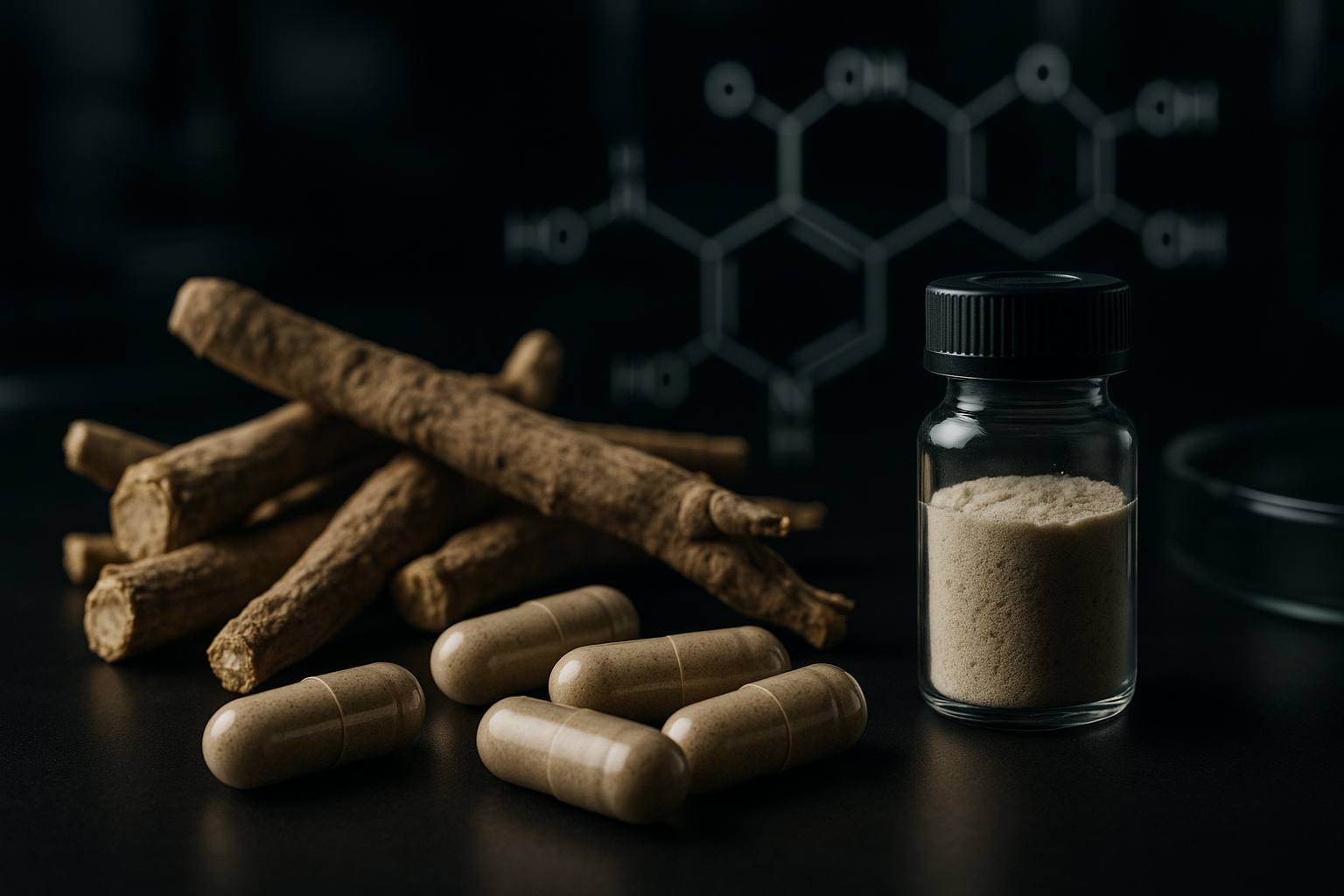
Ashwagandha ksm-66
KSM-66 is a Withania somnifera root extract standardized in withanolides, studied primarily for modulation of the stress response (HPA axis), reduction of cortisol, and possible effects on sleep quality, perceived anxiety, and recovery. The evidence is stronger for stress/anxiety and cortisol, whereas for sleep it is generally moderate and depends on population, dose, and duration.
Standardized root extract: support for stress, sleep, and recovery (Sleep & Recovery)
KSM-66 is a Withania somnifera root extract standardized for withanolides, studied primarily for modulation of the stress response (HPA axis), reduction of cortisol, and possible effects on sleep quality, perceived anxiety, and recovery. The evidence is stronger for stress/anxiety and cortisol, while for sleep it is generally moderate and depends on the population, dose, and duration.
Mechanism of action
Proposed mechanisms (not all definitively confirmed in humans): modulation of the hypothalamic-pituitary-adrenal (HPA) axis with a possible reduction in cortisol in stressed individuals; indirect GABAergic activity and modulation of neurotransmission in preclinical models; anti-inflammatory and antioxidant effects (reduction of pro-inflammatory markers in some contexts); possible influence on thyroid and sex hormones in subgroups; improved stress resilience with a secondary impact on sleep latency, awakenings, and perceived recovery.
Supported benefits
- Reduction in perceived stress and/or anxiety in adults under stress (measures such as PSS, DASS, HAM-A in various studies) (moderate)
- Reduction in cortisol (especially in stressed individuals) and improvement in some stress-related markers (moderate)
- Improvement in sleep quality (e.g., PSQI scores) and/or subjective rest parameters; in some studies also objective measures (actigraphy) with small-to-moderate effects (moderate)
- Improvement in strength/power and body composition in training protocols (not a sleep-specific effect but relevant for recovery) (limited)
- Possible improvement in some aspects of sexual function/male fertility in selected populations (limited)
Safety & side effects
- Gastrointestinal disturbances (nausea, diarrhea, cramps), especially at higher doses or on an empty stomach
- Drowsiness or sedation in sensitive individuals
- Headache or dizziness (less common)
- Allergic reactions (rare)
- Increases in thyroid hormones in some cases (reports and small studies suggest a possible thyroid effect in predisposed individuals)
- Rare cases reported in the literature of hepatotoxicity associated with ashwagandha-based products (causality not always certain; possible role of adulteration/contaminants or individual susceptibility)
FAQ
Is KSM-66 different from other ashwagandha extracts?
Yes: KSM-66 is a root-only extract standardized for withanolides and supported by a specific clinical study profile. Other extracts may include leaves, have different standardizations, or contain different markers, making the results less directly comparable.
Is it a sedative like melatonin or sleep medications?
It is not considered a direct hypnotic. Its effect on sleep is often mediated by stress reduction and improved perceived rest quality; the intensity is generally milder than sedative-hypnotic drugs.
How long does it take to notice effects on stress or sleep?
In studies, effects are typically evaluated after several weeks (often 6–12). Response is individual and depends on baseline stress, sleep hygiene, dose, and product quality.
Can it affect the thyroid?
There are data and reports suggesting possible increases in thyroid hormones in some individuals. Those with thyroid disorders or taking thyroid medication should discuss it with a healthcare professional.
Are there any risks to the liver?
Rare cases of liver injury associated with ashwagandha-based products have been reported. Causality is not always certain, and contaminants/adulteration or individual susceptibility may contribute. Greater caution is warranted in those with a history of liver disease.
The information provided is for informational and educational purposes only. It does not constitute medical advice. Use should be evaluated and authorized by a qualified healthcare professional.
Mechanism of action
Proposed mechanisms (not all definitively confirmed in humans): modulation of the hypothalamic-pituitary-adrenal (HPA) axis with possible reduction of cortisol in stressed subjects; indirect GABAergic activity and modulation of neurotransmission in preclinical models; anti-inflammatory and antioxidant effects (reduction of pro-inflammatory markers in some contexts); possible influence on thyroid and sex hormones in subgroups; improved stress resilience with secondary impact on sleep latency, awakenings, and perceived recovery.
Scientific benefits
Contraindications
- Pregnancy (traditionally discouraged; insufficient safety data)
- Breastfeeding (insufficient data)
- Thyroid disorders (hyperthyroidism or thyroid therapy): possible interference with hormone levels
- Autoimmune diseases or immunosuppressive therapy: possible immune modulation (direction and clinical relevance not always predictable)
- History of liver disease or unexplained elevation of transaminases: caution due to the rare reported cases of liver injury
- Peptic ulcer or marked gastrointestinal sensitivity: possible worsening of symptoms in some subjects
Side effects
- Gastrointestinal disorders (nausea, diarrhea, cramps) especially at higher doses or on an empty stomach
- Drowsiness or sedation in sensitive subjects
- Headache or dizziness (less common)
- Allergic reactions (rare)
- Increases in thyroid hormones in some cases (reports and small studies suggest a possible thyroid effect in predisposed subjects)
- Rare cases reported in the literature of hepatotoxicity associated with ashwagandha-based products (causality not always certain; possible role of adulteration/contaminants or individual susceptibility)
Interactions
- Sedatives/hypnotics and alcohol: possible increase in drowsiness and reduction in alertness
- Thyroid medications (levothyroxine) or antithyroid drugs: potential interference with thyroid levels
- Antidiabetics: possible additive effect on blood glucose in some subjects (clinical monitoring if under treatment)
- Antihypertensives: possible additive effect on blood pressure in sensitive subjects
- Immunosuppressants: possible theoretical interference due to immune modulation
- Hepatotoxic agents (e.g. some antifungals, high-dose paracetamol, etc.): caution due to potential liver overload, especially in the presence of symptoms or abnormal test results
Regulatory status
In the EU and in many countries it is sold as a food supplement; health claims are subject to local regulations and often do not authorize therapeutic claims. In sports, ashwagandha is not generally listed as a prohibited substance by WADA, but it remains important to verify the risk of contamination and choose products tested by third parties.
Supplements and peptides
 Sleep & Recovery
5-HTP (5-hydroxytryptophan)
5-HTP is a metabolic intermediate between L-tryptophan and serotonin (5-HT). Because it crosses the blood-brain barrier…
 Sleep & Recovery
Ashwagandha sensoril
Sensoril® is a patented extract of Withania somnifera (ashwagandha), typically standardized to withanolides and…
 Sleep & Recovery
Melatonin
Melatonin (N-acetyl-5-methoxytryptamine) is a hormone produced mainly by the pineal gland, with nighttime secretion…