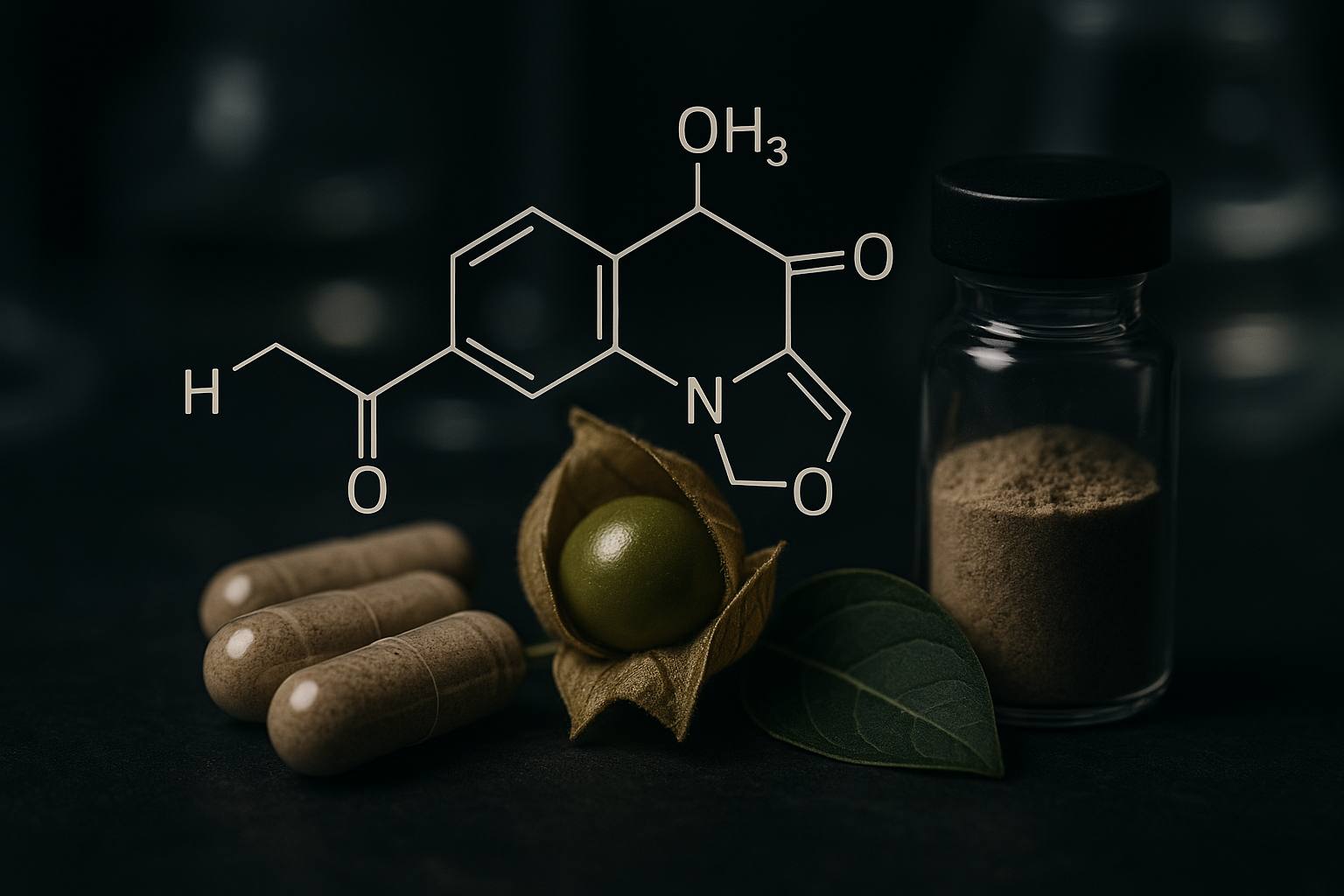
Ashwagandha sensoril
Sensoril® is a patented extract of Withania somnifera (ashwagandha), typically standardized to withanolides and glycowithanolides, often obtained from leaves and roots. It is studied mainly as an adaptogen: it may modulate the stress response (HPA axis), with possible effects on sleep quality, perception of anxiety/stress, and recovery. The evidence is stronger for stress/anxiety and some sleep parameters, while for performance and body composition the results are more variable and depend on population, dose, and duration.
Standardized extract of Withania somnifera for stress, sleep, and recovery (Sleep & Recovery)
Sensoril® is a patented extract of Withania somnifera (ashwagandha), typically standardized for withanolides and glycowithanolides, often derived from leaves and roots. It is studied primarily as an adaptogen: it may modulate the stress response (HPA axis), with possible effects on sleep quality, perceived anxiety/stress, and recovery. The evidence is strongest for stress/anxiety and some sleep parameters, while results for performance and body composition are more variable and depend on the population, dose, and duration.
Mechanism of action
Proposed mechanisms (not all definitively confirmed in humans): modulation of the hypothalamic-pituitary-adrenal (HPA) axis with a possible reduction in cortisol under stress conditions; GABAergic activity and/or modulation of neurotransmission in circuits linked to anxiety and sleep; anti-inflammatory and antioxidant effects (reduction of pro-inflammatory mediators and oxidative stress in preclinical models); possible influence on the thyroid in some individuals (reports of increased thyroid hormones in selected cases); potential improvement in stress resilience and recovery quality through reduction of hyperarousal.
Supported benefits
- Reduction in perceived stress and/or anxiety scores in stressed adults (moderate)
- Reduction in cortisol (especially in stressed individuals) and improvement in some stress-related markers (moderate)
- Improvement in sleep quality (e.g. subjective scores) and/or reduction in sleep onset latency in some studies (moderate)
- Improvements in performance/strength and body composition in some contexts (more evidence for specific root extracts; transferability to Sensoril® is not always direct) (limited)
Safety & side effects
- Gastrointestinal disturbances (nausea, diarrhea, abdominal pain), especially at higher doses or on an empty stomach
- Drowsiness or sedation in some individuals
- Headache or dizziness (occasional reports)
- Allergic reactions (rare) to botanical components
- Rare but relevant reports of hepatotoxicity associated with ashwagandha-based products (causality not always certain; possible role of adulteration/contaminants or individual susceptibility)
FAQ
Is Sensoril® different from other ashwagandha extracts?
Yes: it differs in the plant part used (often leaves + roots), extraction process, and standardization profile. This can influence effects, tolerability, and comparability with studies conducted on root-only extracts.
How strong is the evidence for sleep?
The evidence is overall moderate: several studies report subjective improvements in sleep quality and sometimes in parameters such as latency or efficiency, especially in stressed people or those with suboptimal sleep. Results are not uniform and depend on the extract, dose, and duration.
Does it act like a sedative?
It is not a classic hypnotic. It may reduce stress-related hyperactivation and promote relaxation; in some individuals it may cause drowsiness. The effect is generally more “adaptogenic” than sedative, but individual response varies.
Can it affect the thyroid?
Cases have been reported and some data suggest possible increases in thyroid hormones under specific conditions. Anyone with thyroid disorders or taking therapy should exercise particular caution and consult a healthcare professional.
Is it safe for long-term use?
Many studies last 6–12 weeks; beyond these periods the data are less robust. Long-term safety has not been conclusively defined and should be considered together with individual factors and product quality.
The information provided is for informational and educational purposes only. It does not constitute medical advice. Use should be evaluated and authorized by a qualified healthcare professional.
Mechanism of action
Proposed mechanisms (not all definitively confirmed in humans): modulation of the hypothalamic-pituitary-adrenal (HPA) axis with possible reduction of cortisol under stress conditions; GABAergic activity and/or modulation of neurotransmission in circuits linked to anxiety and sleep; anti-inflammatory and antioxidant effects (reduction of pro-inflammatory mediators and oxidative stress in preclinical models); possible influence on the thyroid in some individuals (reports of increased thyroid hormones in selected cases); potential improvement in stress resilience and recovery quality through reduction of hyperarousal.
Scientific benefits
Contraindications
- Pregnancy (avoid as a precaution: insufficient safety data and possible uterotonic effects reported in traditional sources)
- Breastfeeding (insufficient data)
- Thyroid disorders or thyroid therapy: possible alteration of hormone levels in some individuals
- Autoimmune diseases or immunosuppressive therapy: potential immune modulation (clinical uncertainty, caution advised)
- Pre-existing liver disease or elevated liver enzymes: caution due to reports of liver injury
- Planned surgical procedures: caution due to possible sedative effects and interactions with anesthetics/sedatives
Side effects
- Gastrointestinal disturbances (nausea, diarrhea, abdominal pain), especially at higher doses or on an empty stomach
- Drowsiness or sedation in some individuals
- Headache or dizziness (occasional reports)
- Allergic reactions (rare) to botanical components
- Rare but relevant reports of hepatotoxicity associated with ashwagandha-based products (causality not always certain; possible role of adulteration/contaminants or individual susceptibility)
Interactions
- Sedatives/hypnotics (e.g. benzodiazepines, Z-drugs) and alcohol: possible increased sedation
- Thyroid medications (levothyroxine) or antithyroid drugs: possible interference with thyroid control
- Antidiabetic drugs: possible reduction in blood glucose in some individuals (clinical monitoring if on therapy)
- Antihypertensives: possible blood pressure reduction in some individuals (clinical monitoring if on therapy)
- Immunosuppressants: potential theoretical antagonism if the extract increases some aspects of the immune response (limited clinical evidence)
- Hepatotoxic agents (drugs or supplements with hepatotoxic potential): caution due to cumulative risk
Regulatory status
In the EU and in many countries it is sold as a dietary supplement; health claims on the label are subject to local regulations. Sensoril® is a patented ingredient/trademark; regulation concerns the finished product and the claims, not the trademark itself.
Supplements and peptides
 Sleep & Recovery
5-HTP (5-hydroxytryptophan)
5-HTP is a metabolic intermediate between L-tryptophan and serotonin (5-HT). Because it crosses the blood-brain barrier…
 Sleep & Recovery
Ashwagandha ksm-66
KSM-66 is a Withania somnifera root extract standardized in withanolides, studied primarily for modulation of the…
 Sleep & Recovery
Melatonin
Melatonin (N-acetyl-5-methoxytryptamine) is a hormone produced mainly by the pineal gland, with nighttime secretion…