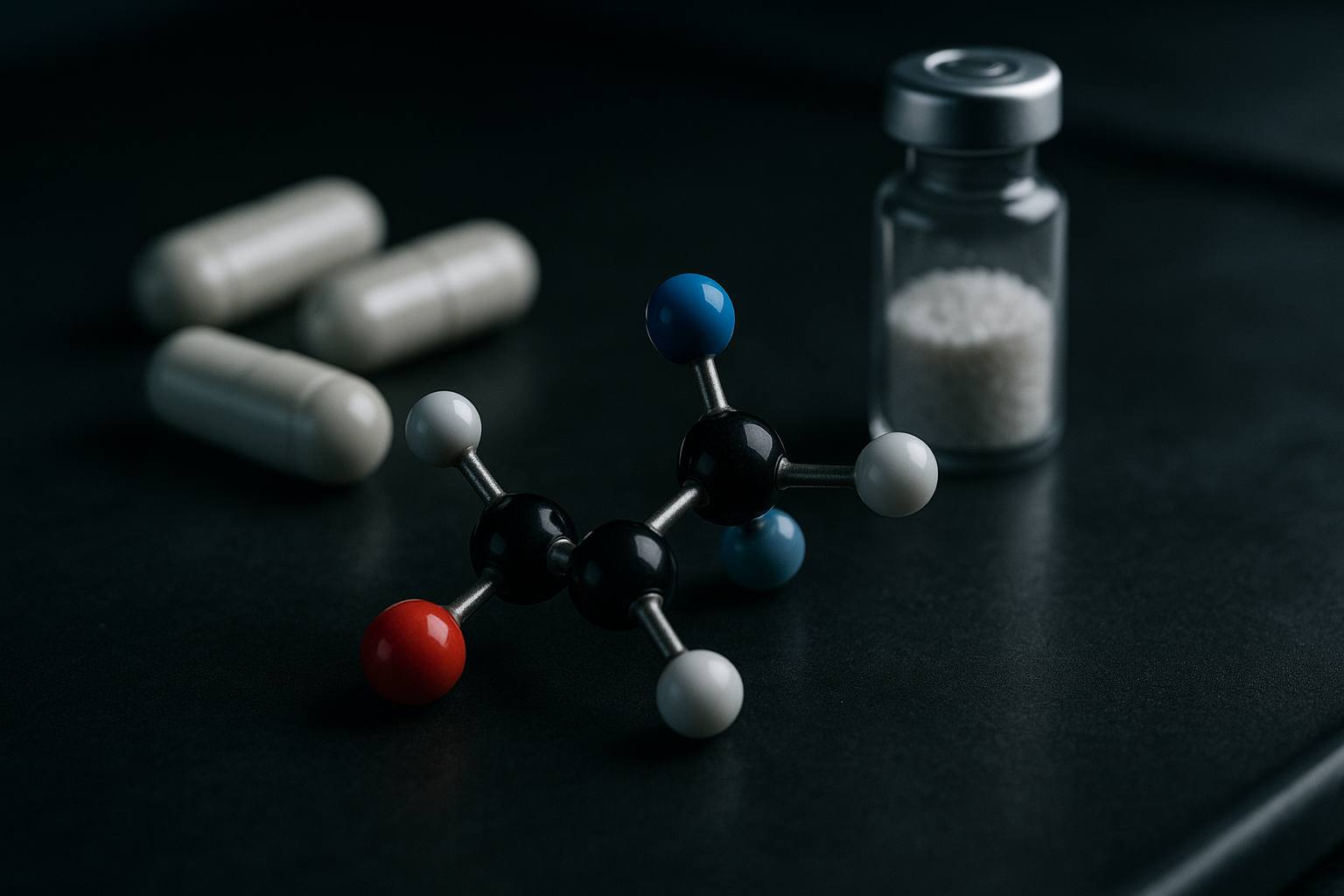
Beta-alanine
Beta-alanine is a non-protein amino acid that, once absorbed, contributes to carnosine synthesis in skeletal muscle. Increased carnosine may improve tolerance to high-intensity exercise by reducing the accumulation of hydrogen ions (H+) associated with fatigue. The effects are typically linked to continuous use over weeks, rather than acute intake.
Non-essential amino acid used in performance settings to increase muscle carnosine and buffering capacity
Beta-alanine is a non-proteinogenic amino acid that, once absorbed, contributes to the synthesis of carnosine in skeletal muscle. Increased carnosine may improve tolerance to high-intensity exercise by reducing the accumulation of hydrogen ions (H+) associated with fatigue. The effects are typically linked to consistent use over weeks, rather than acute intake.
Mechanism of action
1) Increased intramuscular carnosine: beta-alanine is often the limiting factor in carnosine synthesis; increasing its availability raises carnosine levels in muscle. 2) H+ buffering: carnosine helps buffer the acidity (H+) generated by anaerobic glycolysis, delaying the reduction in contractile function associated with lower pH. 3) Possible secondary effects: carnosine may bind reactive species and aldehydes (“carbonyl scavenging” activity) and modulate calcium sensitivity in vitro; however, the practical relevance of these mechanisms for human performance is less well defined than its buffering role.
Supported benefits
- Improved performance in high-intensity exercise with a typical duration of ~1–4 minutes (e.g. time trials, sustained intense efforts, some interval training protocols) (strong)
- Increased total work capacity in intermittent high-intensity exercise protocols (in some sports/contexts) (moderate)
- Increased muscle carnosine (a physiological marker consistent with the mechanism of action) (strong)
- Possible reduction in perceived fatigue in specific high-intensity tests (limited)
Safety & side effects
- Paresthesia (skin tingling/itching), dose-dependent and more common with high single doses; generally transient and not dangerous, but it may be bothersome
- Possible gastrointestinal disturbances (nausea, discomfort) in sensitive individuals, especially with high doses or on an empty stomach
- Headache or sensations of warmth reported occasionally (evidence not consistent)
FAQ
Does beta-alanine work immediately like a pre-workout?
The main effect is not acute: it depends on increasing muscle carnosine, which requires daily intake for weeks. Taking it immediately before training is not necessary for the main mechanism.
For which types of exercise is it most relevant?
The evidence is most consistent for high-intensity efforts in which acidosis contributes to fatigue, often in the ~1–4 minute duration window, and in some intermittent protocols with repeated intense efforts.
Is the tingling dangerous?
Paresthesia is a common, dose-dependent effect, usually transient. It is not generally considered dangerous in healthy adults, but it can be bothersome; reducing the single dose or using sustained-release formulations may improve tolerability.
Is it necessary to take histidine as well?
Generally no: in most diets, histidine is not the main limiting factor for carnosine synthesis in muscle; beta-alanine is considered the more relevant limiting precursor.
How long does it take to lose the effect after stopping?
Muscle carnosine tends to decrease gradually after discontinuation; the kinetics vary between individuals and depend on the level achieved and the duration of the supplementation period.
The information provided is for informational and educational purposes only. It does not constitute medical advice. Use should be evaluated and authorized by a qualified healthcare professional.
Mechanism of action
1) Increase in intramuscular carnosine: beta-alanine is often the limiting factor in carnosine synthesis; increasing its availability raises carnosine levels in muscle. 2) H+ buffering: carnosine helps buffer the acidity (H+) generated by anaerobic glycolysis, delaying the reduction in contractile function associated with lower pH. 3) Possible secondary effects: carnosine may bind reactive species and aldehydes ("carbonyl scavenging" activity) and modulate calcium sensitivity in vitro; however, the practical relevance of these mechanisms for human performance is less well defined than its buffering role.
Scientific benefits
Contraindications
- Pregnancy and breastfeeding: insufficient safety data to recommend its use
- Pediatric age: evidence and safety are less well defined than in adults
- People with chronic conditions or undergoing drug therapy: professional evaluation recommended for risk/benefit and interactions
- Individual hypersensitivity or marked intolerance to paresthesia
Side effects
- Paresthesia (skin tingling/itching), dose-dependent and more common with high single doses; generally transient and not dangerous but may be bothersome
- Possible gastrointestinal disturbances (nausea, discomfort) in sensitive individuals, especially with high doses or on an empty stomach
- Headache or sensations of warmth reported occasionally (evidence not consistent)
Interactions
- Taurine: possible competition at the level of cellular transport (hypothesis based on shared transporters); the clinical relevance in humans is not conclusive, but it is a point discussed in the literature
- Drugs and conditions that affect renal/hepatic function: no specific established interactions are known, but caution is appropriate in the absence of robust data
- Other ergogenic aids that increase the supplementation load (e.g. bicarbonate): possible additive gastrointestinal adverse effects
Regulatory status
Generally marketed as a dietary supplement in the EU and USA; it is not typically classified as a drug. In sports, it is not generally included among prohibited substances, but the risk of contamination with banned substances in uncertified products remains relevant.
Supplements and peptides
 Performance
Acetyl l-carnitine
Acetyl-L-carnitine (ALCAR) is a form of carnitine in which an acetyl group facilitates entry into tissues and the…
 Performance
Anhydrous betaine (trimethylglycine)
Anhydrous betaine (TMG) is a compound naturally present in various foods (e.g. beetroot, spinach, cereals) and also…
 Performance
Arginine akg
Arginine AKG (AAKG) combines L-arginine with α-ketoglutarate (AKG), an intermediate in the Krebs cycle. It is marketed…