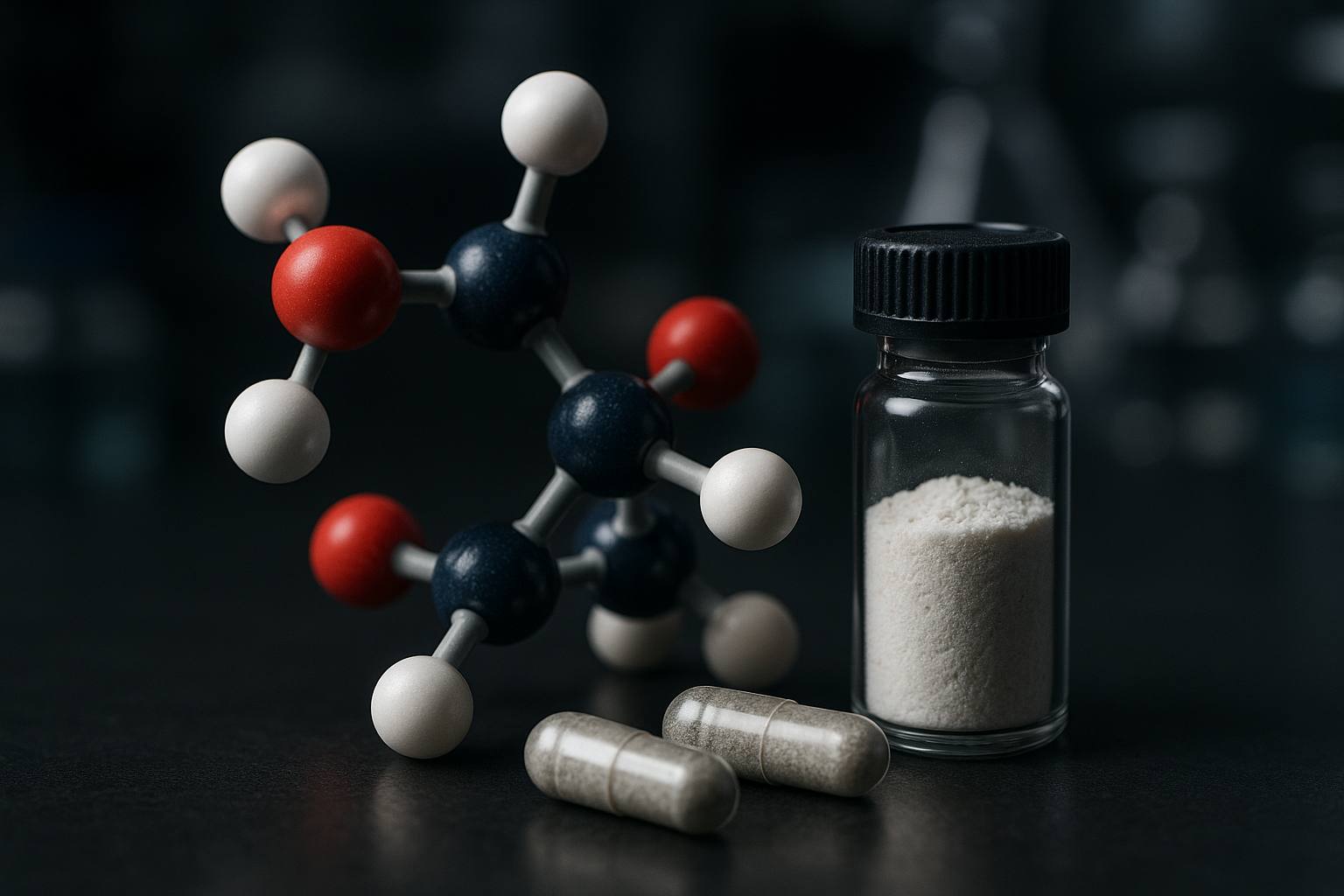
Citrulline malate
Citrulline malate (CM) combines L-citrulline and malic acid (malate). It is studied primarily in sports settings for its potential to increase the availability of arginine and nitric oxide (NO), with possible effects on blood flow, exercise tolerance, and perception of fatigue. The evidence is heterogeneous: positive results are more frequent in high-intensity exercise and in specific protocols, but are not always replicated.
Non-protein amino acid + malate salt: support for performance through the nitric oxide pathway and energy metabolism
Citrulline malate (CM) combines L-citrulline and malic acid (malate). It is studied mainly in sports settings for its potential to increase the availability of arginine and nitric oxide (NO), with possible effects on blood flow, exercise tolerance, and perceived fatigue. The evidence is heterogeneous: positive results are more frequent in high-intensity exercise and in specific protocols, but are not always replicated.
Mechanism of action
1) Increased plasma arginine: citrulline partly bypasses the hepatic first-pass metabolism that limits oral arginine, promoting greater systemic availability of arginine. 2) Support for the nitric oxide pathway: more arginine may increase NO production (in conditions where synthesis is substrate-limited), with potential effects on vasodilation, muscle perfusion, and nutrient/oxygen transport. 3) Ammonia metabolism and the urea cycle: citrulline is involved in the urea cycle and may indirectly contribute to the handling of nitrogen metabolites during intense exercise (evidence is not conclusive in the sports context). 4) Role of malate: theoretically, it may support Krebs cycle flux and the malate-aspartate shuttle, with possible effects on energy production and recovery; direct evidence in humans is variable and often confounded by the effect of citrulline.
Supported benefits
- Improved work capacity in high-intensity muscular endurance exercise (e.g. multiple sets in the weight room) in some studies (moderate)
- Reduced perception of fatigue and/or post-exercise muscle soreness in some protocols (limited)
- Possible improvement in some performance parameters in intermittent or high-intensity exercise (results are not always consistent) (limited)
- Increased plasma arginine and potential support for NO production (a more consistent physiological endpoint than performance outcomes) (moderate)
Safety & side effects
- Gastrointestinal disturbances (nausea, cramps, diarrhea), more likely with high doses or in sensitive individuals
- Headache or a sensation of “flushing” in some individuals (potentially related to vascular changes, non-specific)
- Possible drop in blood pressure in predisposed individuals (an uncommon event, but plausible due to effects on the NO pathway)
FAQ
Are citrulline malate and L-citrulline the same thing?
No. Citrulline malate is a combination of L-citrulline and malate; for the same total grams, the amount of actual citrulline depends on the citrulline:malate ratio (e.g. 2:1 contains more citrulline than 1:1).
Why is it used for performance?
Because citrulline can increase plasma arginine and potentially nitric oxide production, with possible effects on muscle perfusion and exercise tolerance. However, the effects on performance are not uniform across studies and depend on the protocol, population, and type of exercise.
How long before training has it been studied?
Many studies use pre-exercise intake ranging from tens of minutes up to about 2 hours, consistent with the plasma kinetics of citrulline. There is no universally optimal timing.
Is it more effective than oral arginine?
Citrulline often increases plasma arginine more efficiently than arginine taken by mouth, because arginine is more extensively metabolized at the intestinal/hepatic level. This does not automatically guarantee improved performance in every context.
What are the main practical risks?
Mainly gastrointestinal disturbances and, in predisposed individuals or in combination with medications/other vasodilating substances, possible hypotension. An additional risk is product quality variability (actual dose and contaminants).
The information provided is for informational and educational purposes only. It does not constitute medical advice. Use must be evaluated and authorized by a qualified healthcare professional.
Mechanism of action
1) Increase in plasma arginine: citrulline partly bypasses the hepatic first-pass metabolism that limits oral arginine, promoting greater systemic availability of arginine. 2) Support for the nitric oxide pathway: more arginine may increase NO production (in conditions where synthesis is substrate-limited), with potential effects on vasodilation, muscle perfusion, and nutrient/oxygen transport. 3) Ammonia metabolism and the urea cycle: citrulline is involved in the urea cycle and may indirectly contribute to the handling of nitrogenous metabolites during intense exercise (evidence is inconclusive in the sports context). 4) Role of malate: theoretically, it may support Krebs cycle flux and the malate-aspartate shuttle, with possible effects on energy production and recovery; direct evidence in humans is variable and often confounded with the effect of citrulline.
Scientific benefits
Contraindications
- Pregnancy and breastfeeding: insufficient data for a reliable safety profile
- Pediatric age: use not supported by safety/efficacy evidence for performance
- Hypotension or tendency to fainting: possible worsening due to vasodilatory effects
- Cardiovascular, renal, or hepatic diseases: requires individual clinical evaluation (nitrogen metabolism and blood pressure management may be relevant)
- History of significant gastrointestinal disorders: greater likelihood of intolerance
Side effects
- Gastrointestinal disorders (nausea, cramps, diarrhea), more likely with high doses or in sensitive individuals
- Headache or a sensation of “flush” in some individuals (potentially related to vascular changes, nonspecific)
- Possible drop in blood pressure in predisposed individuals (uncommon event, but plausible due to effects on the NO pathway)
Interactions
- Antihypertensive drugs: possible additive effect on lowering blood pressure
- Pharmaceutical nitrates (e.g. nitroglycerin) and NO donors: potential increased risk of hypotension
- PDE5 inhibitors (e.g. sildenafil, tadalafil): possible summation of vasodilatory effects (caution regarding hypotension)
- Other vasodilatory supplements (e.g. high doses of dietary nitrates): potential hemodynamic additivity
- Anticoagulants/antiplatelet agents: direct interaction not well established, but general caution is advised in the case of multiple combinations affecting vascular function
Regulatory status
Generally marketed as a dietary supplement (regulations vary by country). It is not typically listed as a prohibited substance; however, in sport the risk of contamination from uncertified products remains relevant.
Supplements and peptides
 Performance
Acetyl l-carnitine
Acetyl-L-carnitine (ALCAR) is a form of carnitine in which an acetyl group facilitates entry into tissues and the…
 Performance
Anhydrous betaine (trimethylglycine)
Anhydrous betaine (TMG) is a compound naturally present in various foods (e.g. beetroot, spinach, cereals) and also…
 Performance
Arginine akg
Arginine AKG (AAKG) combines L-arginine with α-ketoglutarate (AKG), an intermediate in the Krebs cycle. It is marketed…