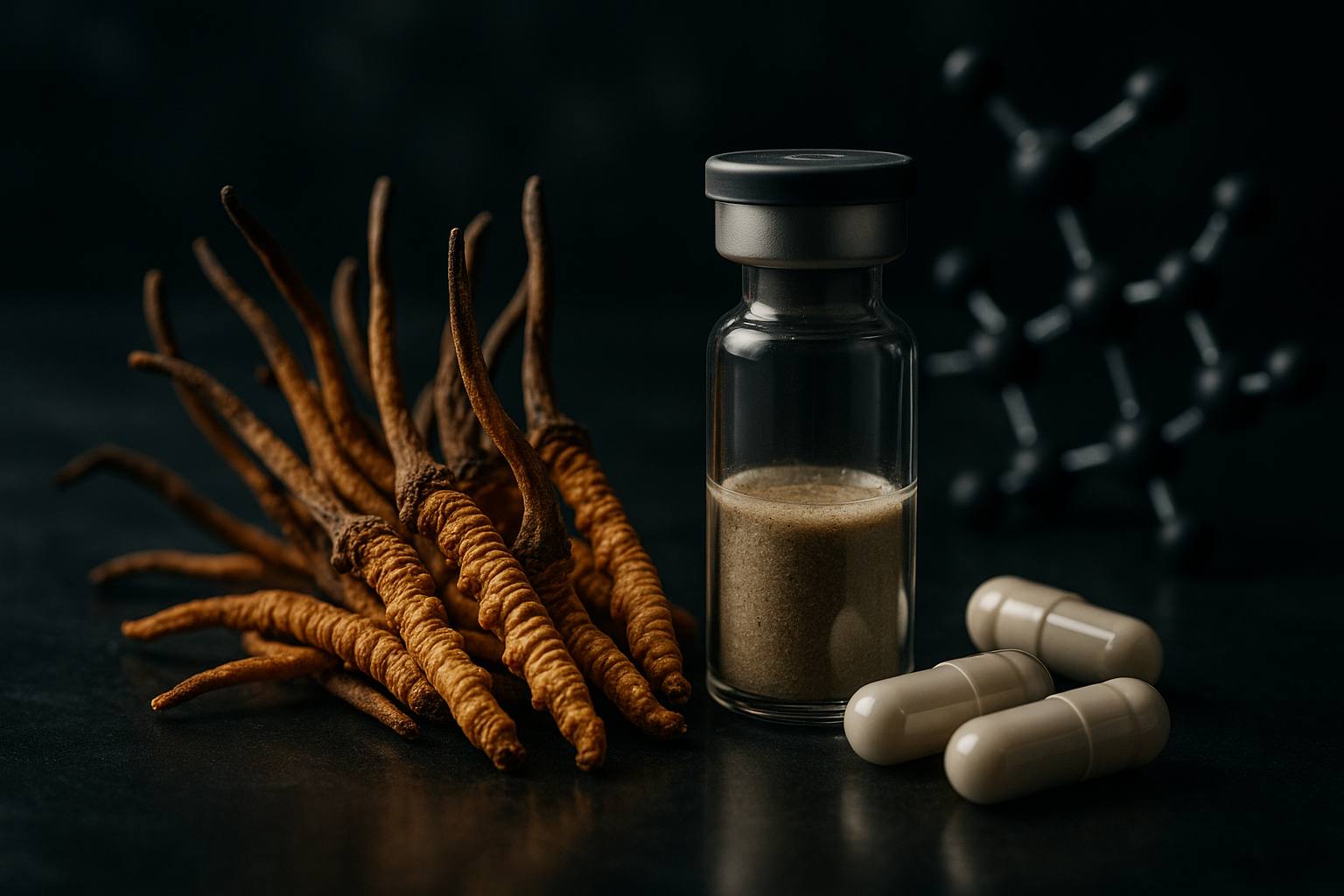
Cordyceps sinensis
Cordyceps sinensis is a parasitic fungus traditionally used in Asia. In supplementation, the wild fungus (rare and expensive) is often not used; instead, biomass/fermented products or related species (e.g. Cordyceps militaris) and products with different chemical profiles are used. Evidence on aerobic performance and fatigue is mixed: some studies show small improvements in untrained or older subjects, while results in trained athletes are often null. Product quality (species, part used, standardization) is a critical determinant.
Medicinal mushroom used as a phytocompound to support performance: heterogeneous evidence dependent on species/extract
Cordyceps sinensis is a parasitic fungus traditionally used in Asia. In supplementation, the wild fungus itself (rare and expensive) is often not used; instead, biomass/fermented products or related species (e.g. Cordyceps militaris) and products with different chemical profiles are used. The evidence on aerobic performance and fatigue is mixed: some studies show small improvements in untrained or older subjects, while in trained athletes the results are often null. Product quality (species, part used, standardization) is a critical determinant.
Mechanism of action
Proposed mechanisms (not all confirmed in humans): (1) modulation of energy metabolism and mitochondrial function with possible effects on oxidative efficiency; (2) potential increase in oxygen availability/peripheral use through effects on vasodilation and purinergic signaling (adenosine), with plausible impact on VO2 and ventilatory threshold in some contexts; (3) indirect antioxidant and anti-inflammatory activity (reduction of oxidative stress markers in some studies), potentially relevant for recovery; (4) immunomodulation (β-glucans) with possible effects on respiratory infections and exercise tolerance; (5) possible effects on carbohydrate/lipid metabolism and insulin sensitivity in populations with metabolic alterations. Translation to performance depends on dose, duration, population, and extract standardization.
Supported benefits
- Possible small improvement in aerobic capacity parameters (e.g. VO2peak/time to exhaustion) in untrained or older subjects in some trials (moderate)
- Inconsistent or null effects on performance in trained athletes (endurance/high intensity) in the available trials (moderate)
- Possible reduction in some fatigue/oxidative stress markers and improved perception of well-being in some studies, with high variability (limited)
- Potential immune support (modulation of innate/adaptive response) attributed to β-glucans; specific human evidence for Cordyceps on clinical outcomes is limited (emerging)
- Possible improvements in metabolic parameters (blood glucose/lipids) in populations with cardiometabolic risk in some studies on medicinal mushrooms/extracts; specificity for C. sinensis and study quality are variable (emerging)
Safety & side effects
- Gastrointestinal disturbances (nausea, diarrhea, abdominal discomfort) in a minority of users
- Headache or dizziness occasionally reported
- Allergic/hypersensitivity reactions (rare), especially in subjects sensitive to mushrooms
- Possible dry mouth or taste alterations (anecdotal reports)
FAQ
Are Cordyceps sinensis and Cordyceps militaris the same thing?
No. They are different species with different chemical profiles. Many products on the market use C. militaris or cultivated mycelium and may contain different levels of nucleosides (e.g. cordycepin is more typical of C. militaris). This affects efficacy and comparability with studies.
Does it work as an immediate pre-workout “boost”?
The evidence does not support a reliable acute effect. In trials, any changes in aerobic capacity or fatigue were more often observed after weeks of continuous use, and not consistently.
Is it also useful for athletes who are already highly trained?
In trained subjects, many studies do not show significant improvements. When present, effects tend to be small and dependent on product, dose, and duration.
What parameters should you look for on the label to assess quality?
Declared species, part used (fruiting body vs mycelium), extraction method, standardization (β-glucans/polysaccharides and nucleosides), and above all third-party testing for contaminants (heavy metals, microbiology) and, for athletes, anti-contamination certifications.
Are there any main risks to consider?
The most common risks are gastrointestinal and allergic. One often underestimated risk is product variability/contamination (heavy metals, adulteration), which may have health and sporting implications.
The information provided is for informational and educational purposes only. It does not constitute medical advice. Use must be evaluated and authorized by a qualified healthcare professional.
Mechanism of action
Proposed mechanisms (not all confirmed in humans): (1) modulation of energy metabolism and mitochondrial function with possible effects on oxidative efficiency; (2) potential increase in oxygen availability/peripheral utilization through effects on vasodilation and purinergic signaling (adenosine), with plausible impact on VO2 and ventilatory threshold in some contexts; (3) indirect antioxidant and anti-inflammatory activity (reduction of oxidative stress markers in some studies), potentially relevant for recovery; (4) immunomodulation (β-glucans) with possible effects on respiratory infections and exercise tolerance; (5) possible effects on carbohydrate/lipid metabolism and insulin sensitivity in populations with metabolic alterations. Translation to performance depends on dose, duration, population, and extract standardization.
Scientific benefits
Contraindications
- Known allergy to mushrooms or product components
- Pregnancy and breastfeeding: insufficient safety data for recommendations on use
- Pediatric age: insufficient data
- Autoimmune diseases or immunosuppressive therapy: potential immunomodulatory interference (clinical evaluation required)
- Coagulation disorders or use of anticoagulants/antiplatelet agents: caution due to possible effects on hemostasis reported for some mushrooms/extracts
Side effects
- Gastrointestinal disturbances (nausea, diarrhea, abdominal discomfort) in a minority of users
- Headache or dizziness occasionally reported
- Allergic reactions/hypersensitivity (rare), especially in subjects sensitive to mushrooms
- Possible dry mouth or changes in taste (anecdotal reports)
Interactions
- Anticoagulants/antiplatelet agents (e.g. warfarin, DOACs, aspirin, clopidogrel): possible increased risk of bleeding (evidence not definitive, but caution advised)
- Glucose-lowering drugs/insulin: possible additive effect on blood glucose in predisposed subjects (clinical monitoring if used)
- Immunosuppressants (e.g. high-dose corticosteroids, calcineurin inhibitors): potential functional antagonism or unpredictability of the immune response
- Drugs metabolized by CYP: limited specific human data; possible theoretical interactions depending on the extract
Regulatory status
In many countries it is marketed as a dietary supplement; classification may depend on species, part used, and manufacturing process (novel food/food supplement). It is not typically a substance prohibited by anti-doping regulations, but responsibility for contamination remains with the athlete.
Supplements and peptides
 Performance
Acetyl l-carnitine
Acetyl-L-carnitine (ALCAR) is a form of carnitine in which an acetyl group facilitates entry into tissues and the…
 Performance
Anhydrous betaine (trimethylglycine)
Anhydrous betaine (TMG) is a compound naturally present in various foods (e.g. beetroot, spinach, cereals) and also…
 Performance
Arginine akg
Arginine AKG (AAKG) combines L-arginine with α-ketoglutarate (AKG), an intermediate in the Krebs cycle. It is marketed…