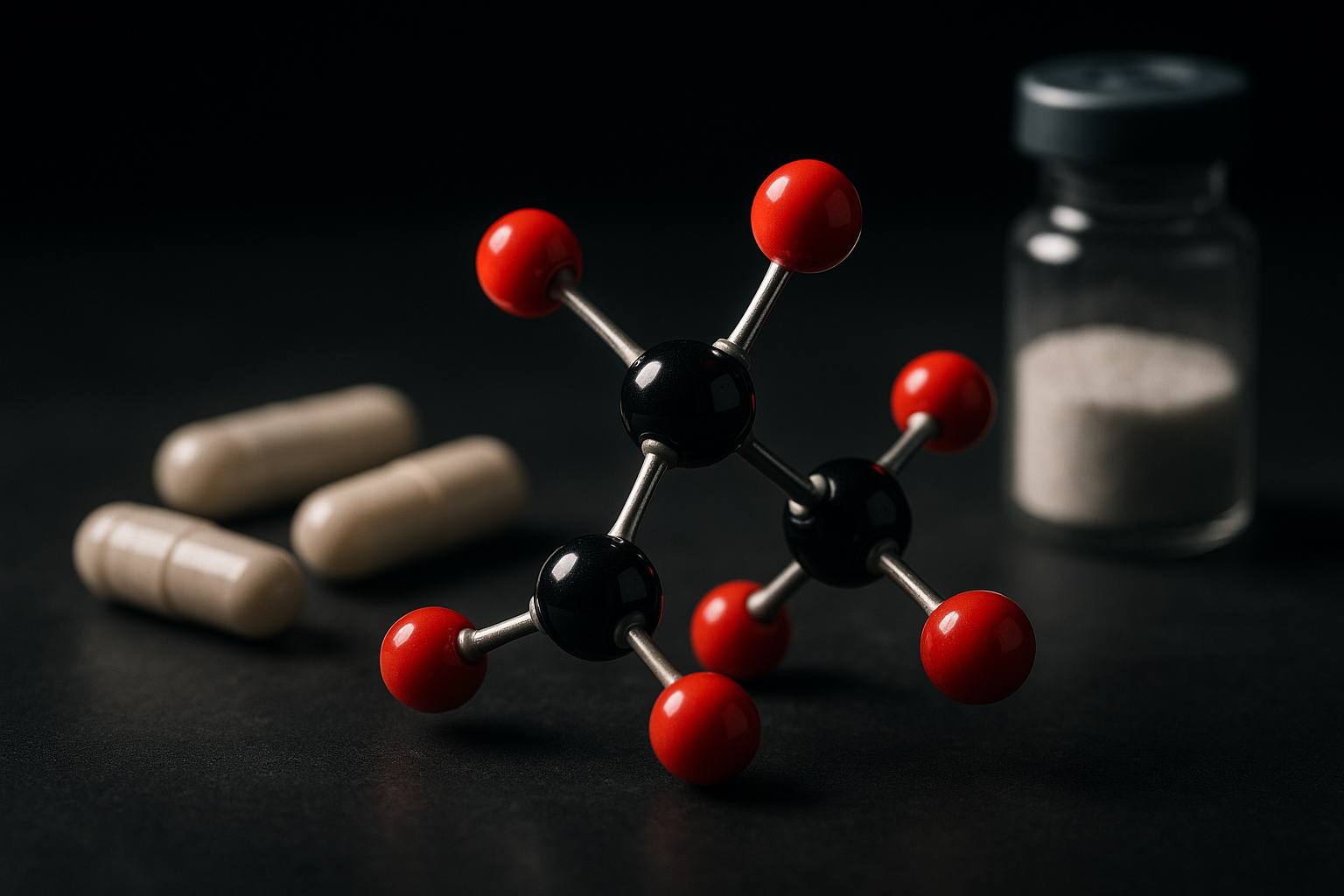
D-ribose
D-ribose is a 5-carbon sugar (pentose) physiologically present in the body as a structural component of RNA and energy molecules (ATP, ADP, AMP) and cofactors (NAD/NADP). As a supplement, it is proposed mainly in the “performance” field to support the restoration of adenine nucleotide pools after metabolic stress; however, evidence for increased performance in healthy individuals is heterogeneous and often limited.
Monosaccharide involved in nucleotide synthesis and energy metabolism (ATP)
D-ribose is a 5-carbon sugar (pentose) physiologically present in the body as a structural component of RNA and energy molecules (ATP, ADP, AMP) and cofactors (NAD/NADP). As a supplement, it is proposed mainly in the “performance” field to support the restoration of adenine nucleotide pools after metabolic stress; however, the evidence for increased performance in healthy individuals is heterogeneous and often limited.
Mechanism of action
1) Substrate for the formation of ribose-5-phosphate and PRPP: PRPP is a key precursor for de novo synthesis and salvage of purine nucleotides. 2) Potential acceleration of the restoration of adenine nucleotide pools (AMP/ADP/ATP) in tissues with significant depletion. 3) Indirect support for the synthesis of redox cofactors (NAD/NADP) through ribose availability for nucleotides. 4) Acute metabolic effects: as a sugar, it can influence blood glucose levels (in some cases lowering them by increasing utilization/clearance), with possible related symptoms in predisposed individuals.
Supported benefits
- Possible support for energy recovery (restoration of adenine nucleotide pools) in conditions of metabolic stress or reduced energy reserve (specific clinical contexts) (moderate)
- Improvement in performance in healthy individuals (strength, sprint, endurance): inconsistent results; often no significant benefit (limited)
- Possible reduction in perceived fatigue or improvement in subjective recovery in some protocols, with high individual variability (emerging)
Safety & side effects
- Gastrointestinal disturbances (nausea, diarrhea, cramps, bloating), more likely with high single doses
- Possible reduction in blood glucose with associated symptoms (weakness, dizziness, sweating) in predisposed individuals or when fasting
- Headache or fatigue reported occasionally
FAQ
Does D-ribose really increase ATP and therefore performance?
Biochemically, it may promote nucleotide synthesis when ribose/PRPP availability is a bottleneck, especially after marked depletion. In healthy individuals, however, a measurable increase in performance is often absent or small, because performance limitation depends on multiple factors beyond ribose availability.
It is a sugar: can it affect blood glucose?
Yes. Paradoxically, in some contexts D-ribose can lower blood glucose (probably due to rapid uptake and metabolism), with possible onset of hypoglycemia symptoms in susceptible people, especially when fasting or when taking glucose-lowering medications.
Does it make sense for strength or sprint sports?
Evidence in athletes or trained individuals is limited and inconsistent. The theoretical rationale (nucleotide restoration) does not always translate into improvements in power or sprint repeatability.
Is it more useful for recovery than for acute performance?
If a benefit exists, it is more plausible for energy recovery in conditions of high metabolic stress or in populations with reduced energy reserve. In healthy individuals, the effect on recovery is variable and not guaranteed.
The information provided is for informational and educational purposes only. It does not constitute medical advice. Use should be assessed and authorized by a qualified healthcare professional.
Mechanism of action
1) Substrate for the formation of ribose-5-phosphate and PRPP: PRPP is a key precursor for de novo synthesis and the salvage of purine nucleotides. 2) Potential acceleration of the restoration of adenine nucleotide pools (AMP/ADP/ATP) in tissues with significant depletion. 3) Indirect support for the synthesis of redox cofactors (NAD/NADP) through ribose availability for nucleotides. 4) Acute metabolic effects: as a sugar, it may influence blood glucose (in some cases lowering it due to increased utilization/clearance), with possible related symptoms in predisposed individuals.
Scientific benefits
Contraindications
- Diabetes or glucose-lowering therapy: risk of hypoglycemia or need for close monitoring
- Reactive hypoglycemia or history of hypoglycemic episodes
- Pregnancy and breastfeeding: insufficient safety data for recommendations on use
- Pediatric age: insufficient data for non-clinical use
- Kidney or liver disease: caution due to lack of robust data on prolonged use at high doses
Side effects
- Gastrointestinal disturbances (nausea, diarrhea, cramps, bloating), more likely with high single doses
- Possible reduction in blood glucose with associated symptoms (weakness, dizziness, sweating) in predisposed individuals or when fasting
- Headache or fatigue occasionally reported
Interactions
- Antidiabetic drugs (insulin, sulfonylureas, meglitinides, and other glucose-lowering agents): potential increased risk of hypoglycemia
- Alcohol and prolonged fasting: may increase vulnerability to drops in blood glucose
- Supplements or drugs that affect blood glucose (e.g. berberine, alpha-lipoic acid): possible additive effect on glucose reduction
Regulatory status
In many countries it is marketed as a dietary supplement. It is not typically included in lists of prohibited substances as a doping agent, but athletes should check their federation’s regulations and the risk of supply-chain contamination (third-party certifications).
Supplements and peptides
 Performance
Acetyl l-carnitine
Acetyl-L-carnitine (ALCAR) is a form of carnitine in which an acetyl group facilitates entry into tissues and the…
 Performance
Anhydrous betaine (trimethylglycine)
Anhydrous betaine (TMG) is a compound naturally present in various foods (e.g. beetroot, spinach, cereals) and also…
 Performance
Arginine akg
Arginine AKG (AAKG) combines L-arginine with α-ketoglutarate (AKG), an intermediate in the Krebs cycle. It is marketed…