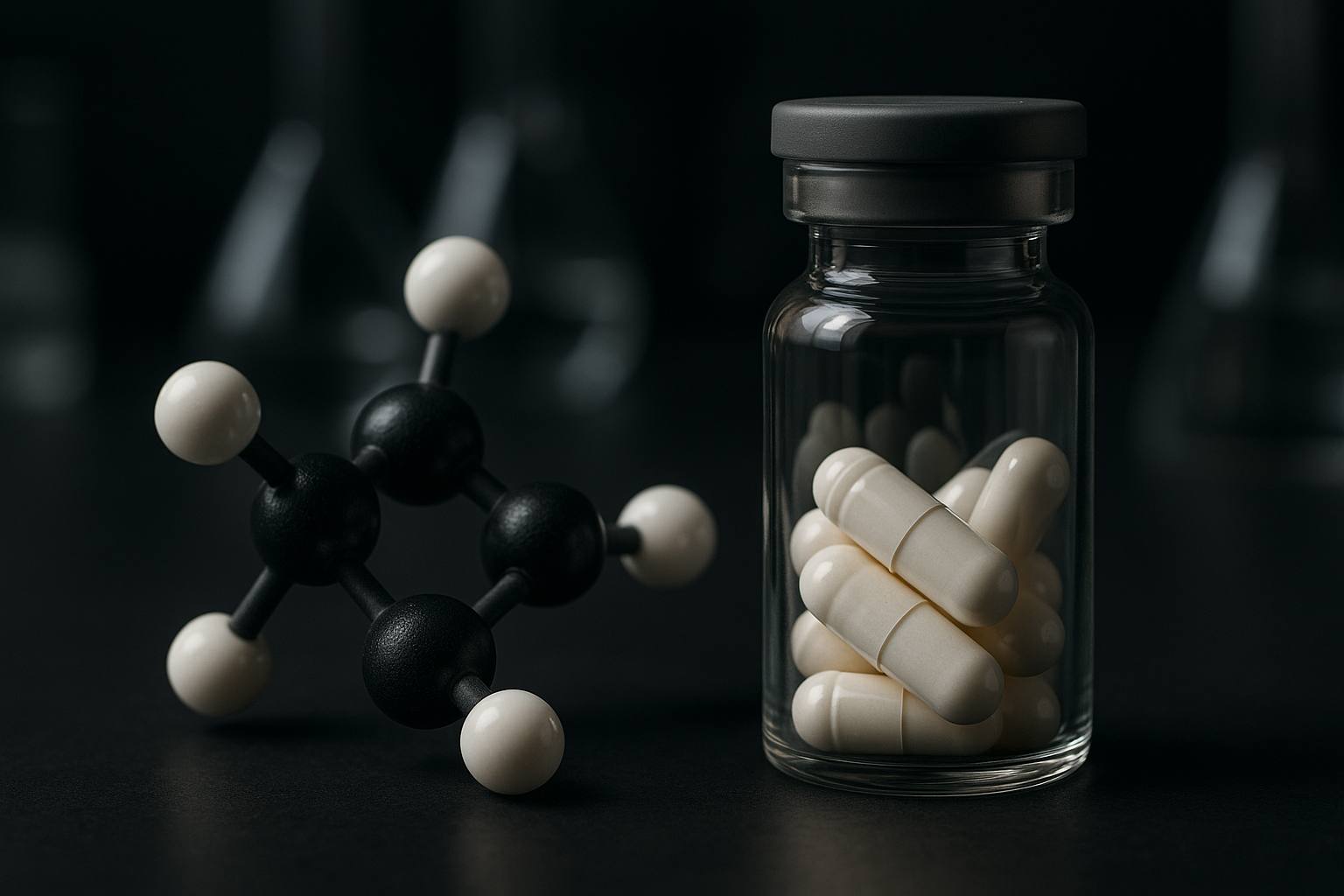
Dmae
DMAE (2-dimethylaminoethanol) is an organic compound related to choline, used as a supplement in the “Focus & Nootropics” category. It has been studied mainly for possible effects on attention, memory, and behavioral symptoms, but the quality and currency of the clinical evidence are variable. Safety requires caution in individuals with neurological/psychiatric conditions or those taking medications that modulate the cholinergic or dopaminergic system.
A cholinergic precursor studied for attention, mood, and cognitive function, with overall limited clinical evidence
DMAE (2-dimethylaminoethanol) is an organic compound related to choline, used as a supplement in the “Focus & Nootropics” category. It has been studied primarily for possible effects on attention, memory, and behavioral symptoms, but the quality and relevance of the clinical evidence vary. Safety requires caution in individuals with neurological/psychiatric conditions or those taking medications that modulate the cholinergic or dopaminergic system.
Mechanism of action
Proposed mechanisms (not all robustly demonstrated in humans): (1) possible role as a precursor/analog of choline with potential impact on the synthesis or availability of acetylcholine; (2) possible modulation of phospholipid metabolism (e.g. phosphatidylcholine) and membrane composition, with indirect effects on neuronal signaling; (3) hypothesized effects on central cholinergic tone with potential implications for attention and alertness. DMAE’s ability to consistently increase brain acetylcholine in humans has not been established; some of the evidence comes from older, small studies or studies with heterogeneous endpoints.
Supported benefits
- Reduction of certain behavioral/attentional symptoms in specific clinical populations historically studied (e.g. behavioral disorders, hyperactivity), with non-uniform results (limited)
- Improvement in attention/alertness or cognitive performance in healthy subjects (emerging)
- Mood support (e.g. apathy/subjective energy) in some contexts (emerging)
Safety & side effects
- Insomnia or sleep disturbances
- Nervousness, irritability, agitation
- Headache (possible cholinergic component)
- Nausea, gastrointestinal disturbances
- Muscle tension or a feeling of “overstimulation” in sensitive individuals
- Rarely: worsening of psychiatric symptoms in predisposed individuals (e.g. marked anxiety)
FAQ
Does DMAE definitely increase acetylcholine in the brain?
This has not been conclusively demonstrated in humans. There is a cholinergic rationale, but the available clinical and neurochemical data do not establish a consistent and predictable increase in brain acetylcholine.
Is it a “reliable” nootropic for memory and concentration in healthy individuals?
The evidence in healthy individuals is limited/emerging and does not allow for robust conclusions. The effects, when reported, are often subjective and vary between individuals.
What are the most common side effects?
Insomnia, nervousness/agitation, headache, and gastrointestinal disturbances. In predisposed individuals, it may worsen anxiety or promote mood activation.
Does the form matter (DMAE base vs bitartrate)?
Yes. Different forms contain different amounts of elemental DMAE and may differ in tolerability. Without conversion to elemental DMAE, dosages across products are not directly comparable.
The information provided is for informational and educational purposes only. It does not constitute medical advice. Use should be evaluated and authorized by a qualified healthcare professional.
Mechanism of action
Proposed mechanisms (not all robustly demonstrated in humans): (1) possible role as a precursor/analog of choline with potential impact on the synthesis or availability of acetylcholine; (2) possible modulation of phospholipid metabolism (e.g. phosphatidylcholine) and membrane composition, with indirect effects on neuronal signaling; (3) hypothesis of effects on central cholinergic tone with potential implications for attention and alertness. DMAE’s ability to consistently increase brain acetylcholine in humans has not been established; some of the evidence comes from older, small studies or studies with heterogeneous endpoints.
Scientific benefits
Contraindications
- Pregnancy and breastfeeding (insufficient safety data)
- Bipolar disorder or history of mania/hypomania (potential risk of activation/worsening in predisposed individuals)
- Epilepsy or history of seizures (caution due to possible CNS effects; evidence not definitive)
- Unstable psychiatric disorders (severe anxiety, psychosis) due to possible worsening of agitation/insomnia
- Pediatric age: use not advisable without specialist supervision due to lack of modern safety/efficacy data
Side effects
- Insomnia or sleep disturbances
- Nervousness, irritability, agitation
- Headache (possible cholinergic component)
- Nausea, gastrointestinal disturbances
- Muscle tension or a feeling of “overstimulation” in sensitive individuals
- Rarely: worsening of psychiatric symptoms in predisposed individuals (e.g. marked anxiety)
Interactions
- Cholinergic drugs (e.g. acetylcholinesterase inhibitors): possible increase in cholinergic effects and adverse events
- Anticholinergics: possible functional antagonism
- Dopaminergic drugs or stimulants (e.g. for ADHD): possible increase in insomnia/agitation; clinical monitoring required
- Drugs that affect mood (antidepressants, mood stabilizers): caution due to possible activation in vulnerable individuals; individual clinical assessment
Regulatory status
In many markets DMAE is marketed as a dietary supplement; it is not generally approved as a pharmacological treatment for cognitive enhancement. Regulations and permitted label claims vary by country.
Supplements and peptides
 Focus & Nootropics
Agmatine sulfate
Agmatine is an endogenous metabolite produced by decarboxylation of L-arginine. In supplementation contexts it is…
 Focus & Nootropics
Alpha-gpc
Alpha-GPC is a choline-containing compound (a precursor of acetylcholine) and an intermediate in phospholipid…
 Focus & Nootropics
Anhydrous caffeine
Anhydrous caffeine is the dehydrated form of caffeine, used in supplements for its high concentration and dosing…