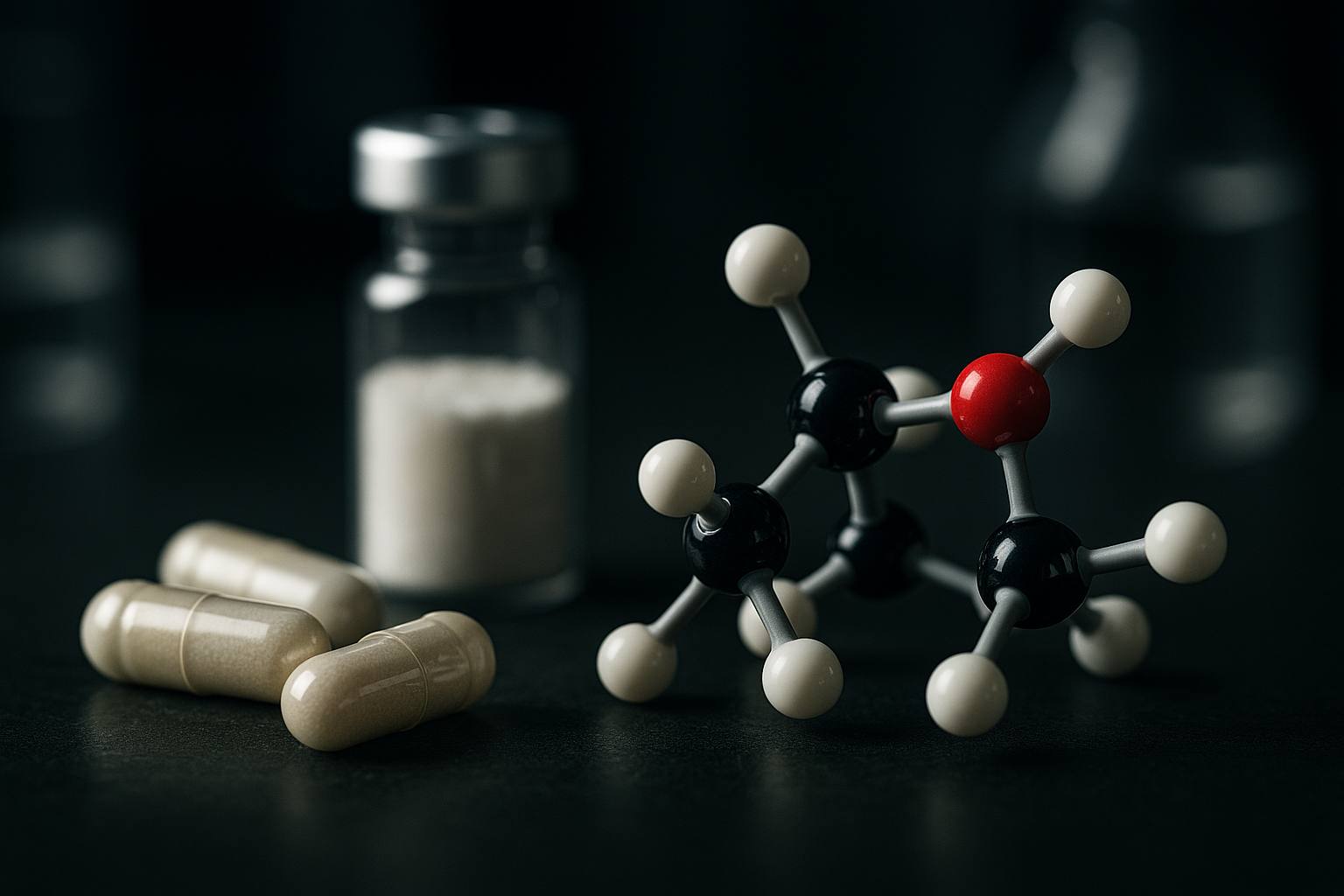
Hmb
HMB (β-hydroxy-β-methylbutyrate) is a leucine metabolite produced in small amounts by the body and available as a supplement (main forms: calcium salt, HMB-Ca, and free acid form, HMB-FA). It has been studied mainly in contexts of muscular stress (start of training, high volume, energy deficit, immobilization) and in populations at risk of losing lean mass (older adults). The results are heterogeneous and depend on training status, protein intake, and training protocol.
A leucine metabolite studied for preserving muscle mass and supporting adaptation to training
HMB (β-hydroxy-β-methylbutyrate) is a leucine metabolite produced in small amounts by the body and available as a supplement (main forms: calcium salt, HMB-Ca, and free acid form, HMB-FA). It has been studied primarily in contexts of muscular stress (beginning training, high volume, energy deficit, immobilization) and in populations at risk of losing lean mass (older adults). Results are heterogeneous and depend on training status, protein intake, and training protocol.
Mechanism of action
Proposed mechanisms (not all definitively confirmed in humans): (1) reduction of muscle proteolysis through modulation of ubiquitin–proteasome pathways and catabolic signals; (2) possible support for muscle protein synthesis through anabolic signaling pathways (e.g. mTOR) in specific contexts; (3) effects on cell membrane stability and intracellular cholesterol metabolism (hypothesis supporting sarcolemma integrity), potentially relevant in exercise-induced muscle damage; (4) modulation of post-exercise damage/inflammatory markers in some studies. The magnitude of the effect depends on dose, form, timing, training status, and diet.
Supported benefits
- Reduction of lean mass loss in catabolic conditions (older adults, immobilization/bed rest, energy deficit, or physiological stress) (moderate)
- Modest improvement in strength and body composition in untrained individuals or at the beginning of resistance training programs (moderate)
- Reduction of some markers of muscle damage and DOMS in specific protocols involving high muscular stress (limited)
- Increases in performance and hypertrophy in well-trained athletes with adequate protein intake (limited)
Safety & side effects
- Gastrointestinal disturbances (nausea, cramps, diarrhea) reported in a minority of subjects
- Headache or nonspecific sensations (sporadic reports)
- Generally well tolerated at the doses commonly studied, but individual response varies
FAQ
Is HMB the same thing as leucine or BCAAs?
No. HMB is a metabolite of leucine. Leucine (and BCAAs) directly stimulate anabolic signals related to protein synthesis; HMB has been studied mainly for anti-catabolic and muscle-protective effects in specific contexts. The effects are not interchangeable and depend on diet and training.
Does HMB work even if I already consume a lot of protein?
In subjects with adequate protein intake and a high training level, studies often show small or no results. When present, the effect tends to emerge more clearly under catabolic stress, suboptimal protein intake, or in less trained populations.
Is HMB-FA better than HMB-Ca?
HMB-FA generally reaches peak plasma concentration more quickly than HMB-Ca. This may be relevant for timing strategies, but it does not automatically imply clinical or performance superiority in all contexts; the comparative literature is inconclusive.
Is it useful for reducing DOMS?
Some studies report reductions in markers of muscle damage and/or soreness, but the evidence is variable and depends on the type of exercise, training level, and protocol. It is not a guaranteed effect.
How long does it take to see effects?
In strength training trials, assessments are often conducted over 2–12 weeks. When present, effects tend to be more evident in the initial phases of training or under conditions of high muscular stress.
The information provided is for informational and educational purposes only. It does not constitute medical advice. Use should be evaluated and authorized by a qualified healthcare professional.
Mechanism of action
Proposed mechanisms (not all definitively confirmed in humans): (1) reduction of muscle proteolysis through modulation of ubiquitin–proteasome pathways and catabolic signals; (2) possible support for muscle protein synthesis through anabolic signals (e.g. mTOR) in specific contexts; (3) effects on cell membrane stability and intracellular cholesterol metabolism (hypothesized support for sarcolemma integrity), potentially relevant in exercise-induced muscle damage; (4) modulation of post-exercise damage/inflammatory markers in some studies. The magnitude of the effect depends on dose, form, timing, training status, and diet.
Scientific benefits
Contraindications
- Pregnancy and breastfeeding: insufficient data to establish safety
- Pediatric age: insufficient data for generalized use
- Kidney or liver disease: caution due to the lack of robust evidence in these populations; professional evaluation required
- Complex medical conditions or frailty: medical supervision is necessary to avoid interference with therapies and nutritional status
Side effects
- Gastrointestinal disturbances (nausea, cramps, diarrhea) reported in a minority of subjects
- Headache or nonspecific sensations (sporadic reports)
- Generally well tolerated at commonly studied doses, but individual response varies
Interactions
- Nephrotoxic/hepatotoxic drugs: caution due to the absence of conclusive data on interactions and safety in comorbidities
- Therapies that influence protein metabolism (e.g. corticosteroids, some cancer treatments): possible overlap in goals (muscle catabolism) but limited specific interaction data
- Other performance supplements (e.g. stimulants): no known direct interaction, but they increase the complexity of the risk profile and the likelihood of contamination/adverse effects
Regulatory status
In many countries, HMB is marketed as a dietary supplement. It does not typically appear on lists of prohibited substances as an active ingredient; however, the risk of contamination with banned substances in uncertified products remains relevant (an important issue for athletes subject to testing).
Supplements and peptides
 Performance
Acetyl l-carnitine
Acetyl-L-carnitine (ALCAR) is a form of carnitine in which an acetyl group facilitates entry into tissues and the…
 Performance
Anhydrous betaine (trimethylglycine)
Anhydrous betaine (TMG) is a compound naturally present in various foods (e.g. beetroot, spinach, cereals) and also…
 Performance
Arginine akg
Arginine AKG (AAKG) combines L-arginine with α-ketoglutarate (AKG), an intermediate in the Krebs cycle. It is marketed…