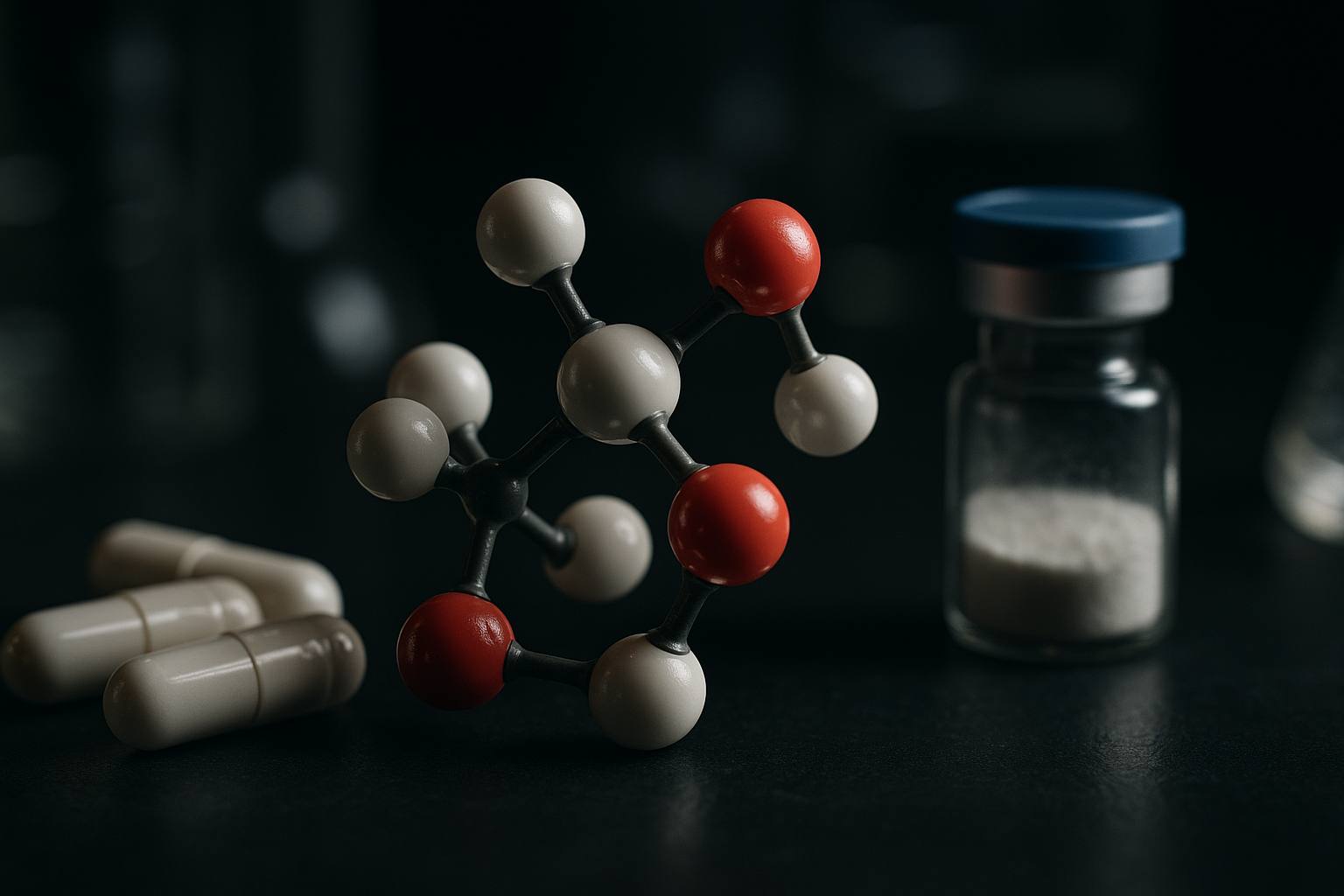
Inositol
Inositol is a family of compounds (polyhydroxylated cyclohexanes) found in human cells and foods. The forms most studied in the metabolic field are myo-inositol (MI) and D-chiro-inositol (DCI), involved in insulin signal transduction and in the regulation of pathways linked to glucose and lipid metabolism. The literature is particularly extensive in conditions associated with insulin resistance (e.g. polycystic ovary syndrome), whereas in healthy populations the effects are more variable.
Myo-inositol and D-chiro-inositol: insulin mediators and cellular signaling in metabolic health
Inositol is a family of compounds (polyhydroxylated cyclohexanes) found in human cells and foods. The forms most studied in the metabolic field are myo-inositol (MI) and D-chiro-inositol (DCI), involved in insulin signal transduction and in the regulation of pathways linked to glucose and lipid metabolism. The literature is particularly extensive in conditions associated with insulin resistance (e.g. polycystic ovary syndrome), whereas in healthy populations the effects are more variable.
Mechanism of action
Proposed mechanisms (not mutually exclusive): (1) Insulin signaling: MI and DCI contribute to phosphoinositide pools and mediators (inositol-phosphoglycans) that may facilitate downstream steps of the insulin receptor (e.g. GLUT4 translocation, activity of enzymes involved in glycogen metabolism and lipogenesis). (2) MI→DCI conversion: the conversion is catalyzed by an insulin-dependent epimerase; in states of insulin resistance it may be altered in a tissue-specific manner, with possible imbalances between MI and DCI. (3) Effects on lipid metabolism and inflammation: some studies suggest improvements in triglycerides, HDL, and indirect markers of cardiometabolic risk, potentially mediated by improved insulin sensitivity and effects on signaling pathways (PI3K/Akt) and oxidative stress. (4) Reproductive-metabolic axis (relevant in PCOS): improvement in ovulation and androgen-related parameters may secondarily influence the metabolic profile; this does not imply efficacy generalizable to all populations.
Supported benefits
- Improvement in indices of insulin resistance and glycemic parameters in people with PCOS (e.g. HOMA-IR, insulinemia, sometimes fasting glucose) (moderate)
- Improvement in some lipid parameters (e.g. triglycerides, HDL) in subgroups with metabolic risk/PCOS (limited)
- Reduction in the risk of gestational diabetes in selected high-risk populations (heterogeneous evidence across studies) (emerging)
- Improvement in blood pressure or inflammatory markers in specific contexts (results not consistent) (emerging)
Safety & side effects
- Gastrointestinal disturbances (nausea, bloating, diarrhea), more likely at higher doses or in sensitive individuals
- Headache or dizziness (occasionally reported)
- In rare cases, insomnia or agitation (anecdotal reports; causality not always clear)
FAQ
Are inositol and “vitamin B8” the same thing?
Inositol has historically been called “vitamin B8,” but it is not an essential vitamin in the strict sense because the body can synthesize it; however, it remains a biologically relevant compound.
Myo-inositol and D-chiro-inositol: what is the main difference?
They are stereoisomers with partially distinct roles in insulin signaling and metabolism. MI is more abundant; DCI derives in part from the conversion of MI and may be altered in insulin-resistant states in a tissue-specific manner.
Does it also work in people without insulin resistance?
The most consistent evidence concerns conditions involving insulin resistance (particularly PCOS). In metabolically healthy individuals, the effects on glucose and lipids are less predictable and often small or not significant.
How long does it take to observe changes in metabolic parameters?
In trials, when effects are observed, they often emerge after several weeks (frequently 8–12+), but the response is variable and depends on the clinical context and concomitant interventions.
Can inositol cause hypoglycemia?
On its own, in untreated individuals, clinically relevant hypoglycemia is not common in trials. The risk may increase in the presence of glucose-lowering drugs or supplements and requires medical monitoring.
The information provided is for informational and educational purposes only. It does not constitute medical advice. Use must be assessed and authorized by a qualified healthcare professional.
Mechanism of action
Proposed mechanisms (not mutually exclusive): (1) Insulin signaling: MI and DCI contribute to phosphoinositide pools and mediators (inositol-phosphoglycans) that may facilitate steps downstream of the insulin receptor (e.g. GLUT4 translocation, activity of enzymes involved in glycogen metabolism and lipogenesis). (2) MI→DCI conversion: the conversion is catalyzed by an insulin-dependent epimerase; in states of insulin resistance it may become altered in a tissue-specific manner, with possible imbalances between MI and DCI. (3) Effects on lipid metabolism and inflammation: some studies suggest improvements in triglycerides, HDL, and indirect markers of cardiometabolic risk, potentially mediated by improved insulin sensitivity and effects on signaling pathways (PI3K/Akt) and oxidative stress. (4) Reproductive-metabolic axis (relevant in PCOS): improvement in ovulation and androgen-related parameters may secondarily influence the metabolic profile; this does not imply efficacy generalizable to all populations.
Scientific benefits
Contraindications
- Known hypersensitivity to the compound or excipients
- Bipolar disorder or history of mania/hypomania: caution due to possible effects on signaling pathways involved in mood (clinical evidence is not unequivocal, but caution is advisable)
- Pregnancy and breastfeeding: use only under medical supervision, since the protocols and populations studied are specific and not generalizable
Side effects
- Gastrointestinal disturbances (nausea, bloating, diarrhea), more likely at higher doses or in sensitive individuals
- Headache or dizziness (occasionally reported)
- In rare cases, insomnia or agitation (anecdotal reports; causality not always clear)
Interactions
- Glucose-lowering drugs (e.g. metformin, insulin, sulfonylureas): possible additive effect on glycemic control; requires clinical monitoring to avoid hypoglycemia in treated individuals
- Supplements or drugs that affect blood glucose (e.g. berberine, ALA): potential additive effect; direct evidence limited
- Diuretics or conditions that alter renal function: elimination is predominantly renal; specific interaction data are limited, but this is a point of caution
Regulatory status
In many countries MI and DCI are sold as dietary supplements; they are not approved as drugs for the treatment of diabetes or other metabolic disorders. Permitted health claims depend on local regulatory authorities.
Supplements and peptides
 Metabolic health
Alpha-lipoic acid
Alpha-lipoic acid (ALA; also called thioctic acid) is an endogenous molecule involved in mitochondrial energy…
 Metabolic health
Chromium picolinate
Chromium picolinate is a chelated form of chromium (Cr3+) with picolinic acid, used as a supplement for metabolic…
 Metabolic health
Cinnamon extract
Cinnamon extracts (from Cinnamomum spp.) are used as supplements to support metabolic health, particularly for glycemic…