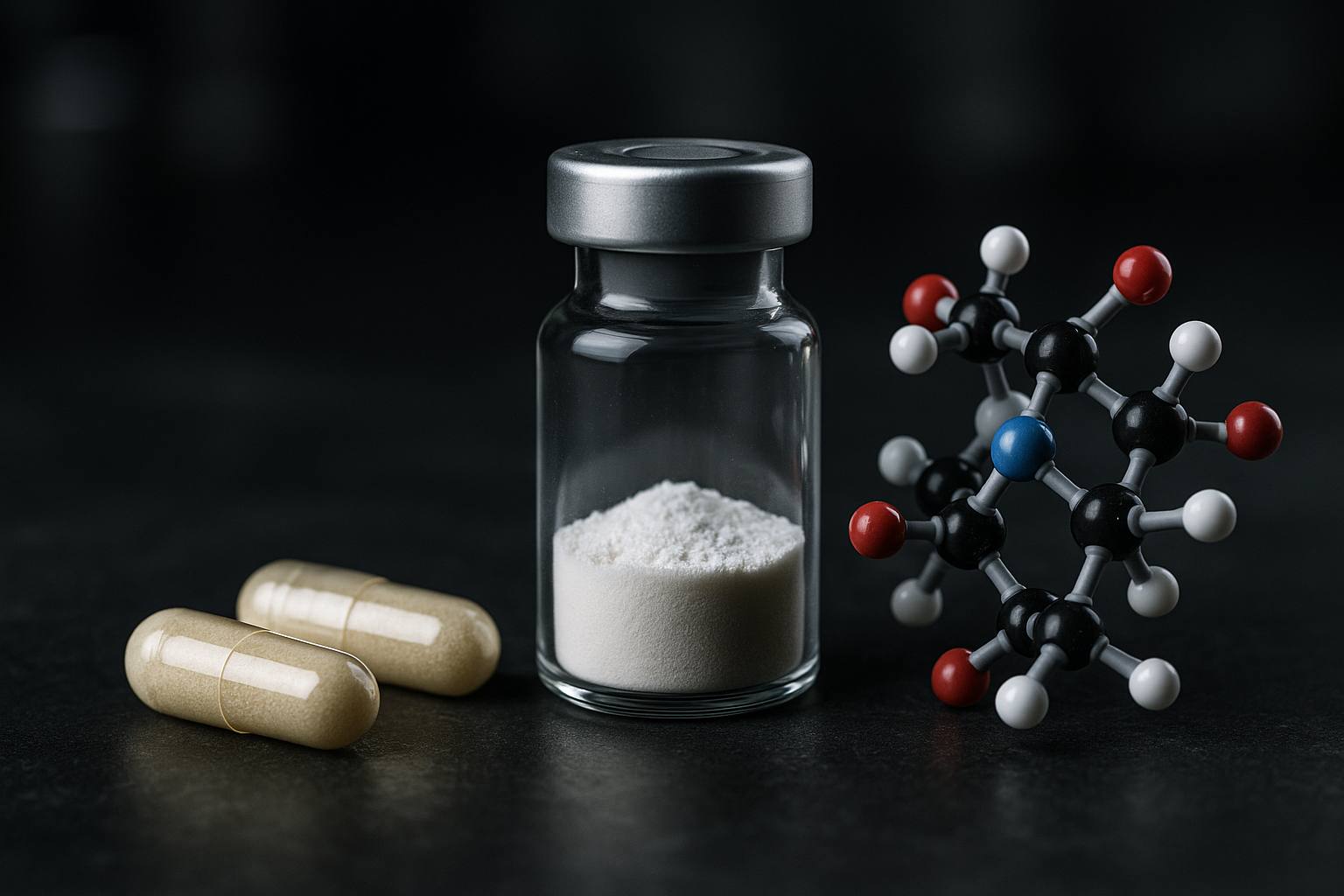
L-carnitine tartrate
L-carnitine tartrate is a form of L-carnitine bound to tartaric acid, used in sports supplementation for its good stability and tolerability. L-carnitine is an endogenous compound involved in the transport of long-chain fatty acids into the mitochondria and in energy metabolism. In practice, the effects on acute performance are often modest or variable; the literature is more consistent regarding some indicators of recovery and muscle damage, especially with continued use.
Performance supplement: a salt form of L-carnitine, studied primarily for muscle recovery and post-exercise damage markers
L-carnitine tartrate is a form of L-carnitine bound to tartaric acid, used in sports supplementation for its good stability and tolerability. L-carnitine is an endogenous compound involved in the transport of long-chain fatty acids into the mitochondria and in energy metabolism. In practice, the effects on acute performance are often modest or variable; the literature is more consistent regarding certain indicators of recovery and muscle damage, especially with continued use.
Mechanism of action
1) Mitochondrial transport of fatty acids: carnitine facilitates the entry of long-chain acyl groups into the mitochondria via CPT1/CPT2 and translocase, supporting fat oxidation when the substrate and intensity allow it. 2) Regulation of the CoA pool: by forming acylcarnitines, it may help maintain free CoA and modulate energy metabolism during metabolic stress. 3) Potential effects on recovery: some studies suggest reductions in markers of muscle damage and post-exercise oxidative/inflammatory stress, with possible benefits for muscle soreness and functional recovery. 4) Indirect effects: the increase in muscle carnitine is limited by transport (OCTN2) and may be promoted by insulin-mediated conditions; this makes more noticeable effects plausible with chronic use and in specific contexts.
Supported benefits
- Reduction in some markers of muscle damage and oxidative stress after exercise (in specific protocols and populations) (moderate)
- Possible improvement in perceived recovery (DOMS) and the ability to repeat efforts in some contexts, especially with continued use (limited)
- Effects on body composition or fat oxidation during exercise: heterogeneous results, often small or null in already trained individuals (limited)
- Increase in plasma carnitine; increasing muscle carnitine requires prolonged strategies and time and is not guaranteed (moderate)
Safety & side effects
- Gastrointestinal disturbances (nausea, cramps, diarrhea), more likely with high doses or concentrated intake
- “Fishy” body odor (from metabolites such as trimethylamine), variable between individuals
- Headache or restlessness occasionally reported
- Increase in TMAO (trimethylamine N-oxide) in some contexts: a biomarker associated with cardiovascular risk in observational studies; the causal relevance and individual impact remain a matter of debate
FAQ
Does L-carnitine tartrate increase “fat burning” during training?
The biological rationale exists (transport of fatty acids into the mitochondria), but in studies on trained individuals the effects on fat oxidation and weight loss are often small or inconsistent. Any increase in muscle carnitine is difficult to achieve and requires time.
Is it more useful before or after training?
Many protocols use it daily and sometimes around the time of training or with meals. The literature suggests that continued use matters more than acute timing, because the potential effects depend on adaptations and tissue availability.
What is the difference between L-carnitine tartrate and acetyl-L-carnitine (ALCAR)?
They are different forms: LCLT is often used for recovery/performance-related goals; ALCAR is more studied for neurological/cognitive aspects. They are not equivalent in terms of pharmacokinetics and intended use in the literature.
Is the increase in TMAO definitely a problem?
Carnitine supplementation may increase TMA/TMAO in some individuals, influenced by the microbiota and diet. TMAO is associated with cardiovascular risk in observational studies, but the causality and clinical impact of the increase induced by supplements are not uniformly established.
Is it necessary if I already eat a lot of meat?
Those who regularly consume animal foods already take in carnitine and often have adequate levels. In these cases, the additional effects of supplementation on performance are less predictable and often limited.
The information provided is for informational and educational purposes only. It does not constitute medical advice. Use should be evaluated and authorized by a qualified healthcare professional.
Mechanism of action
1) Mitochondrial transport of fatty acids: carnitine facilitates the entry of long-chain acyl groups into the mitochondria via CPT1/CPT2 and translocase, supporting fat oxidation when substrate availability and exercise intensity allow it. 2) Regulation of the CoA pool: by forming acylcarnitines, it may help maintain free CoA and modulate energy metabolism during metabolic stress. 3) Potential effects on recovery: some studies suggest reductions in markers of muscle damage and post-exercise oxidative/inflammatory stress, with possible benefits for muscle soreness and functional recovery. 4) Indirect effects: the increase in muscle carnitine is limited by transport (OCTN2) and may be promoted by insulin-related conditions; this makes more evident effects plausible with chronic use and in specific contexts.
Scientific benefits
Contraindications
- Pregnancy and breastfeeding: insufficient data for non-medical use
- Pediatric age: use only in clinical settings and under supervision
- Kidney disease: the handling of carnitine and metabolites may be altered; professional evaluation is necessary
- History of seizures/epilepsy: caution due to reports of a possible increased seizure risk with carnitine in some predisposed individuals
- Thyroid disorders: carnitine may interfere with the action of thyroid hormones at the peripheral level; caution in those on therapy or with thyroid dysfunction
Side effects
- Gastrointestinal disturbances (nausea, cramps, diarrhea), more likely with high doses or concentrated intake
- “Fishy” body odor (from metabolites such as trimethylamine), variable between individuals
- Headache or restlessness reported occasionally
- Increase in TMAO (trimethylamine N-oxide) in some contexts: biomarker associated with cardiovascular risk in observational studies; the causal relevance and individual impact remain under debate
Interactions
- Thyroid hormones (e.g. levothyroxine): possible peripheral functional antagonism; clinical evaluation required if on therapy
- Coumarin anticoagulants (e.g. warfarin): reports of a possible increase in INR with carnitine in some cases; medical monitoring if used
- Drugs that affect carnitine metabolism (e.g. valproate) or conditions that alter carnitine status: healthcare supervision required
Regulatory status
Dietary supplement generally permitted in the EU/USA and in many other jurisdictions. In the anti-doping context, carnitine is not typically prohibited when taken orally; some sports regulations have imposed limits or conditions on infusions/injections (not specific to the substance but to the route/volume). Always check the updated rules of the relevant sports governing body.
Supplements and peptides
 Performance
Acetyl l-carnitine
Acetyl-L-carnitine (ALCAR) is a form of carnitine in which an acetyl group facilitates entry into tissues and the…
 Performance
Anhydrous betaine (trimethylglycine)
Anhydrous betaine (TMG) is a compound naturally present in various foods (e.g. beetroot, spinach, cereals) and also…
 Performance
Arginine akg
Arginine AKG (AAKG) combines L-arginine with α-ketoglutarate (AKG), an intermediate in the Krebs cycle. It is marketed…