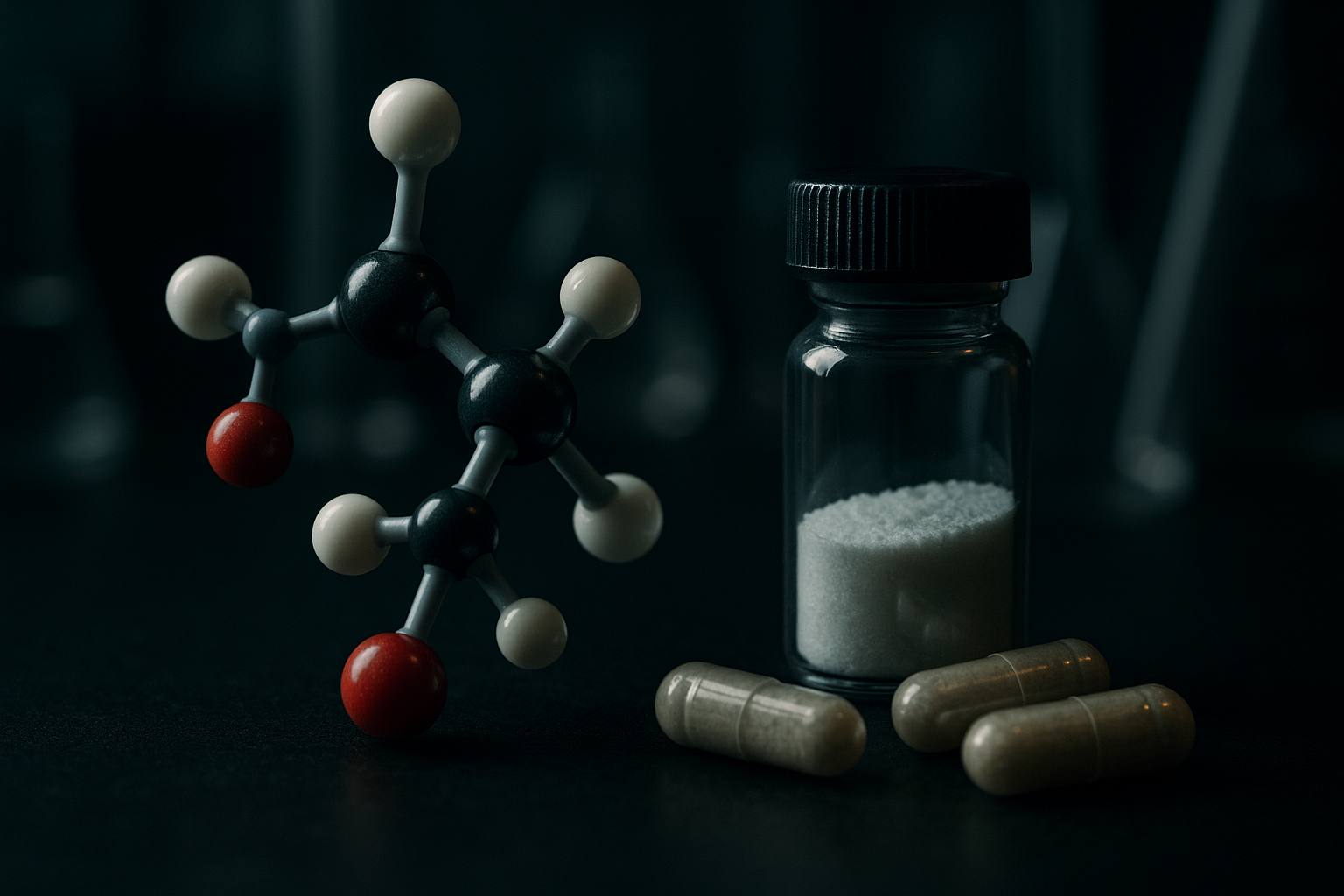
L-citrulline
L-citrulline is an amino acid involved in the urea cycle and arginine metabolism. As a supplement, it is studied mainly for increasing the availability of plasma L-arginine and, indirectly, the production of nitric oxide (NO), with potential effects on blood flow, exercise tolerance, and recovery. The evidence is more consistent in high-intensity exercise contexts and for some vascular parameters, with interindividual variability and dependence on dose, timing, and type of exercise.
Non-protein amino acid for supporting performance via the arginine–nitric oxide pathway
L-citrulline is an amino acid involved in the urea cycle and arginine metabolism. As a supplement, it is studied primarily for increasing the availability of plasma L-arginine and, indirectly, nitric oxide (NO) production, with potential effects on blood flow, exercise tolerance, and recovery. The evidence is more consistent in high-intensity exercise contexts and for some vascular parameters, with interindividual variability and dependence on dose, timing, and type of exercise.
Mechanism of action
1) Increased plasma arginine: citrulline partially bypasses the first-pass metabolism that limits L-arginine, promoting greater systemic availability of arginine. 2) Support for NO synthesis: more arginine can increase the substrate available for endothelial NO synthase (eNOS), with potential vasodilation and improved muscle perfusion. 3) Urea cycle: it may contribute to the handling of ammonia produced during intense exercise, with possible effects on fatigue (evidence varies). 4) Indirect effects on energy efficiency: in the form of citrulline malate, malate is an intermediate in the Krebs cycle; the hypothesis is support for oxidative metabolism and the removal of metabolites, but separating the effects of citrulline vs. malate is not always clear.
Supported benefits
- Increased plasma arginine and potential increase in NO bioavailability (vascular/endothelial markers in some studies) (moderate)
- Improvement in some performance outcomes in high-intensity/high-volume exercise (e.g. repetitions to failure, total work), especially with citrulline malate (moderate)
- Reduced perception of fatigue and/or post-exercise muscle soreness in some protocols (limited)
- Support for hemodynamic parameters (e.g. blood pressure) in specific populations and contexts, with heterogeneous results (limited)
Safety & side effects
- Gastrointestinal disturbances (nausea, cramps, diarrhea), more likely at high doses or in sensitive individuals
- Headache or a sensation of warmth/vasodilation in some individuals (uncommon)
- Possible reduction in blood pressure in predisposed individuals (dizziness/asthenia)
FAQ
What is the difference between L-citrulline and L-arginine?
L-citrulline is a precursor to arginine: it is converted mainly in the kidneys, often increasing plasma arginine more efficiently than direct arginine intake, which may be more extensively metabolized at the intestinal/hepatic level.
Is citrulline malate “better” than L-citrulline for performance?
Many performance studies use citrulline malate and report benefits in some protocols, but comparability is limited by differences in design, population, and the citrulline:malate ratio. It is not always possible to attribute the effect solely to malate or solely to citrulline.
How long before training is it used in studies?
Frequently 30–120 minutes beforehand, consistent with the trend in plasma levels. There are also daily intake protocols lasting several weeks.
Is it useful for endurance sports?
Results are heterogeneous: some studies suggest possible improvements in exercise tolerance or economy in specific contexts, but the overall evidence for endurance is less consistent than for some outcomes in high-volume resistance training.
Can it lower blood pressure?
In some individuals and contexts, it may influence NO-mediated vasodilation and contribute to modest reductions in blood pressure. This may be undesirable in those with low blood pressure or those taking antihypertensive medications.
The information provided is for informational and educational purposes only. It does not constitute medical advice. Use must be evaluated and authorized by a qualified healthcare professional.
Mechanism of action
1) Increase in plasma arginine: citrulline partly bypasses the first-pass metabolism that limits L-arginine, promoting greater systemic availability of arginine. 2) Support for NO synthesis: more arginine can increase the substrate for endothelial NO synthase (eNOS), with potential vasodilation and improved muscle perfusion. 3) Urea cycle: it may contribute to the handling of ammonia produced during intense exercise, with possible effects on fatigue (variable evidence). 4) Indirect effects on energy efficiency: in the form of citrulline malate, malate is an intermediate of the Krebs cycle; the hypothesis is support for oxidative metabolism and the removal of metabolites, but separating the effects of citrulline vs malate is not always clear.
Scientific benefits
Contraindications
- Hypotension or tendency toward fainting/dizziness (due to possible vasodilatory effect)
- Cardiovascular or kidney disorders: professional evaluation is necessary for use (arginine/NO metabolism and electrolyte/blood pressure management)
- Pregnancy and breastfeeding: insufficient data for a robust safety profile
- Pediatric age: use not supported by evidence of safety/effectiveness for performance
Side effects
- Gastrointestinal disturbances (nausea, cramps, diarrhea), more likely at high doses or in sensitive individuals
- Headache or sensation of warmth/vasodilation in some individuals (uncommon)
- Possible reduction in blood pressure in predisposed individuals (dizziness/asthenia)
Interactions
- Antihypertensive drugs: possible additive effect on blood pressure reduction
- Pharmaceutical nitrates (e.g. nitroglycerin) and other vasodilators: potential summation of hemodynamic effects
- PDE5 inhibitors (e.g. sildenafil, tadalafil): possible increased risk of hypotension due to convergence on the NO-cGMP pathway
- Other “NO booster” supplements (arginine, nitrates): additive effects not always predictable; higher likelihood of GI disturbances or hypotension
Regulatory status
Marketed as a dietary supplement in many regions (EU/USA) with varying requirements for labeling and claims. It is not typically included among WADA-prohibited substances, but athletes should consider the risk of contamination and check regulatory updates and the policies of their federation/anti-doping body.
Supplements and peptides
 Performance
Acetyl l-carnitine
Acetyl-L-carnitine (ALCAR) is a form of carnitine in which an acetyl group facilitates entry into tissues and the…
 Performance
Anhydrous betaine (trimethylglycine)
Anhydrous betaine (TMG) is a compound naturally present in various foods (e.g. beetroot, spinach, cereals) and also…
 Performance
Arginine akg
Arginine AKG (AAKG) combines L-arginine with α-ketoglutarate (AKG), an intermediate in the Krebs cycle. It is marketed…