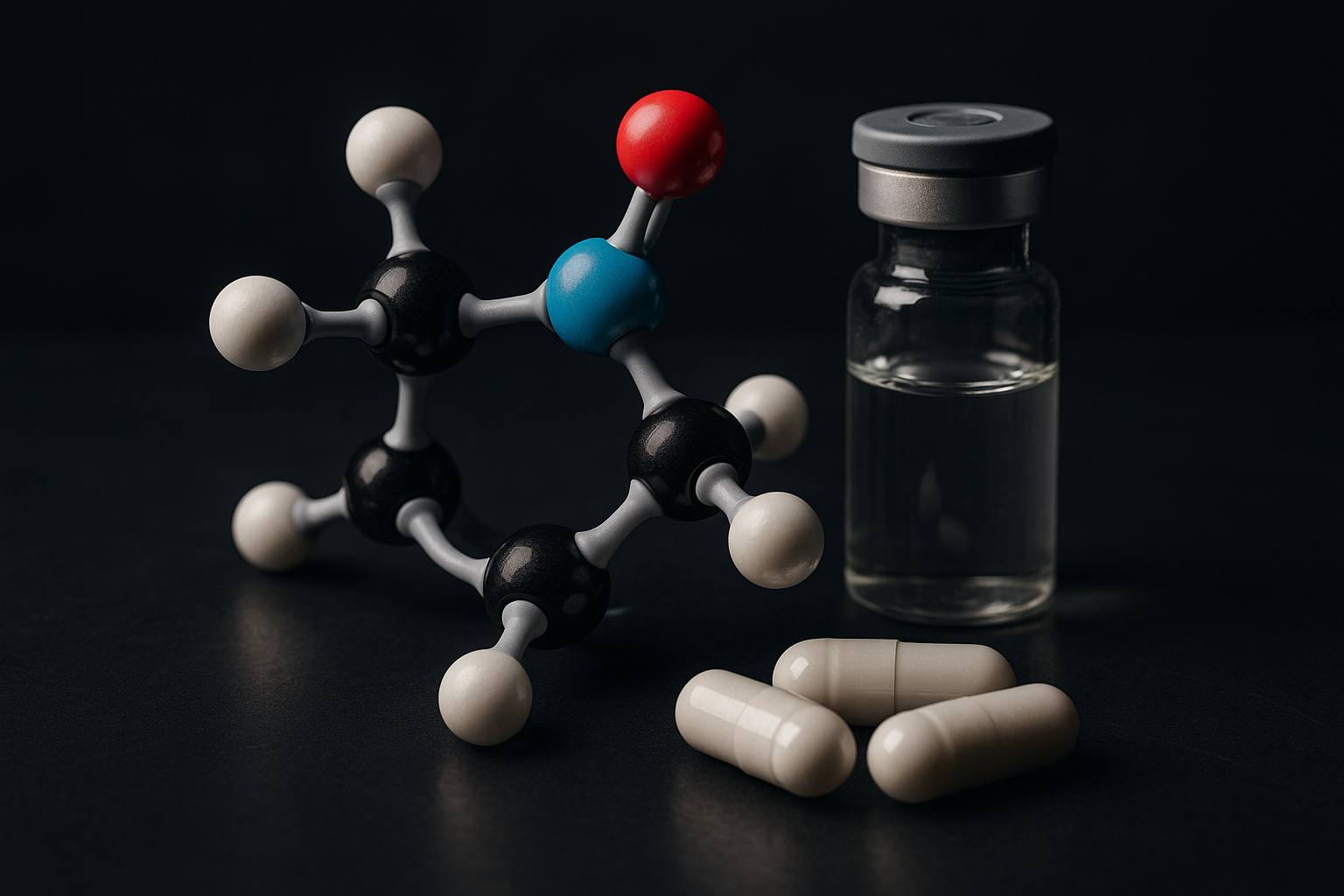
L-norvalina
L-norvaline is a non-proteinogenic amino acid (not incorporated into human proteins) used in some “focus/nootropics” and “pump” supplements for its hypothesized ability to inhibit the arginase enzyme, increasing the availability of L-arginine and potentially nitric oxide (NO) synthesis. Human evidence for cognitive benefits is limited; however, there are preclinical signals and safety considerations that require caution.
Non-proteinogenic amino acid studied as a modulator of arginine metabolism (arginase pathway), with potential implications for nitric oxide and cerebral perfusion
L-norvaline is a non-proteinogenic amino acid (not incorporated into human proteins) used in some “focus/nootropics” and “pump” supplements for its hypothesized ability to inhibit the arginase enzyme, increasing the availability of L-arginine and potentially nitric oxide (NO) synthesis. Human evidence for cognitive benefits is limited; there are, however, preclinical signals and safety considerations that warrant caution.
Mechanism of action
Main proposed mechanism: inhibition of arginase (ARG1/ARG2) → reduced catabolism of L-arginine → potential increase in substrate availability for NO synthase (NOS) → possible increase in nitric oxide production and improvement in endothelium-dependent vasodilation. Secondary mechanisms hypothesized in preclinical models include modulation of inflammatory/oxidative pathways and possible effects on nitrogen metabolism; however, translation to humans and to the CNS has not been demonstrated. It is not a classic nootropic with well-defined direct synaptic targets (e.g., cholinergic).
Supported benefits
- Improved endothelial function/vasodilation through modulation of arginine metabolism (plausible mechanism, but limited direct clinical evidence) (limited)
- Possible support for perfusion and “pump” in sports contexts (mainly based on the NO/arginine rationale; specific human data on isolated L-norvaline are scarce) (limited)
- Potential neuroprotective effects or effects on memory/learning in animal models of neurodegeneration (preclinical, not conclusive for humans) (emerging)
Safety & side effects
- Gastrointestinal disturbances (nausea, cramps, diarrhea) reported anecdotally with powdered/capsule amino acids
- Headache, flushing, or a feeling of pressure (possible if the NO/vasodilation axis is affected, especially when stacking)
- Possible changes in blood pressure (hypotension in predisposed individuals or when combined with vasodilatory drugs/substances)
- Uncertainty regarding long-term effects: solid clinical data on chronic safety are lacking
FAQ
Is L-norvaline a “direct” nootropic for the brain?
It is not considered a classic nootropic with well-defined neurotransmitter targets. Nootropic interest derives mainly from a vascular/metabolic rationale (arginase → arginine → NO pathway), but clinical evidence of cognitive improvement in humans is limited.
Does it definitely increase nitric oxide?
The proposed mechanism makes an increase in arginine availability, and therefore NO, plausible, but the magnitude of the effect in humans, at typical supplement doses and under real-world conditions, has not been well quantified by solid clinical studies.
Is it safe for prolonged use?
There are not enough data to draw conclusions about long-term safety. In particular, the chronic impact on arginine/NO regulation and on cardiovascular parameters has not been adequately characterized.
Does it make sense to combine it with citrulline or arginine?
There is a theoretical synergy (more substrate and less degradation), but this may also increase the likelihood of vasodilation-related side effects. The efficacy and safety of the combination have not been robustly demonstrated for cognitive goals.
The information provided is for informational and educational purposes only. It does not constitute medical advice. Use should be assessed and authorized by a qualified healthcare professional.
Mechanism of action
Main proposed mechanism: arginase inhibition (ARG1/ARG2) → reduced catabolism of L-arginine → potential increase in substrate availability for nitric oxide synthase (NOS) → possible increase in nitric oxide production and improvement in endothelium-dependent vasodilation. Secondary mechanisms hypothesized in preclinical models include modulation of inflammatory/oxidative pathways and possible effects on nitrogen metabolism; however, translation to humans and the CNS has not been demonstrated. It is not a classic nootropic with well-defined direct synaptic targets (e.g. cholinergic).
Scientific benefits
Contraindications
- Pregnancy and breastfeeding (lack of adequate safety data)
- Pediatric/adolescent age (lack of data)
- Hypotension or hemodynamic instability
- Uncontrolled cardiovascular disease or history of syncope (due to potential vascular effects)
- Significant kidney or liver disease (amino acid metabolism/clearance and nitrogen balance: caution due to lack of data)
- History of recurrent herpes: the arginine/NO axis is complex; there is no direct evidence that L-norvaline worsens herpes, but modulation of arginine availability suggests caution
Side effects
- Gastrointestinal disturbances (nausea, cramps, diarrhea) reported anecdotally with powdered/capsule amino acids
- Headache, flushing, or a feeling of pressure (possible if the NO/vasodilation axis is affected, especially in stacking)
- Possible changes in blood pressure (hypotension in predisposed individuals or in combination with vasodilating drugs/substances)
- Uncertainty about long-term effects: solid clinical data on chronic safety are lacking
Interactions
- Antihypertensives (ACE inhibitors, ARBs, calcium channel blockers, beta-blockers, diuretics): possible additive effects on blood pressure
- Nitrates (e.g. nitroglycerin) and other vasodilators: potential increased risk of hypotension/headache
- PDE5 inhibitors (e.g. sildenafil, tadalafil): possible additive effect on the NO-cGMP pathway with risk of hypotension
- “NO booster” supplements (citrulline/arginine, beet-derived nitrates): possible additive effects
- Drugs affecting endothelial function or coagulation: specific interactions not well studied, but caution is advised due to lack of data
Regulatory status
Ingredient found in supplements in various markets, but with non-uniform regulatory status and subject to possible restrictions/evaluations. It is not an approved drug for cognitive indications. Always verify compliance with local regulations and the manufacturer's quality documentation.
Supplements and peptides
 Focus & Nootropics
Agmatine sulfate
Agmatine is an endogenous metabolite produced by decarboxylation of L-arginine. In supplementation contexts it is…
 Focus & Nootropics
Alpha-gpc
Alpha-GPC is a choline-containing compound (a precursor of acetylcholine) and an intermediate in phospholipid…
 Focus & Nootropics
Anhydrous caffeine
Anhydrous caffeine is the dehydrated form of caffeine, used in supplements for its high concentration and dosing…