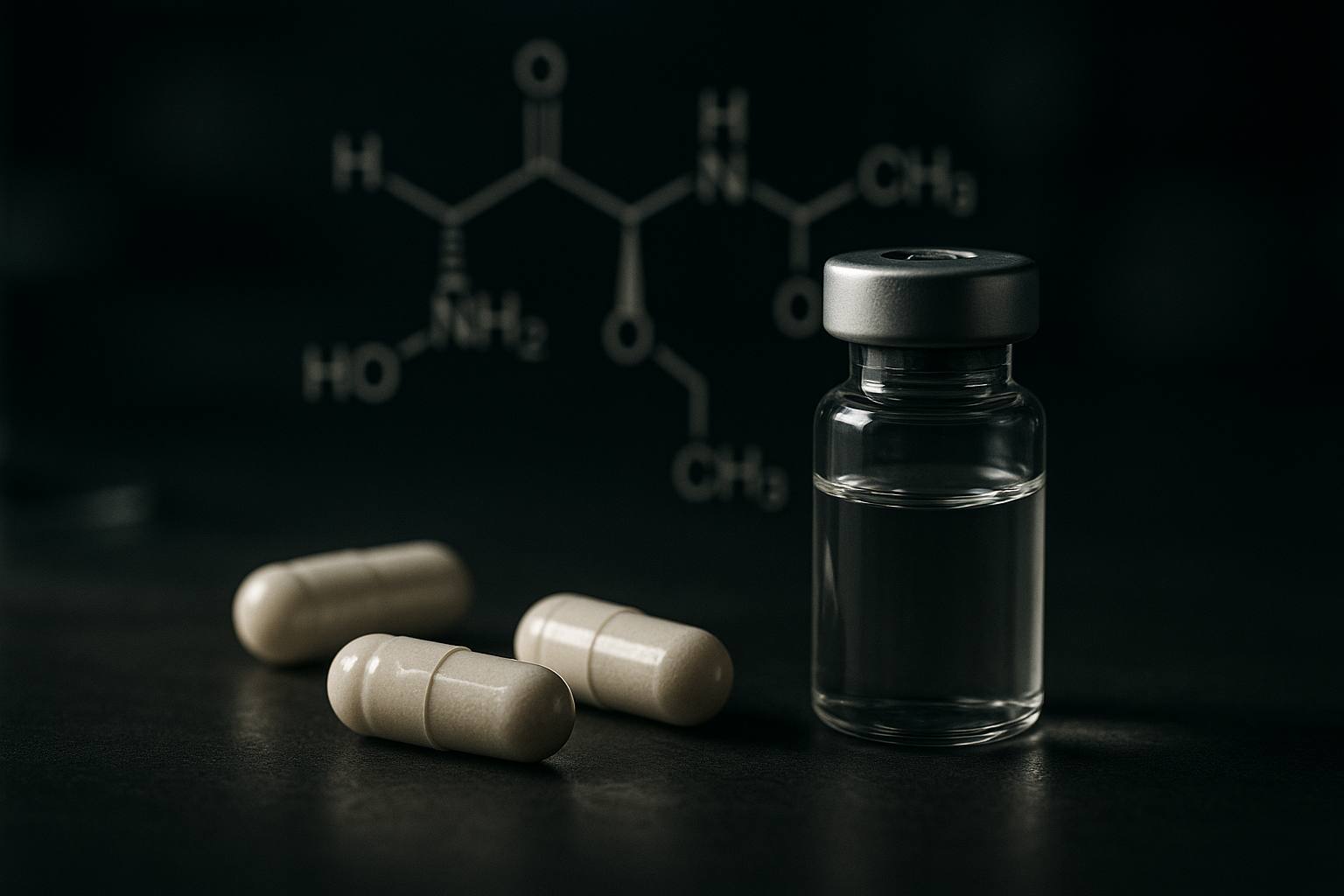
L-theanine
L-theanine (γ-glutamyl-ethylamide) is an amino acid naturally found especially in the leaves of Camellia sinensis (tea). It is studied for effects on relaxation without marked sedation, stress management, and sleep quality, and for possible benefits on focus when associated with caffeine. Evidence varies by endpoint and population; safety is generally good at the studied doses, with attention to possible interactions and specific conditions.
Non-protein amino acid from tea: modulation of a calm yet alert state and attentional support
L-theanine (γ-glutamyl-ethylamide) is an amino acid naturally found especially in the leaves of Camellia sinensis (tea). It is studied for effects on relaxation without marked sedation, stress management, and sleep quality, as well as for possible benefits on focus when combined with caffeine. The evidence varies by endpoint and population; safety is generally good at the studied doses, with attention to possible interactions and specific conditions.
Mechanism of action
Proposed mechanisms (not mutually exclusive): (1) modulation of the glutamatergic system: possible interaction with glutamate receptors and regulation of release/uptake, with a potential “balancing” effect on neuronal excitability; (2) increased alpha activity on EEG (associated with relaxed alertness) in some studies; (3) modulation of neurotransmitters: preclinical data and some human data suggest effects on GABA, dopamine, and serotonin, with an impact on stress and mood; (4) stress axis: possible attenuation of physiological stress responses (e.g. cardiovascular parameters and/or salivary markers in some protocols); (5) possible influence on sleep quality through reduction of hyperarousal, rather than as a direct hypnotic.
Supported benefits
- Improved selective attention and performance on cognitive tasks when combined with caffeine (compared with placebo and sometimes compared with the individual components) (moderate)
- Reduced perceived stress and/or attenuation of some physiological stress responses in experimental settings (moderate)
- Support for relaxation without marked sedation (increased alpha EEG activity in some studies) (limited)
- Improvement in some sleep parameters (e.g. subjective quality), especially in individuals with stress or mild sleep difficulties (limited)
- Possible support for mild anxious symptoms in some populations and protocols (emerging)
Safety & side effects
- Generally well tolerated at the studied doses
- Possible: headache, nausea, or mild gastrointestinal discomfort
- Possible drowsiness or reduced alertness in some individuals, especially if combined with other sedatives or in conditions of fatigue
- Rarely: dizziness or a sense of “drop” if combined with blood pressure-lowering substances or in predisposed individuals
FAQ
Is L-theanine a stimulant?
No. It is more often associated with relaxation and reduced tension. It may, however, support focus, especially in combination with caffeine, promoting more “stable” alertness in some individuals.
How long does it take to work?
In acute studies, effects on relaxation/EEG and some cognitive measures have often been observed within ~30–60 minutes of oral intake, with individual variability.
Is drinking tea equivalent to using isolated L-theanine?
Not necessarily. Tea also contains caffeine and polyphenols; the amount of L-theanine varies greatly. The perceived effect may differ depending on dose, theanine:caffeine ratio, and method of preparation.
Can it help with sleep?
The evidence suggests a possible benefit for sleep quality, especially by reducing stress-related hyperarousal, rather than acting as a direct sedative. Results are not consistent across studies and populations.
Are there risks of dependence or tolerance?
There is no solid evidence of dependence. Tolerance is not well characterized; subjective experience may change over time based on stress, sleep, caffeine, and other factors.
The information provided is for informational and educational purposes only. It does not constitute medical advice. Use should be evaluated and authorized by a qualified healthcare professional.
Mechanism of action
Proposed mechanisms (not mutually exclusive): (1) modulation of the glutamatergic system: possible interaction with glutamate receptors and regulation of release/uptake, with a potential “balancing” effect on neuronal excitability; (2) increased alpha activity on EEG (associated with relaxed alertness) in some studies; (3) modulation of neurotransmitters: preclinical data and some human data suggest effects on GABA, dopamine, and serotonin, with an impact on stress and mood; (4) stress axis: possible attenuation of physiological stress responses (e.g. cardiovascular parameters and/or salivary markers in some protocols); (5) possible influence on sleep quality through reduction of hyperarousal, rather than as a direct hypnotic.
Scientific benefits
Contraindications
- Pregnancy and breastfeeding: insufficient clinical data for safety recommendations
- Hypotension or tendency toward low blood pressure: possible further reduction in blood pressure in some individuals
- Mood or anxiety disorders under pharmacological treatment: evaluate with a professional for possible interactions/additive effects
- Pediatric age: use only under medical supervision due to lack of robust data
Side effects
- Generally well tolerated at the studied doses
- Possible: headache, nausea, or mild gastrointestinal disturbances
- Possible drowsiness or reduced alertness in some individuals, especially if combined with other sedatives or in conditions of fatigue
- Rarely: dizziness or a feeling of “drop” if combined with hypotensive substances or in predisposed individuals
Interactions
- Antihypertensives: potential additive effect on blood pressure
- Sedatives/anxiolytics (e.g. benzodiazepines), hypnotics, and alcohol: possible increase in drowsiness/psychomotor impairment
- Stimulants (e.g. caffeine): may modulate the subjective response; the combination may improve performance but also undesirable effects in sensitive individuals
- Drugs that influence neurotransmission (e.g. antidepressants): clinically relevant interactions are not well defined; caution due to possible additive effects on anxiety/sleep
Regulatory status
In many regions it is sold as a dietary supplement; it is not approved as a drug for specific clinical indications. Health claims are regulated and often limited; check local regulations and labeling compliance.
Supplements and peptides
 Focus & Nootropics
Agmatine sulfate
Agmatine is an endogenous metabolite produced by decarboxylation of L-arginine. In supplementation contexts it is…
 Focus & Nootropics
Alpha-gpc
Alpha-GPC is a choline-containing compound (a precursor of acetylcholine) and an intermediate in phospholipid…
 Focus & Nootropics
Anhydrous caffeine
Anhydrous caffeine is the dehydrated form of caffeine, used in supplements for its high concentration and dosing…