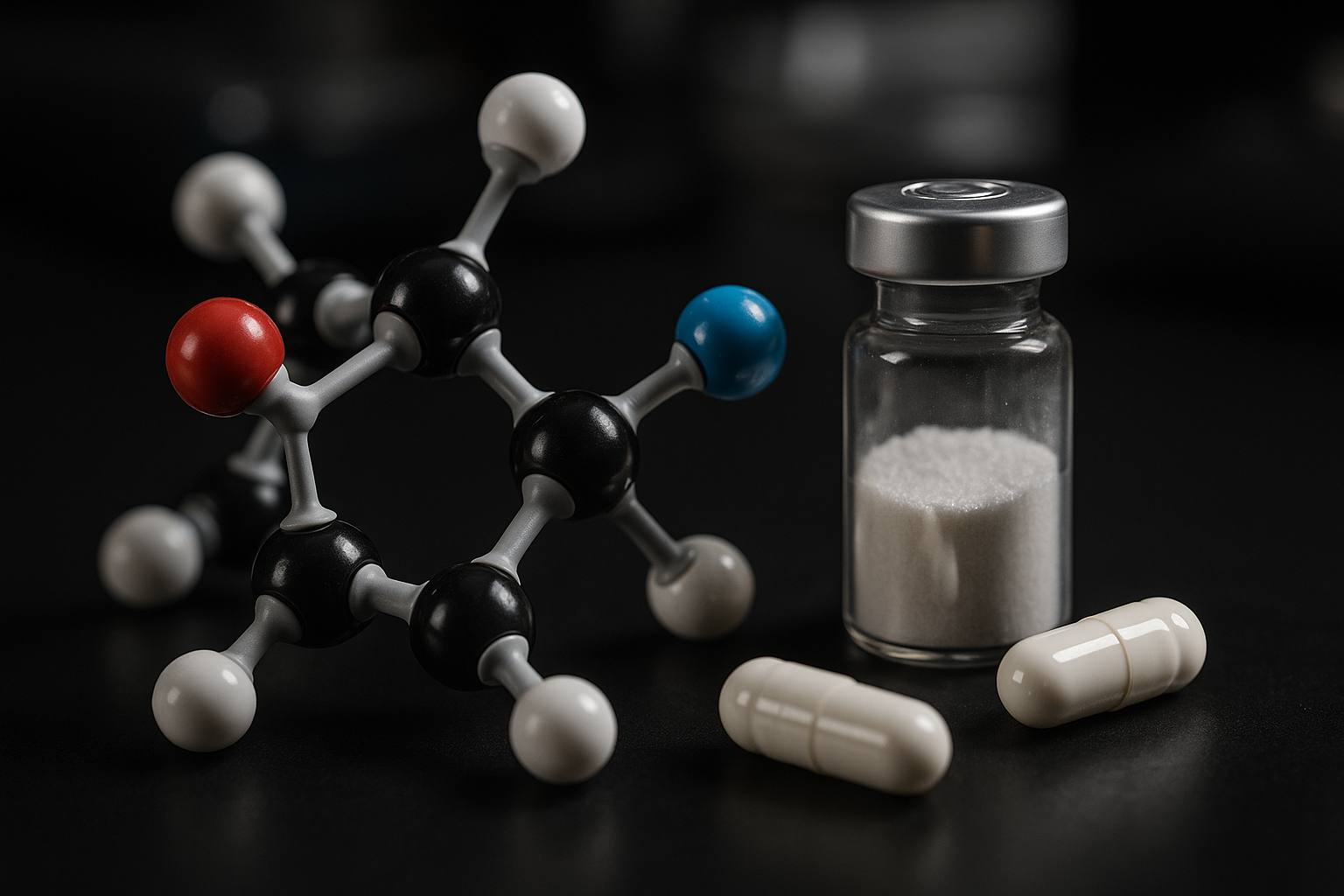
L-tyrosine
L-tyrosine is a non-essential amino acid (also derivable from phenylalanine) involved in the synthesis of dopamine, noradrenaline, and adrenaline, as well as thyroid hormones and melanin. In the “Focus & Nootropics” field, it is studied mainly for its ability to support certain cognitive functions (attention, working memory) when neurochemical demand increases, for example during acute stress, cold, or sleep deprivation.
An amino acid precursor of catecholamines: cognitive support especially under stress
L-tyrosine is a non-essential amino acid (also derived from phenylalanine) involved in the synthesis of dopamine, noradrenaline, and adrenaline, as well as thyroid hormones and melanin. In the “Focus & Nootropics” field, it is studied primarily for its ability to support certain cognitive functions (attention, working memory) when neurochemical demand increases, such as during acute stress, cold exposure, or sleep deprivation.
Mechanism of action
Tyrosine is the substrate of tyrosine hydroxylase (the rate-limiting step in catecholamine synthesis), which converts tyrosine into L-DOPA, then into dopamine and subsequently into noradrenaline/adrenaline. Supplementation may increase the availability of tyrosine in the blood and, to some extent, in the brain, potentially supporting catecholamine synthesis when noradrenergic/dopaminergic neurons are under high demand (stress, cold, cognitive load, sleep deprivation). The effect is modulated by competition with other amino acids for transport into the CNS and by the fact that, under baseline conditions, catecholamine synthesis is often regulated by feedback and not limited by substrate availability.
Supported benefits
- Maintenance of certain cognitive functions (attention, working memory, cognitive flexibility) under acute stress conditions (cold, multitasking, high mental load) (moderate)
- Support for cognitive performance during sleep deprivation or operational fatigue in some experimental protocols (limited)
- Reduction of some subjective markers of stress/fatigue in specific contexts (results are not consistent) (limited)
- Improved focus under baseline conditions (without stress) in healthy subjects (emerging)
Safety & side effects
- Nausea or gastrointestinal discomfort (more likely at high doses)
- Headache
- Agitation, irritability, or anxiety in predisposed individuals
- Insomnia if taken late or in combination with stimulants
- Possible increase in heart rate or blood pressure in sensitive individuals (especially with stimulants)
FAQ
Does L-tyrosine increase dopamine in the brain?
It is a precursor to dopamine and may increase substrate availability for catecholamine synthesis. However, under baseline conditions, synthesis is often regulated by feedback and not necessarily limited by tyrosine; effects are more evident under conditions of acute stress or high demand.
Is it useful for studying in the absence of stress?
Evidence for above-baseline improvement in healthy, non-stressed individuals is less consistent. The literature more strongly supports a role in reducing performance decline under stress rather than in generalized enhancement.
Is L-tyrosine or N-acetyl-L-tyrosine (NALT) better?
NALT is an acetylated form often marketed for its solubility, but it is not guaranteed to produce higher tyrosine levels than L-tyrosine in all contexts. Many classic studies on performance under stress use L-tyrosine.
Can it interfere with the thyroid?
Tyrosine is involved in the synthesis of thyroid hormones, but the thyroid axis is regulated by complex endocrine mechanisms. In people with thyroid disorders or those on hormone therapy, the use of tyrosine supplements should be clinically evaluated.
What are the signs of excessive stimulation?
Insomnia, nervousness, irritability, palpitations, increased blood pressure, or headache may indicate excessive sympathetic activation, especially if associated with caffeine or other stimulants.
The information provided is for informational and educational purposes only. It does not constitute medical advice. Use should be evaluated and authorized by a qualified healthcare professional.
Mechanism of action
Tyrosine is the substrate of tyrosine hydroxylase (the rate-limiting step in catecholamine synthesis), which converts tyrosine into L-DOPA, then into dopamine and subsequently into noradrenaline/adrenaline. Supplementation can increase the availability of tyrosine in the blood and, in part, in the brain, potentially supporting catecholamine synthesis when noradrenergic/dopaminergic neurons are under high demand (stress, cold, cognitive load, sleep deprivation). The effect is modulated by competition with other amino acids for transport into the CNS and by the fact that, under baseline conditions, catecholamine synthesis is often regulated by feedback and not limited by substrate availability.
Scientific benefits
Contraindications
- MAOI therapy (risk of excessive catecholaminergic stimulation and hypertensive crisis)
- Hyperthyroidism or conditions in which excess thyroid substrates/precursors is not recommended (clinical evaluation required)
- Melanoma or a history of melanoma: tyrosine is a precursor of melanin; caution and specialist consultation are advisable
- Uncontrolled anxiety/panic disorders: possible worsening of symptoms in some individuals
- Pregnancy and breastfeeding: safety data for targeted supplementation are insufficient
Side effects
- Nausea or gastrointestinal disturbances (more likely at high doses)
- Headache
- Agitation, irritability, or anxiety in predisposed individuals
- Insomnia if taken late or in combination with stimulants
- Possible increase in heart rate or blood pressure in sensitive individuals (especially with stimulants)
Interactions
- MAOIs (e.g. phenelzine, tranylcypromine): potential increased risk of hypertension and adrenergic symptoms
- Levodopa: competition for transport and metabolism; possible interference with clinical efficacy (relevant in Parkinson's disease)
- Thyroid hormones (levothyroxine): possible interference with thyroid balance in susceptible individuals; clinical monitoring if used
- Stimulants/sympathomimetics (e.g. pseudoephedrine, high doses of caffeine): possible additive effects on heart rate, blood pressure, anxiety, and insomnia
Regulatory status
In many countries, L-tyrosine is marketed as a dietary supplement; it is not approved as a drug for nootropic indications. Permitted health claims depend on local regulations (e.g. EU vs USA) and on claim authorizations.
Supplements and peptides
 Focus & Nootropics
Agmatine sulfate
Agmatine is an endogenous metabolite produced by decarboxylation of L-arginine. In supplementation contexts it is…
 Focus & Nootropics
Alpha-gpc
Alpha-GPC is a choline-containing compound (a precursor of acetylcholine) and an intermediate in phospholipid…
 Focus & Nootropics
Anhydrous caffeine
Anhydrous caffeine is the dehydrated form of caffeine, used in supplements for its high concentration and dosing…