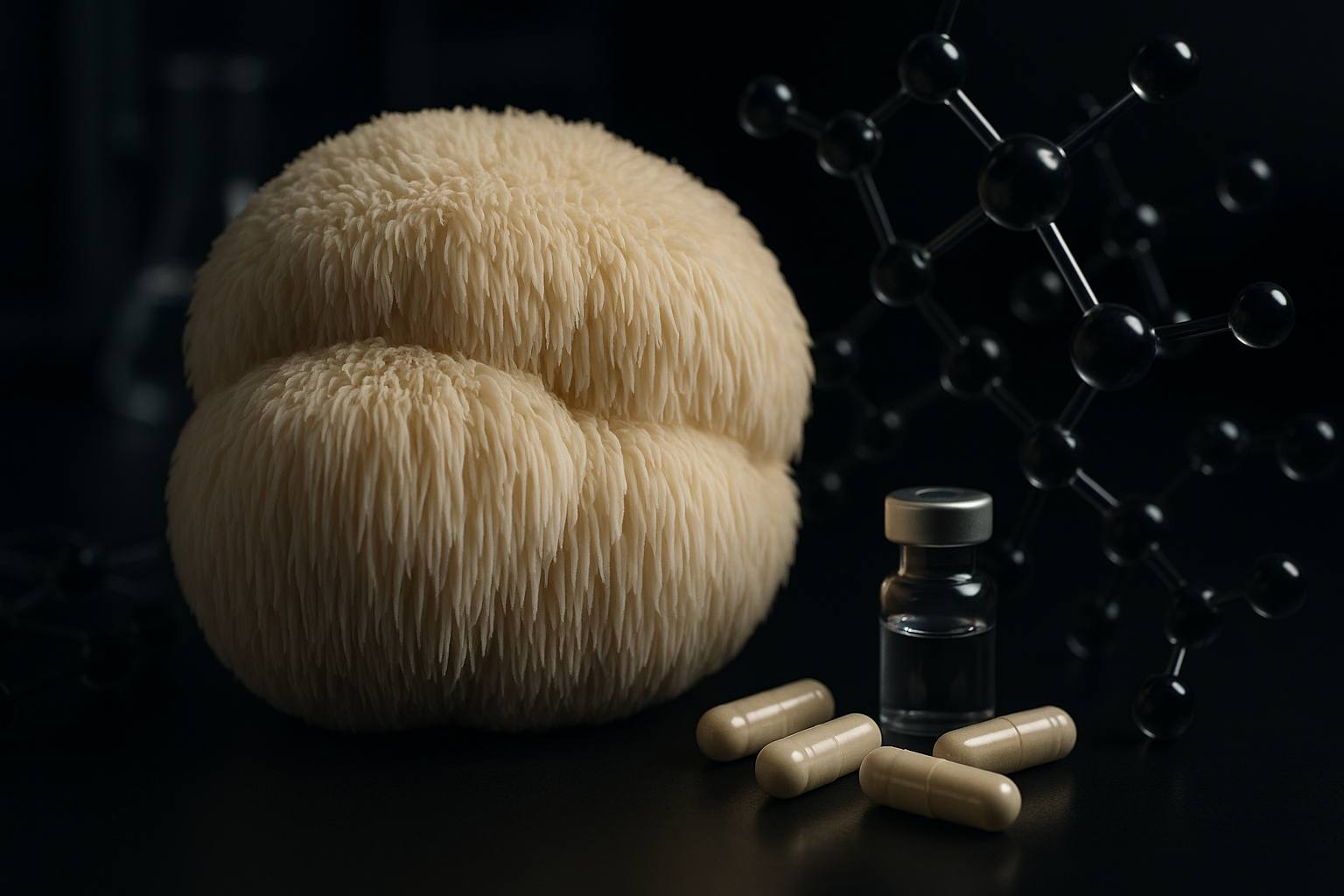
Lion’s mane (hericium erinaceus)
Hericium erinaceus (Lion’s Mane) is an edible mushroom containing bioactive compounds (e.g. erinacines and hericenones) investigated for effects on neurotrophic factors, inflammation, and the gut-brain axis. Clinical evidence is promising but not definitive; extract quality and standardization greatly influence results.
Medicinal mushroom studied for cognitive support, neurotrophic activity, and nervous system well-being
Hericium erinaceus (Lion’s Mane) is an edible mushroom containing bioactive compounds (e.g. erinacines and hericenones) investigated for effects on neurotrophic factors, inflammation, and the gut-brain axis. Clinical evidence is promising but not definitive; extract quality and standardization greatly influence results.
Mechanism of action
Proposed mechanisms (mainly from preclinical studies): - Neurotrophic activity: some compounds (e.g. erinacines/hericenones) have been associated with increased neurotrophic signaling (NGF and/or BDNF) and modulation of intracellular pathways related to synaptic plasticity. - Neuroprotection: reduction of oxidative stress and neuroinflammation (modulation of cytokines and inflammatory pathways), with possible effects on neuronal integrity and myelin in animal models. - Gut-brain axis: polysaccharides and fungal cell wall components may act as fermentable substrates and modulate the microbiota, with potential downstream effects on systemic inflammation and neurobehavioral signaling. - Metabolism and immunity: beta-glucans and other polysaccharides may influence innate/adaptive immune response and metabolic parameters; the relevance for focus/cognition in humans remains indirect. Note: translation to humans depends on dose, form (mycelium vs fruiting body), standardization, and bioavailability of the active compounds.
Supported benefits
- Improvement in some cognitive domains in adults with mild cognitive impairment (MCI) in small clinical studies (moderate)
- Reduction of anxious-depressive symptoms and improvement in subjective well-being in some populations (e.g. menopausal women) in preliminary trials (limited)
- Support for markers of neuroplasticity/neuroprotection (NGF/BDNF, inflammation, oxidative stress) in preclinical models (emerging)
- Possible support for symptoms of peripheral neuropathy/nerve regeneration in specific contexts (clinical evidence still scarce) (emerging)
Safety & side effects
- Gastrointestinal disturbances (nausea, dyspepsia, diarrhea) in a minority of users
- Skin reactions or itching (possible allergic phenomena)
- Headache or nonspecific sensations of agitation/sedation (anecdotal reports; limited clinical evidence)
- Rarely, hypersensitivity reactions in individuals allergic to mushrooms
FAQ
What is the difference between the fruiting body and mycelium?
The fruiting body is the edible “mushroom” part; mycelium is the vegetative network. Composition may differ: some hericenones are more associated with the fruiting body, while some erinacines are often reported in mycelium extracts. In addition, mycelium grown on grains may contain starches from the substrate, affecting the percentage of beta-glucans and other active compounds.
Are the effects immediate like caffeine?
In clinical trials, outcomes on cognition/mood were typically assessed after weeks. It is not a compound known for a reliable acute effect on focus; any benefit is more often considered subacute/chronic and context-dependent.
Are there human biomarkers confirming an increase in NGF/BDNF?
Much of the evidence on NGF/BDNF comes from cellular/animal models. In humans, biomarker data are limited and not standardized; moreover, peripheral measures (blood) do not always directly reflect levels in the central nervous system.
How should product quality be evaluated?
Useful indicators include: specification of the part used (fruiting body/mycelium), extraction method, declared beta-glucan content with analytical method, any standardization for specific compounds, and third-party testing for contaminants (heavy metals, pesticides, mycotoxins) and species identity.
The information provided is for informational and educational purposes only. It does not constitute medical advice. Use should be evaluated and authorized by a qualified healthcare professional.
Mechanism of action
Proposed mechanisms (mainly from preclinical studies): - Neurotrophy: some compounds (e.g. erinacines/hericenones) have been associated with increased neurotrophic signaling (NGF and/or BDNF) and modulation of intracellular pathways related to synaptic plasticity. - Neuroprotection: reduction of oxidative stress and neuroinflammation (modulation of cytokines and inflammatory pathways), with possible effects on neuronal integrity and myelin in animal models. - Gut-brain axis: polysaccharides and fungal cell wall components may act as fermentable substrates and modulate the microbiota, with potential effects on systemic inflammation and neurobehavioral signals. - Metabolism and immunity: beta-glucans and other polysaccharides may influence innate/adaptive immune response and metabolic parameters; the relevance for focus/cognition in humans remains indirect. Note: translation to humans depends on dose, form (mycelium vs fruiting body), standardization, and bioavailability of the active compounds.
Scientific benefits
Contraindications
- Known allergy to mushrooms or product components
- Pregnancy and breastfeeding: insufficient safety data for reliable recommendations
- Autoimmune conditions or immunomodulatory therapies: possible theoretical interference with the immune response (clinical evaluation needed)
- Bleeding disorders or use of anticoagulants/antiplatelet agents: caution due to potential effects on hemostasis reported for some mushrooms/extracts (specific evidence inconclusive)
Side effects
- Gastrointestinal disturbances (nausea, dyspepsia, diarrhea) in a minority of users
- Skin reactions or itching (possible allergic phenomena)
- Headache or nonspecific sensations of agitation/sedation (anecdotal reports; limited clinical evidence)
- Rarely, hypersensitivity reactions in individuals allergic to mushrooms
Interactions
- Anticoagulants/antiplatelet agents (e.g. warfarin, DOACs, aspirin, clopidogrel): possible increased bleeding risk (data not definitive; caution advised).
- Antidiabetics: potential effect on blood glucose in some preclinical contexts/limited clinical data; clinical monitoring if under treatment.
- Immunosuppressants/immunotherapies: possible immune modulation; clinical relevance uncertain but warrants caution.
- Other supplements/drugs with sedative or stimulant effects: possible additive subjective effects (limited evidence).
Regulatory status
In many geographic areas it is marketed as a food or dietary supplement; claims regarding memory, neurogenesis, or treatment of diseases are generally not authorized without specific approval. Check local regulations and labeling compliance.
Supplements and peptides
 Focus & Nootropics
Agmatine sulfate
Agmatine is an endogenous metabolite produced by decarboxylation of L-arginine. In supplementation contexts it is…
 Focus & Nootropics
Alpha-gpc
Alpha-GPC is a choline-containing compound (a precursor of acetylcholine) and an intermediate in phospholipid…
 Focus & Nootropics
Anhydrous caffeine
Anhydrous caffeine is the dehydrated form of caffeine, used in supplements for its high concentration and dosing…