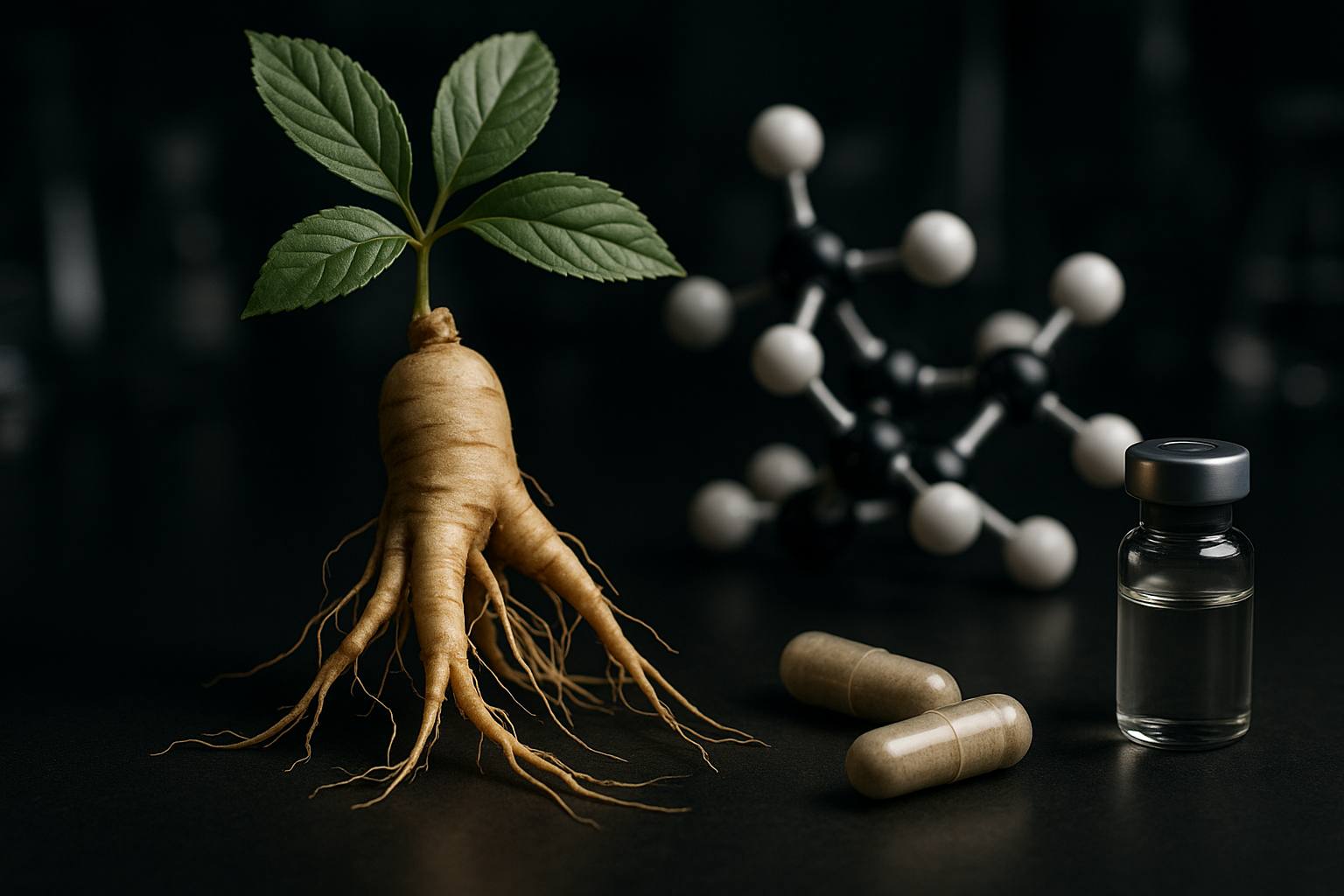
Panax ginseng
Panax ginseng C.A. Meyer is a root traditionally used in Asia and now used as a supplement. The main active compounds are ginsenosides (e.g. Rg1, Rb1, Rg3), which modulate neuroendocrine, immune, and metabolic systems. Evidence on physical performance is heterogeneous and depends on the extract, standardization, dose, and duration.
An adaptogenic phytocompound studied for fatigue, cognitive function, and some aspects of performance
Panax ginseng C.A. Meyer is a root traditionally used in Asia and now employed as a supplement. The main active compounds are ginsenosides (e.g. Rg1, Rb1, Rg3), which modulate neuroendocrine, immune, and metabolic systems. The evidence on physical performance is heterogeneous and depends on the extract, standardization, dose, and duration.
Mechanism of action
Proposed mechanisms (dependent on dose, duration, and ginsenoside profile): modulation of the HPA axis and stress response; interaction with neurotransmission (cholinergic, dopaminergic, and glutamatergic) and neuroinflammation; effects on endothelial nitric oxide and vascular function; modulation of energy metabolism (insulin sensitivity, glucose utilization) and mitochondrial biogenesis in preclinical models; indirect antioxidant/anti-inflammatory activity (regulation of pathways such as NF-κB) and immunomodulatory activity (polysaccharides). The microbial transformation of ginsenosides into more absorbable metabolites (e.g. compound K) is a key determinant of individual response.
Supported benefits
- Reduction of subjective fatigue and improvement in some domains of well-being in people with fatigue (not necessarily athletes), with variable results across studies (moderate)
- Modest improvement in attention/alertness and some aspects of cognitive performance under conditions of stress or fatigue, especially with standardized extracts (moderate)
- Immune support (reduced incidence/duration of respiratory infections in some studies on specific extracts) (moderate)
- Improvement in some metabolic markers (fasting glucose/HbA1c) in subgroups with impaired glycemic control; results are not uniform (limited)
- Improvement in physical performance (endurance, strength, VO2max): overall evidence is inconsistent and protocol-dependent (limited)
- Sexual function/erection: possible benefits in some studies on red ginseng, but with high heterogeneity (emerging)
Safety & side effects
- Insomnia or sleep disturbances (especially if taken late or in sensitive individuals)
- Nervousness, irritability, headache
- Gastrointestinal disturbances (nausea, diarrhea, abdominal pain)
- Palpitations or increased heart rate in predisposed individuals
- Rarely: allergic skin reactions
FAQ
Is Panax ginseng the same as Siberian ginseng (Eleutherococcus)?
No. “Siberian ginseng” is Eleutherococcus senticosus and contains eleutherosides, not ginsenosides. The effects and evidence are not interchangeable.
Are red ginseng and white ginseng different?
Yes. Red ginseng is obtained through steaming/drying and may have a different ginsenoside profile (some transformed), with possible differences in biological activity.
Why do some people not notice any effects?
Responses vary due to the quality/standardization of the extract, dose, and duration, but also because of differences in the gut microbiota, which converts ginsenosides into more absorbable metabolites.
Is it useful for directly increasing muscle mass or strength?
The evidence on direct and reliable increases in strength/hypertrophy is limited and inconsistent. Any benefits are more often reported for fatigue and some cognitive aspects.
Can it affect blood sugar?
In some studies it has shown effects on glycemic control, especially in individuals with impaired blood glucose. In those taking glucose-lowering medications, it may increase the risk of hypoglycemia, so caution and supervision are needed.
The information provided is for informational and educational purposes only. It does not constitute medical advice. Use must be evaluated and authorized by a qualified healthcare professional.
Mechanism of action
Proposed mechanisms (depending on dose, duration, and ginsenoside profile): modulation of the HPA axis and stress response; interaction with neurotransmission (cholinergic, dopaminergic, and glutamatergic) and neuroinflammation; effects on endothelial nitric oxide and vascular function; modulation of energy metabolism (insulin sensitivity, glucose utilization) and mitochondrial biogenesis in preclinical models; indirect antioxidant/anti-inflammatory activity (regulation of pathways such as NF-κB) and immunomodulatory activity (polysaccharides). Microbial transformation of ginsenosides into more absorbable metabolites (e.g. compound K) is a key determinant of individual response.
Scientific benefits
Contraindications
- Pregnancy and breastfeeding: insufficient safety data for unsupervised use
- Sleep disorders/marked anxiety: possible worsening
- Uncontrolled hypertension or arrhythmias: caution due to possible effects on blood pressure/heart rate (data are inconclusive)
- Autoimmune diseases or immunosuppressive therapy: caution due to potential immunomodulation
- Diabetes treated with glucose-lowering therapy: risk of hypoglycemia if combined with medications
Side effects
- Insomnia or sleep disturbances (especially if taken late or in sensitive individuals)
- Nervousness, irritability, headache
- Gastrointestinal disturbances (nausea, diarrhea, abdominal pain)
- Palpitations or increased heart rate in predisposed individuals
- Rarely: allergic skin reactions
Interactions
- Anticoagulants/antiplatelet agents (e.g. warfarin): possible interactions and reported INR changes; caution and clinical monitoring are necessary
- Glucose-lowering drugs (insulin, sulfonylureas, metformin, and others): possible increased risk of hypoglycemia
- Stimulants (caffeine, pseudoephedrine, some pre-workouts): possible increase in adverse effects (anxiety, tachycardia, insomnia)
- MAOIs and some antidepressants: rare reports of “stimulation”-like symptoms; caution due to potential neurochemical interactions
- Immunosuppressants: possible theoretical interference with therapeutic goals (limited clinical evidence)
Regulatory status
In the EU and USA it is generally marketed as a dietary supplement. It is not typically included on lists of prohibited sports substances, but contamination with stimulants or other substances is a documented risk in the supplement market: prefer products tested by third parties (e.g. anti-doping certification programs).
Supplements and peptides
 Performance
Acetyl l-carnitine
Acetyl-L-carnitine (ALCAR) is a form of carnitine in which an acetyl group facilitates entry into tissues and the…
 Performance
Anhydrous betaine (trimethylglycine)
Anhydrous betaine (TMG) is a compound naturally present in various foods (e.g. beetroot, spinach, cereals) and also…
 Performance
Arginine akg
Arginine AKG (AAKG) combines L-arginine with α-ketoglutarate (AKG), an intermediate in the Krebs cycle. It is marketed…