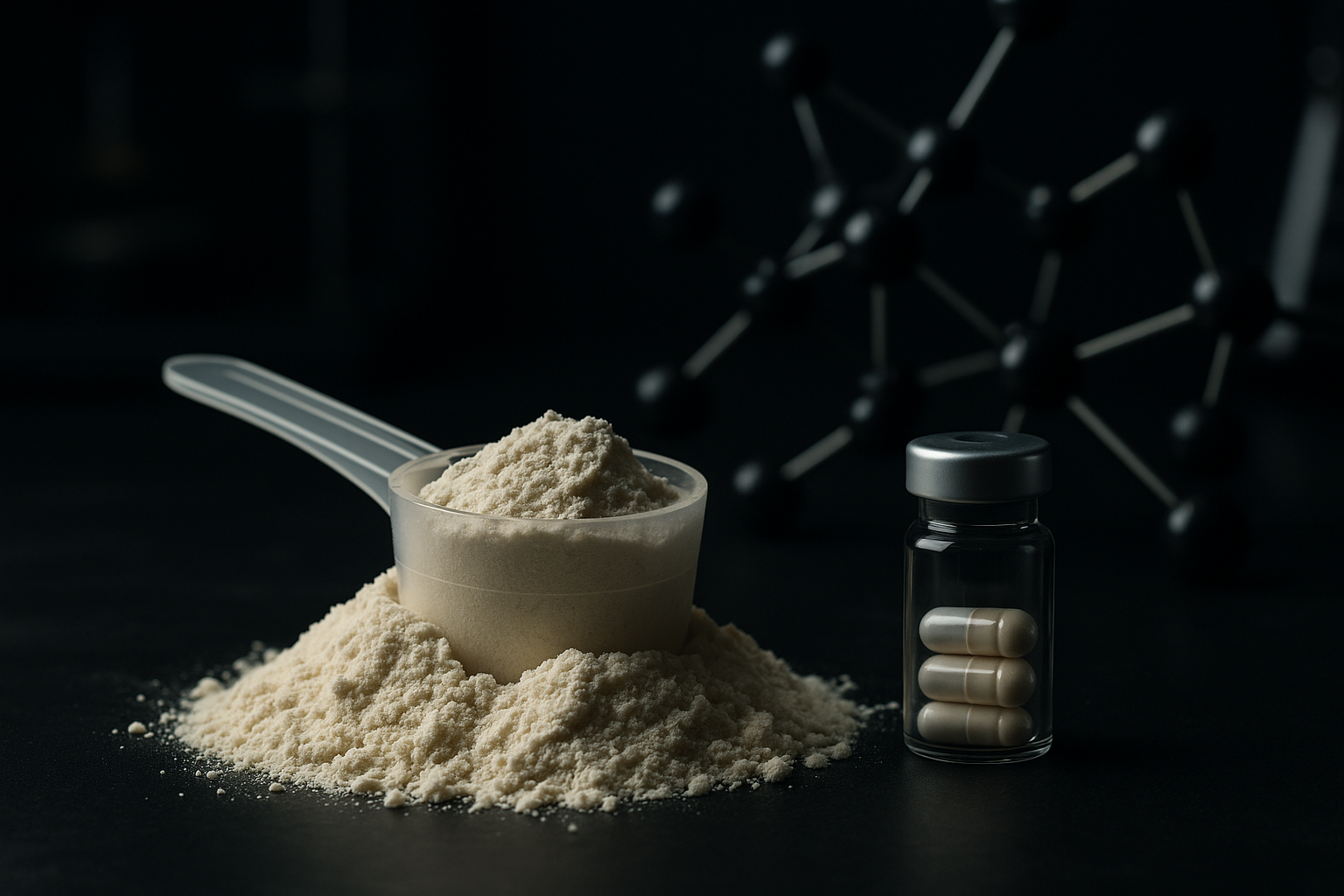
Protein powder
Protein powders are dietary supplements obtained from protein sources (milk, eggs, soy, pea, rice, etc.) concentrated or isolated to provide a standardized and easily measurable protein serving. In sports, they are used primarily to help meet daily protein requirements and to optimize muscle protein synthesis (MPS) when diet alone is not sufficient or practical.
Practical support for protein intake for sport, recovery, and body composition
Protein powders are dietary supplements derived from protein sources (milk, eggs, soy, pea, rice, etc.) that are concentrated or isolated to provide a standardized, easily measured protein amount. In sports settings, they are used mainly to help meet daily protein requirements and to optimize muscle protein synthesis (MPS) when diet alone is not sufficient or practical.
Mechanism of action
After ingestion, proteins are digested into peptides and amino acids that enter circulation. Essential amino acids, and leucine in particular, act as nutritional signals that activate anabolic pathways (e.g. mTORC1) and provide substrate for the synthesis of new myofibrillar proteins. The effect on MPS depends on: total protein dose, EAA/leucine content, daily distribution, energy context, type of training (especially resistance training), and the individual’s status (age, lean mass, training level). Fast-digesting proteins tend to produce a more pronounced amino acid peak; slow proteins provide a more prolonged release, potentially useful during extended fasting windows (e.g. overnight).
Supported benefits
- Increase or maintenance of muscle mass when total protein intake is adequate and combined with strength training (strong)
- Improved strength and adaptations to resistance training, mainly as a consequence of supporting lean mass and recovery (moderate)
- Better recovery (reduction in indirect markers of muscle damage and improved restoration of performance) in some contexts, especially when protein/dietary intake is suboptimal (moderate)
- Preservation of lean mass during calorie deficits and weight-loss programs, especially when combined with strength training (strong)
- Support for meeting daily protein requirements in a practical and standardized way (strong)
- Possible support for appetite control/satiety compared with carbohydrates or fats in some people (moderate)
Safety & side effects
- Gastrointestinal disturbances (bloating, cramps, diarrhea), more common with lactose intolerance, excessive doses, or certain additives/sweeteners
- Nausea or a feeling of heaviness if taken in large amounts or too close to intense training sessions
- Possible worsening of acne in some predisposed individuals (reported observations mainly with whey; evidence is not consistent)
- Increased total calorie intake if added without compensating through the diet, with possible gains in fat mass
FAQ
Is protein powder “necessary” to increase muscle mass?
No. Muscle gain depends mainly on progressive strength training, adequate total protein intake, and energy balance. Powders are a practical solution for meeting requirements when doing so with food is difficult.
Whey or casein: does it make a difference for performance?
Whey tends to be digested more quickly and often has a high leucine content; casein is slower and can support a more prolonged amino acid release. In practice, if total daily protein intake is adequate, differences in the main outcomes are often small.
Are plant-based protein powders equivalent to milk-based proteins?
They can be effective, but they often have different digestibility and amino acid profiles. Plant blends (e.g. pea+rice) and adequate doses can compensate for limiting amino acids and reduce the quality gap.
Is there a narrow post-workout “anabolic window”?
The idea of a window lasting only a few minutes has been scaled back. It is more important to consume sufficient protein throughout the day and distribute doses appropriately; taking a dose in the hours around training is a practical strategy often used in studies.
Is protein powder bad for the kidneys?
In healthy adults, studies do not show kidney damage with protein intakes typical for sport. In the presence of kidney disease or high risk, increased protein intake should be evaluated by a healthcare professional.
How can the risk of contamination be reduced for those who compete under testing?
Choose products with third-party certifications and transparent supply chains, avoid purchases from unreliable channels, and check batches/analyses when available.
The information provided is for informational and educational purposes only. It does not constitute medical advice. Use should be evaluated and authorized by a qualified healthcare professional.
Mechanism of action
After ingestion, proteins are digested into peptides and amino acids that enter circulation. Essential amino acids, and leucine in particular, act as nutritional signals that activate anabolic pathways (e.g. mTORC1) and provide substrate for the synthesis of new myofibrillar proteins. The effect on MPS depends on: total protein dose, EAA/leucine content, daily distribution, energy context, type of training (especially resistance training), and the individual’s status (age, lean mass, training level). Fast-digesting proteins tend to produce a more pronounced amino acid peak; slow proteins provide a more prolonged release, potentially useful during extended fasting windows (e.g. overnight).
Scientific benefits
Contraindications
- Allergy to milk proteins (whey/casein) or egg/soy/other specific sources
- Pre-existing kidney disease or reduced kidney function: increasing protein intake requires individualized professional evaluation
- Gastrointestinal conditions that worsen with high protein amounts or with specific ingredients (to be assessed case by case with a professional)
Side effects
- Gastrointestinal disturbances (bloating, cramps, diarrhea), more common with lactose intolerance, excessive dosage, or some additives/sweeteners
- Nausea or a feeling of heaviness if taken in large amounts or too close to intense workouts
- Possible worsening of acne in some predisposed individuals (reported observations especially with whey; evidence is not consistent)
- Increase in total caloric intake if added without compensating through the diet, with possible gain in fat mass
Interactions
- Levodopa: high-protein meals/products may interfere with absorption in some patients (individual clinical management)
- Some antibiotics (e.g. tetracyclines/fluoroquinolones): interactions are more commonly associated with minerals (calcium) present in dairy products; depends on formulation and timing
- Thyroid medications (levothyroxine): absorption can be influenced by food in general; follow the doctor’s instructions regarding timing in relation to meals
- In general: the interaction is more related to the dietary context and the matrix (milk/calcium) than to the “protein” itself
Regulatory status
Generally marketed as foods/supplements. They are not controlled substances; however, compliance depends on the country (limits on contaminants, claims, novel foods, allergens). For athletes subject to anti-doping controls, choosing products with quality certifications and contaminant testing is relevant.
Supplements and peptides
 Performance
Acetyl l-carnitine
Acetyl-L-carnitine (ALCAR) is a form of carnitine in which an acetyl group facilitates entry into tissues and the…
 Performance
Anhydrous betaine (trimethylglycine)
Anhydrous betaine (TMG) is a compound naturally present in various foods (e.g. beetroot, spinach, cereals) and also…
 Performance
Arginine akg
Arginine AKG (AAKG) combines L-arginine with α-ketoglutarate (AKG), an intermediate in the Krebs cycle. It is marketed…