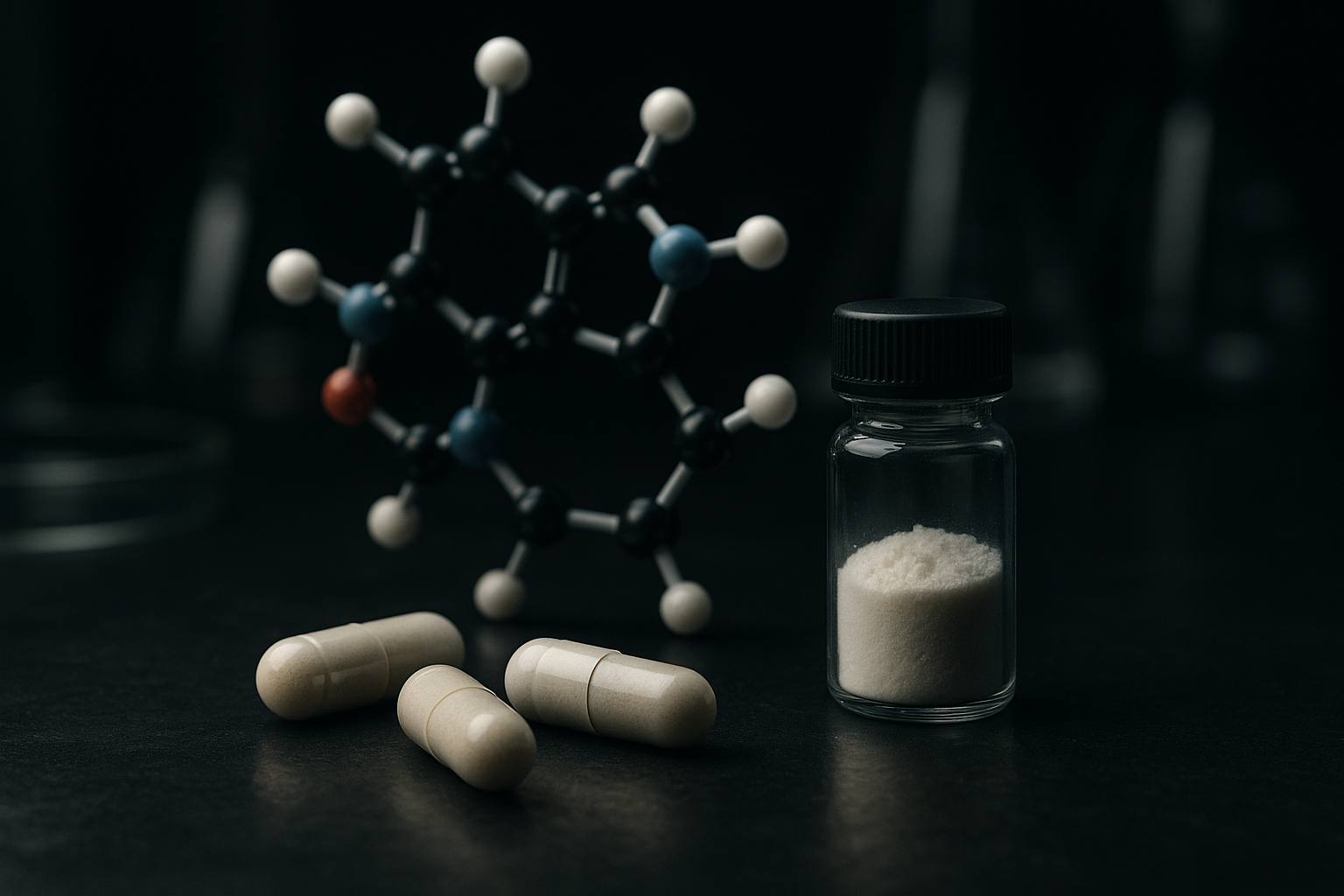
Theobromine
Theobromine is a natural alkaloid belonging to the methylxanthines (like caffeine and theophylline), found mainly in cocoa. It is considered a “focus/nootropic” compound because of its generally milder and longer-lasting effects compared with caffeine, with a possible contribution to subjective alertness, mood tone, and cognitive performance in specific contexts. However, the evidence is heterogeneous and often comes from studies on cocoa/chocolate (where caffeine and polyphenols are also present), making it difficult to attribute the effects to theobromine alone.
A methylxanthine from cocoa with mild effects on alertness, mood, and vasodilation
Theobromine is a natural alkaloid belonging to the methylxanthines (such as caffeine and theophylline), found mainly in cocoa. It is considered a “focus/nootropic” compound because of its generally milder and longer-lasting effects compared with caffeine, with a possible contribution to subjective alertness, mood, and cognitive performance in specific contexts. However, the evidence is heterogeneous and often comes from studies on cocoa/chocolate (where caffeine and polyphenols are also present), making it difficult to attribute the effects to theobromine alone.
Mechanism of action
Main mechanisms: (1) non-selective antagonism of adenosine receptors (A1/A2A), reducing the “sleepiness” signal and modulating dopamine/noradrenaline; lower potency than caffeine. (2) Inhibition of phosphodiesterases (PDE) at relatively high concentrations, increasing cAMP/cGMP and with possible effects on smooth muscle (vasodilation/bronchodilation). (3) Cardiovascular and renal effects: mild diuresis and possible increased peripheral perfusion. (4) In cocoa, the perceived effects may be confounded/mediated by caffeine, flavanols, and other bioactive compounds; therefore, causal attribution to theobromine alone requires caution.
Supported benefits
- Mild increase in alertness and reduction in sleepiness compared with placebo (effect generally weaker than caffeine) (limited)
- Possible subjective improvement in mood and “feeling of energy” in some contexts (often in cocoa/chocolate studies, therefore with confounders) (emerging)
- Peripheral vascular effects (vasodilation) and possible mild hemodynamic changes; relevance for cognitive performance remains inconclusive (moderate)
- Mild bronchodilatory/respiratory effect (a mechanism shared with other methylxanthines, but less potent than theophylline) (limited)
Safety & side effects
- Insomnia or worsening of sleep quality (especially if taken in the afternoon/evening, given its half-life)
- Nervousness, restlessness, anxiety (more likely with high doses or in sensitive individuals)
- Palpitations, increased heart rate, or the sensation of a racing heartbeat
- Gastrointestinal disturbances (nausea, reflux, abdominal discomfort), especially with high doses or in predisposed individuals
- Increased diuresis
- Headache in some individuals (due either to stimulation or vascular changes)
FAQ
Is theobromine like caffeine?
They are both methylxanthines and share adenosine antagonism, but theobromine is generally less stimulating to the CNS and may have a more peripheral profile (vasodilation/diuresis). Subjective response varies and also depends on the presence of caffeine in cocoa.
Can it really improve focus?
Its effects on focus/attention are on average modest, and the evidence is less solid than for caffeine. Much of the data comes from cocoa/chocolate, where other compounds (caffeine, flavanols) contribute to the observed effects.
How long does the effect last?
The half-life is often in the range of 6–10 hours, so the effects may persist and interfere with sleep if taken late in the day.
Is it safe for everyone?
No. People with insomnia, anxiety, palpitations/arrhythmias, reflux, or those taking medications that interact with methylxanthine metabolism should use particular caution and consult a qualified healthcare professional.
Is dark chocolate a good source?
It is a common source of theobromine, but it also contains caffeine and other bioactive compounds. It also provides calories and, depending on the product, sugars and fats; therefore, its effect is not equivalent to that of isolated theobromine.
The information provided is for informational and educational purposes only. It does not constitute medical advice. Use should be evaluated and authorized by a qualified healthcare professional.
Mechanism of action
Main mechanisms: (1) non-selective antagonism of adenosine receptors (A1/A2A) with reduction of the “sleepiness” signal and modulation of dopamine/noradrenaline; lower potency than caffeine. (2) Inhibition of phosphodiesterases (PDE) at relatively high concentrations, with increased cAMP/cGMP and possible effects on smooth muscle (vasodilation/bronchodilation). (3) Cardiovascular and renal effects: mild diuresis and possible increase in peripheral perfusion. (4) In cocoa, the perceived effects may be confused with/mediated by caffeine, flavanols, and other bioactive compounds; therefore, causal attribution to theobromine alone requires caution.
Scientific benefits
Contraindications
- Hypersensitivity to methylxanthines (caffeine/theophylline/theobromine)
- Clinically significant anxiety disorders or insomnia (potential worsening)
- Known arrhythmias or unevaluated cardiac symptoms (risk of palpitations/worsening symptoms)
- Peptic ulcer or significant gastroesophageal reflux (possible worsening of symptoms)
- Pregnancy and breastfeeding: caution due to methylxanthine exposure and individual variability; professional evaluation recommended
- Liver disease: possible altered metabolism and increased exposure
Side effects
- Insomnia or worsening sleep quality (especially if taken in the afternoon/evening, given its half-life)
- Nervousness, restlessness, anxiety (more likely with high doses or in sensitive individuals)
- Palpitations, increased heart rate, or sensation of a rapid heartbeat
- Gastrointestinal disturbances (nausea, reflux, abdominal discomfort), especially with high doses or in predisposed individuals
- Increased diuresis
- Headache in some individuals (both due to stimulation and vascular changes)
Interactions
- Other methylxanthines (caffeine, theophylline): additive effects on the CNS and cardiovascular system; increased risk of insomnia/anxiety/tachycardia
- Drugs that modulate CYP1A2 (inhibitors/inducers): may increase or reduce methylxanthine levels; clinical relevance depends on the drug and dose
- Stimulants/sympathomimetics (e.g. decongestants): potential additive effects on heart rate and blood pressure
- Alcohol: may alter perception of sedation and risk; combined effects are variable
- Nicotine/smoking: may modify methylxanthine metabolism (interindividual variability)
Regulatory status
Natural component of widely marketed foods (cocoa/chocolate). As an ingredient in supplements, availability and usage limits depend on national/regional regulations (e.g. safety requirements, labeling, claims). It is not typically a controlled substance, but may fall under company/sports policies on stimulants depending on the context.
Supplements and peptides
 Focus & Nootropics
Agmatine sulfate
Agmatine is an endogenous metabolite produced by decarboxylation of L-arginine. In supplementation contexts it is…
 Focus & Nootropics
Alpha-gpc
Alpha-GPC is a choline-containing compound (a precursor of acetylcholine) and an intermediate in phospholipid…
 Focus & Nootropics
Anhydrous caffeine
Anhydrous caffeine is the dehydrated form of caffeine, used in supplements for its high concentration and dosing…