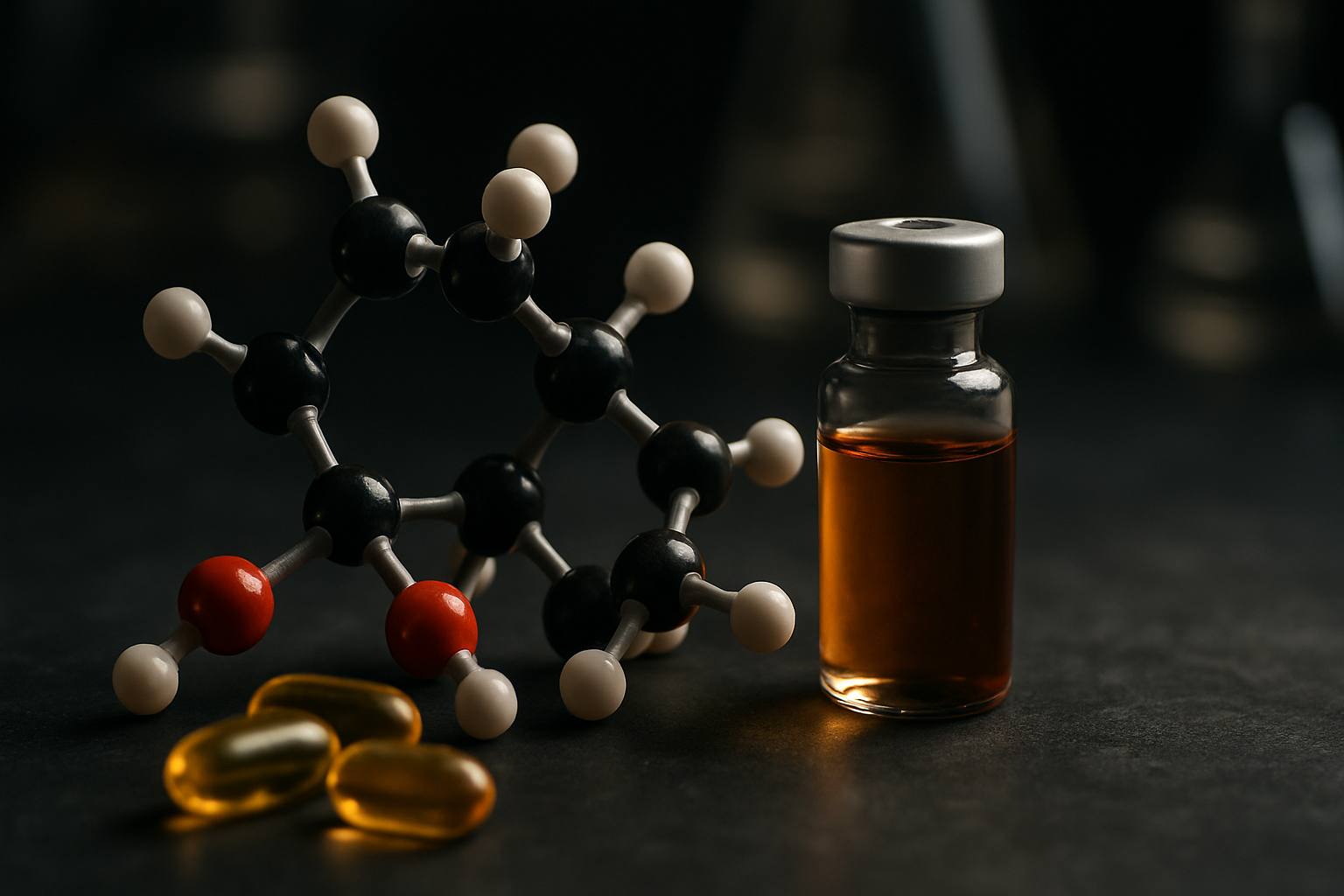
Ubiquinol
Ubiquinol is the reduced and biologically active form of coenzyme Q10 (CoQ10). It participates in electron transport in the mitochondrial respiratory chain and contributes to maintaining cellular redox status. As a supplement, it is studied for supporting parameters related to energy, fatigue, and recovery, with more consistent results in subjects with low CoQ10 levels, advanced age, or statin use.
A fat-soluble mitochondrial cofactor involved in energy production and antioxidant defense; of particular interest in the performance field, especially in conditions of low CoQ10 availability
Ubiquinol is the reduced and biologically active form of coenzyme Q10 (CoQ10). It participates in electron transport in the mitochondrial respiratory chain and contributes to maintaining cellular redox status. As a supplement, it is studied for supporting parameters related to energy, fatigue, and recovery, with more consistent results in individuals with low CoQ10 levels, advanced age, or statin use.
Mechanism of action
1) Mitochondrial bioenergetics: ubiquinol/CoQ10 transfers electrons between complexes I/II and complex III of the respiratory chain, contributing to the generation of the proton gradient and ATP synthesis. 2) Antioxidant action: ubiquinol can neutralize reactive species and regenerate other lipophilic antioxidants (e.g., vitamin E) in specific redox contexts. 3) Membrane and lipoprotein stability: it reduces lipid peroxidation and may influence markers of oxidative stress. 4) Signaling and inflammation: in some studies it modulates inflammatory biomarkers and endothelial function, with potential implications for cardiovascular efficiency and perceived fatigue.
Supported benefits
- Reduction in markers of oxidative stress and improvement in antioxidant status in various contexts (especially in individuals with higher baseline oxidative stress) (moderate)
- Improvement in some parameters of endothelial function and blood pressure in selected populations (small to moderate average effects, heterogeneous) (moderate)
- Support in individuals on statin therapy: increased plasma CoQ10 levels; possible benefit on muscle symptoms in some studies, but overall inconsistent results (limited)
- Aerobic performance/fatigue: possible small improvements in subgroups (untrained individuals, older adults, or those with low CoQ10 levels), with high variability across studies (limited)
Safety & side effects
- Gastrointestinal disturbances (nausea, dyspepsia, diarrhea, abdominal pain), often dose-dependent
- Headache or insomnia in some individuals (if taken late in the day)
- Rare skin rash
- Possible mild reduction in blood pressure in predisposed individuals
FAQ
Are ubiquinol and CoQ10 (ubiquinone) the same thing?
They are two redox forms of the same compound (CoQ10): ubiquinone is the oxidized form, ubiquinol the reduced form. In the body they can convert into each other. As supplements, ubiquinol often shows higher bioavailability, but the difference depends greatly on the formulation.
Is it useful for performance in young, well-trained individuals?
The evidence is heterogeneous: in already trained individuals without deficiencies, the effects on performance tend to be small or absent in many studies. Benefits appear more plausible when CoQ10 levels are low or oxidative stress is high.
How long does it take to see measurable effects?
When observed, effects on biomarkers and some functional outcomes often emerge after several weeks, consistent with the increase in circulating and tissue CoQ10 levels.
Can it interfere with medications?
Yes. The most discussed interaction concerns warfarin (possible changes in INR). It may also add to the effects of antihypertensive drugs. If you are on medication, professional evaluation is necessary.
The information provided is for informational and educational purposes only. It does not constitute medical advice. Use must be evaluated and authorized by a qualified healthcare professional.
Mechanism of action
1) Mitochondrial bioenergetics: ubiquinol/CoQ10 transfers electrons between complexes I/II and complex III of the respiratory chain, contributing to the generation of the proton gradient and ATP synthesis. 2) Antioxidant action: ubiquinol can neutralize reactive species and regenerate other lipophilic antioxidants (e.g. vitamin E) in specific redox contexts. 3) Membrane and lipoprotein stability: it reduces lipid peroxidation and may influence markers of oxidative stress. 4) Signaling and inflammation: in some studies it modulates inflammatory biomarkers and endothelial function, with potential effects on cardiovascular efficiency and perceived fatigue.
Scientific benefits
Contraindications
- Pregnancy and breastfeeding: safety data are not conclusive; professional evaluation is necessary
- Coagulation disorders or anticoagulant therapy: possible interference with INR control (see interactions)
- Hypotension or antihypertensive therapy with already low blood pressure: possible additive effect
- Allergies/intolerances to formulation excipients (e.g. oils, gelatin) in softgel formulations
Side effects
- Gastrointestinal disorders (nausea, dyspepsia, diarrhea, abdominal pain), often dose-dependent
- Headache or insomnia in some subjects (if taken late in the day)
- Rare skin rash
- Possible mild reduction in blood pressure in predisposed subjects
Interactions
- Warfarin and other coumarin anticoagulants: possible changes in INR and anticoagulant effect (clinical monitoring is necessary if used)
- Antihypertensive drugs: possible additive blood pressure-lowering effect
- Statins: reduce endogenous CoQ10 synthesis; supplementation increases plasma levels, but the impact on muscle symptoms is variable
- Chemotherapy/oncology treatments: potential theoretical interactions related to antioxidant action; specialist evaluation is required
Regulatory status
Marketed as a dietary supplement in the EU and USA; not approved as a drug for performance-related indications. Health claims that may be used on labels depend on local regulations (in the EU they are subject to EFSA authorization).
Supplements and peptides
 Performance
Acetyl l-carnitine
Acetyl-L-carnitine (ALCAR) is a form of carnitine in which an acetyl group facilitates entry into tissues and the…
 Performance
Anhydrous betaine (trimethylglycine)
Anhydrous betaine (TMG) is a compound naturally present in various foods (e.g. beetroot, spinach, cereals) and also…
 Performance
Arginine akg
Arginine AKG (AAKG) combines L-arginine with α-ketoglutarate (AKG), an intermediate in the Krebs cycle. It is marketed…