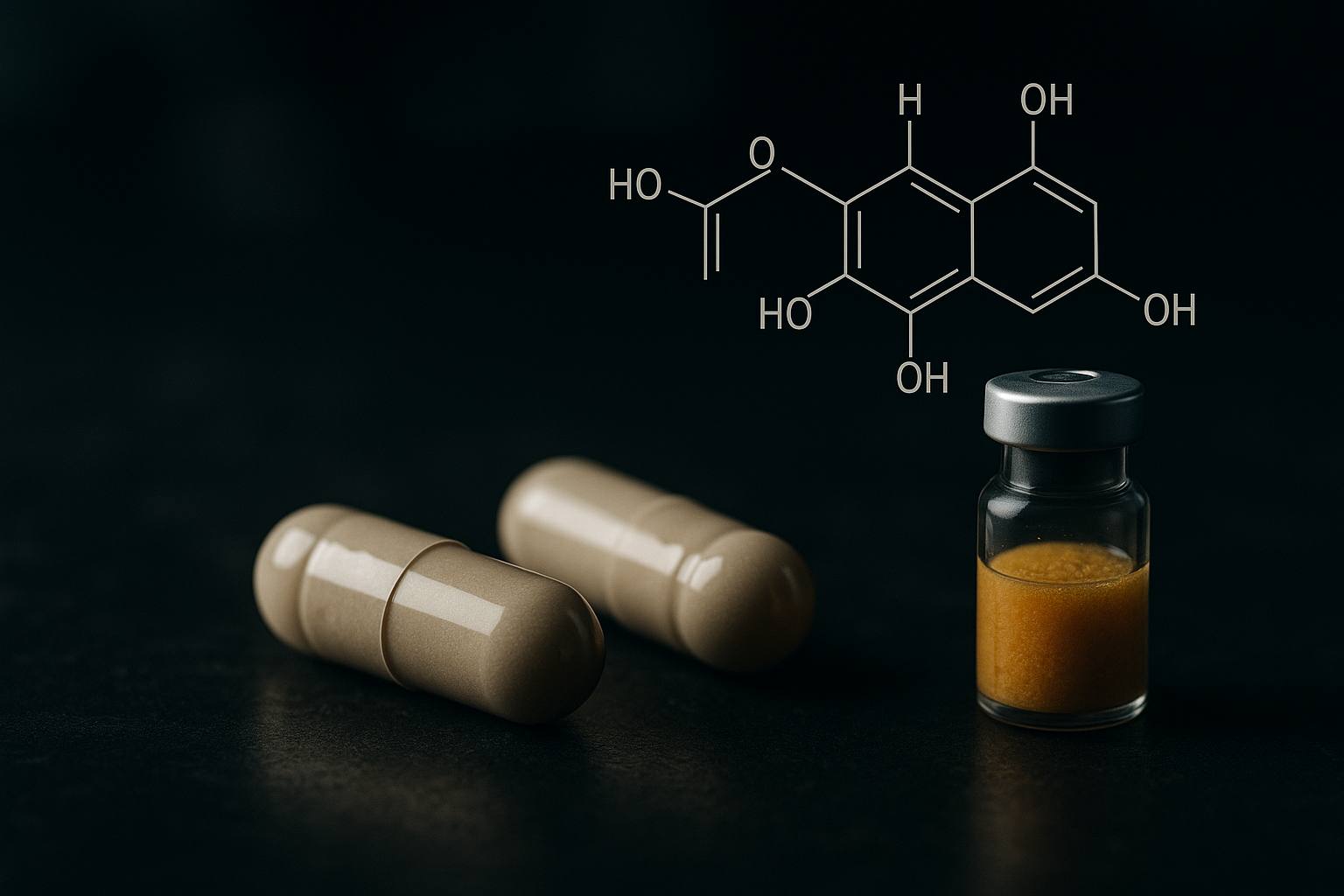
Fisetin
Fisetin is a flavonol found in various plant foods (particularly strawberries) and is being studied for potential effects on cellular senescence, inflammation, and metabolic resilience. The strongest evidence comes from preclinical models; clinical data in humans are still limited and evolving.
A polyphenolic phytocompound studied in the “longevity” field for senolytic activity and modulation of inflammation
Fisetin is a flavonol found in various plant foods (particularly strawberries) and is being studied for potential effects on cellular senescence, inflammation, and metabolic resilience. The strongest evidence comes from preclinical models; clinical data in humans are still limited and evolving.
Mechanism of action
Proposed mechanisms (depending on dose, tissue, and model): (1) Senolytic activity in some models: selective induction of apoptosis in senescent cells through modulation of pro-survival pathways (SCAPs) and stress signals; (2) Senomorphic effects: reduction of the SASP (senescence-associated secretory phenotype) with attenuation of pro-inflammatory cytokines (e.g. IL-6, IL-1β, TNF-α) and mediators such as NF-κB; (3) Direct and indirect antioxidant action: ROS scavenging and activation of cytoprotective responses (e.g. Nrf2/ARE in some contexts); (4) Modulation of metabolic and cell survival pathways (AMPK/mTOR, sirtuins) reported in preclinical models, with possible effects on autophagy and mitochondrial function; (5) Interactions with enzymes and transporters: possible inhibition/competition involving metabolism systems (phase I/II) and transport, with potential drug interactions.
Supported benefits
- Reduction of senescence markers and improvement of health parameters in animal models (healthspan), with evidence of senolytic activity in specific tissues (moderate)
- Anti-inflammatory and antioxidant effects (reduction of pro-inflammatory mediators and oxidative stress) observed in preclinical models and in preliminary human biomarker studies (emerging)
- Potential support for metabolic parameters (insulin sensitivity, steatosis/liver markers) in preclinical models; clinical data are inconclusive (limited)
- Neuroprotection in experimental models (synaptic plasticity, neuroglial inflammation, oxidative stress); clinical translatability not demonstrated (limited)
Safety & side effects
- Gastrointestinal disturbances (nausea, dyspepsia, diarrhea) reported with some polyphenol supplements and in high-dose protocols; frequency and intensity depend on dose and formulation.
- Headache or a feeling of fatigue: anecdotal reports, not well quantified in controlled studies.
- Possible alterations in laboratory tests (e.g. liver enzymes) are not well characterized: caution is warranted in individuals with hepatic vulnerability or on multiple medications.
FAQ
Is fisetin really a “senolytic” in humans?
The “senolytic” label derives mainly from preclinical data (cells and animals) in which fisetin reduces senescence markers and improves some health parameters. In humans, direct evidence of selective elimination of senescent cells and lasting clinical benefits is still limited.
Why is there talk of intermittent high-dose protocols?
Some experimental senolytic approaches aim to target senescent cells with short cycles, hypothesizing that continuous intake may not be necessary. However, the rationale and optimal safety of cycling in humans have not yet been defined.
Is it better to take it with food?
Because it is poorly soluble and lipophilic, taking it with a meal (especially one containing fats) may theoretically promote absorption and improve gastrointestinal tolerability. The actual effect depends on the formulation and individual variability.
Is eating strawberries equivalent to supplementing with fisetin?
No: foods contain fisetin in amounts generally much lower than the dosages used in clinical studies. Diet may contribute to polyphenol exposure, but it does not replicate experimental high-dose protocols.
Which biomarkers are typically evaluated in studies?
Inflammatory markers (e.g. CRP, cytokines), oxidative stress, metabolic parameters (blood glucose/lipids), and in some protocols markers associated with senescence/SASP are often measured. Standardization of senescence biomarkers in humans is still an area of research.
The information provided is for informational and educational purposes only. It does not constitute medical advice. Use must be evaluated and authorized by a qualified healthcare professional.
Mechanism of action
Proposed mechanisms (dependent on dose, tissue, and model): (1) Senolytic activity in some models: selective induction of apoptosis in senescent cells through modulation of pro-survival pathways (SCAP) and stress signals; (2) Senomorphic effects: reduction of the SASP (senescence-associated secretory phenotype) with attenuation of pro-inflammatory cytokines (e.g. IL-6, IL-1β, TNF-α) and mediators such as NF-κB; (3) Direct and indirect antioxidant action: ROS scavenging and activation of cytoprotective responses (e.g. Nrf2/ARE in some contexts); (4) Modulation of metabolic and cell survival pathways (AMPK/mTOR, sirtuins) reported in preclinical models, with possible effects on autophagy and mitochondrial function; (5) Interactions with enzymes and transporters: possible inhibition/competition on metabolism systems (phase I/II) and transport, with potential drug interactions.
Scientific benefits
Contraindications
- Pregnancy and breastfeeding: lack of adequate safety data.
- Pediatric age: safety/efficacy data are lacking.
- Significant liver or kidney disease: insufficient data, possible increased risk related to metabolism/elimination and interactions.
- Coagulation disorders or anticoagulant/antiplatelet therapy: caution due to potential effects on hemostasis and interactions (evidence not definitive).
- Planned surgical procedures: caution due to possible effects on bleeding/interactions (clinical evaluation required).
Side effects
- Gastrointestinal disturbances (nausea, dyspepsia, diarrhea) reported with some polyphenol supplements and in high-dose protocols; frequency and intensity depend on dose and formulation.
- Headache or a feeling of fatigue: anecdotal reports, not well quantified in controlled studies.
- Possible alterations in laboratory tests (e.g. liver enzymes) not well characterized: caution is required in individuals with hepatic frailty or on multiple therapies.
Interactions
- Anticoagulants/antiplatelets (e.g. warfarin, DOACs, aspirin, clopidogrel): potential increased bleeding risk or altered effect; specific clinical data are limited.
- Drugs metabolized by CYP/UGT: polyphenols may variably modulate phase I/II enzymes and transporters (P-gp/OATP); possible changes in concentrations of drugs with a narrow therapeutic index.
- Antidiabetic drugs: in theory, if it improved insulin sensitivity or reduced blood glucose, it could add to the pharmacological effect; clinical evidence is inconclusive but caution is advisable.
- NSAIDs and other agents that affect the gastrointestinal mucosa: possible increase in GI disturbances in sensitive individuals.
Regulatory status
Not approved as a drug for longevity/senescence indications. In many countries it is sold as a dietary supplement or nutraceutical ingredient; health claims are regulated and generally do not include anti-aging or senolytic claims. Status may differ by jurisdiction and form (extract, purity, novel food).
Supplements and peptides
 Longevity
Apigenin
Apigenin (4′,5,7-trihydroxyflavone) is a flavone found in various food and medicinal plants. In human biology, it is…
 Longevity
Astaxanthin
Astaxanthin is a carotenoid from the xanthophyll family (a red-orange pigment) produced mainly by microalgae (e.g.…
 Longevity
Berberine
Berberine is a plant alkaloid found in various plants (e.g. Berberis spp.) and traditionally used in the…