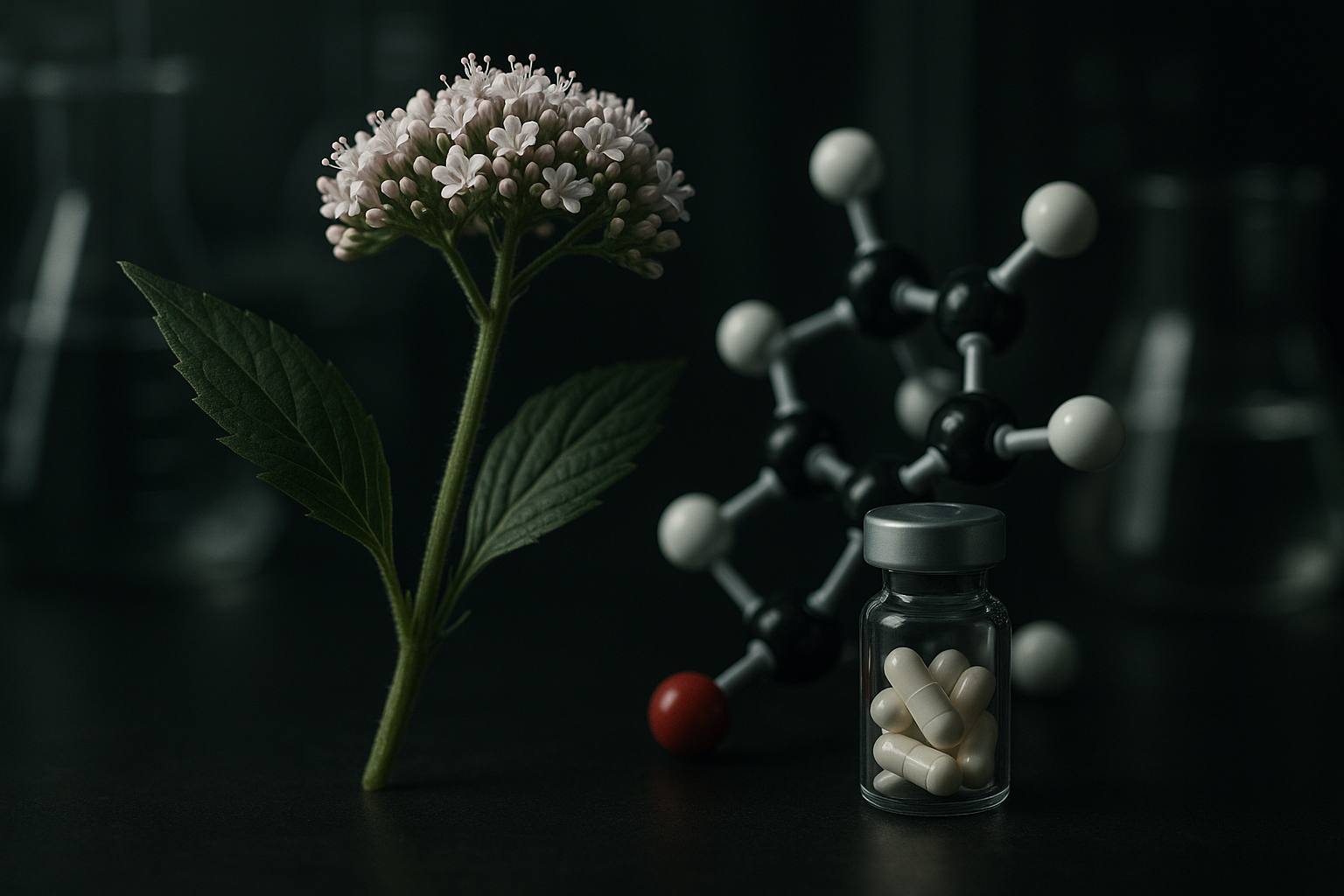
Valerian
Valerian is a medicinal plant traditionally used to promote relaxation and sleep. Extracts (root/rhizome) contain compounds such as valerenic acids and valepotriates, with potential effects on the GABAergic system. Clinical studies show variable results: some indicate subjective improvements in sleep quality and latency, while others detect no significant differences compared with placebo. Response may depend on dose, extract standardization, duration of use, and individual characteristics.
Phytocompound for Sleep & Recovery: mild sedative and sleep modulator with heterogeneous clinical evidence
Valerian is a medicinal plant traditionally used to promote relaxation and sleep. The extracts (root/rhizome) contain compounds such as valeric acids and valepotriates, with potential effects on the GABAergic system. Clinical studies show variable results: some indicate subjective improvements in sleep quality and sleep latency, while others do not detect significant differences compared with placebo. The response may depend on dose, extract standardization, duration of use, and individual characteristics.
Mechanism of action
Proposed mechanisms (not all definitively confirmed in humans): (1) modulation of the GABAergic system: valeric acids may influence GABA transmission (e.g. interaction with GABA-A receptors and/or modulation of GABA reuptake/degradation in preclinical models); (2) effects on adenosine and other neuromodulatory systems involved in sleep (hypothesis); (3) mild anxiolytic action that may reduce pre-sleep physiological arousal. As a phytocomplex, the effect may derive from synergies among multiple components and from the standardization of the extract.
Supported benefits
- Subjective improvement in sleep quality in some studies on mild insomnia or sleep disturbances (moderate)
- Reduction in sleep onset latency (inconsistent results; more often on subjective than objective measures) (limited)
- Reduction of mild anxiety/tension associated with sleep (variable evidence; often in combination with other plants) (limited)
Safety & side effects
- Drowsiness, sedation, reduced alertness (especially if combined with other CNS depressants)
- Headache, dizziness
- Gastrointestinal disturbances (nausea, cramps, diarrhea) in some individuals
- Vivid dreams or changes in perceived sleep quality in a minority of users
- Rarely: skin hypersensitivity reactions
- Possible residual morning drowsiness in sensitive individuals or with higher doses
FAQ
Does valerian really “work” for sleep?
Clinical studies show mixed results. In some people, a subjective improvement in sleep quality and sometimes sleep onset latency is observed, while in other studies the effect does not differ from placebo. The variability depends on the extract, dose, duration, and individual characteristics.
Is it better to take it once, or is continued use necessary?
In several studies, the effect (when present) emerges after continuous use for a few weeks; an acute effect is not guaranteed. The most common timing in protocols is close to bedtime.
Does it cause dependence like sleeping pills?
It is not typically associated with dependence like some classes of hypnotics, but that does not imply an absence of risks. Sedation and impairment of alertness are possible, especially in combination with other CNS depressants.
Can it cause drowsiness the next day?
Yes, in some individuals residual drowsiness may occur, especially with higher doses, individual sensitivity, or when combined with other sedative substances.
Does product standardization matter?
Yes. Different preparations may contain different amounts of active constituents (e.g. valeric acids), and this can affect both efficacy and tolerability.
The information provided is for informational and educational purposes only. It does not constitute medical advice. Use must be evaluated and authorized by a qualified healthcare professional.
Mechanism of action
Proposed mechanisms (not all definitively confirmed in humans): (1) modulation of the GABAergic system: valerenic acids may influence GABA transmission (e.g. interaction with GABA-A receptors and/or modulation of GABA reuptake/degradation in preclinical models); (2) effects on adenosine and other neuromodulatory systems involved in sleep (hypothesis); (3) mild anxiolytic action that may reduce pre-sleep physiological arousal. As it is a phytocomplex, the effect may derive from synergies among multiple components and from extract standardization.
Scientific benefits
Contraindications
- Pregnancy and breastfeeding: insufficient safety data, use generally not recommended without professional guidance
- Pediatric age: evidence and safety are less well defined; requires professional evaluation
- Liver disorders: caution due to rare reports of hepatotoxicity with herbal products (causality often uncertain and possible contamination/adulteration)
- Sleep disorders requiring clinical evaluation (e.g. obstructive sleep apnea, severe persistent insomnia, major depression): supplementation may delay appropriate diagnosis/treatment
- Known allergy to Valeriana spp.
Side effects
- Drowsiness, sedation, reduced alertness (especially if combined with other CNS depressants)
- Headache, dizziness
- Gastrointestinal disturbances (nausea, cramps, diarrhea) in some individuals
- Vivid dreams or changes in perceived sleep quality in a minority of users
- Rarely: cutaneous hypersensitivity reactions
- Possible residual morning drowsiness in sensitive individuals or with higher doses
Interactions
- Alcohol: increased sedation and psychomotor impairment
- Benzodiazepines, Z-drugs, barbiturates, sedating antihistamines, sedating antipsychotics, opioids: possible additive effect on the CNS (sedation, reduced alertness, accident risk)
- Other sedative supplements/herbal products (e.g. kava, passionflower, hops): possible summation of effects
- Anesthetics and perioperative sedatives: potential interference; in surgical settings, prior communication with the healthcare team is often recommended
- Drugs metabolized by CYP: clinically relevant interactions are not well defined; caution due to variability of preparations and polypharmacy
Regulatory status
In Europe, valerian is included in monographs and, in some countries, in registrations as a traditional herbal medicinal product for mild sleep/anxiety disorders. In other contexts it is marketed as a dietary supplement. Label claims and quality requirements vary according to local regulations.
Supplements and peptides
 Sleep & Recovery
5-HTP (5-hydroxytryptophan)
5-HTP is a metabolic intermediate between L-tryptophan and serotonin (5-HT). Because it crosses the blood-brain barrier…
 Sleep & Recovery
Ashwagandha ksm-66
KSM-66 is a Withania somnifera root extract standardized in withanolides, studied primarily for modulation of the…
 Sleep & Recovery
Ashwagandha sensoril
Sensoril® is a patented extract of Withania somnifera (ashwagandha), typically standardized to withanolides and…