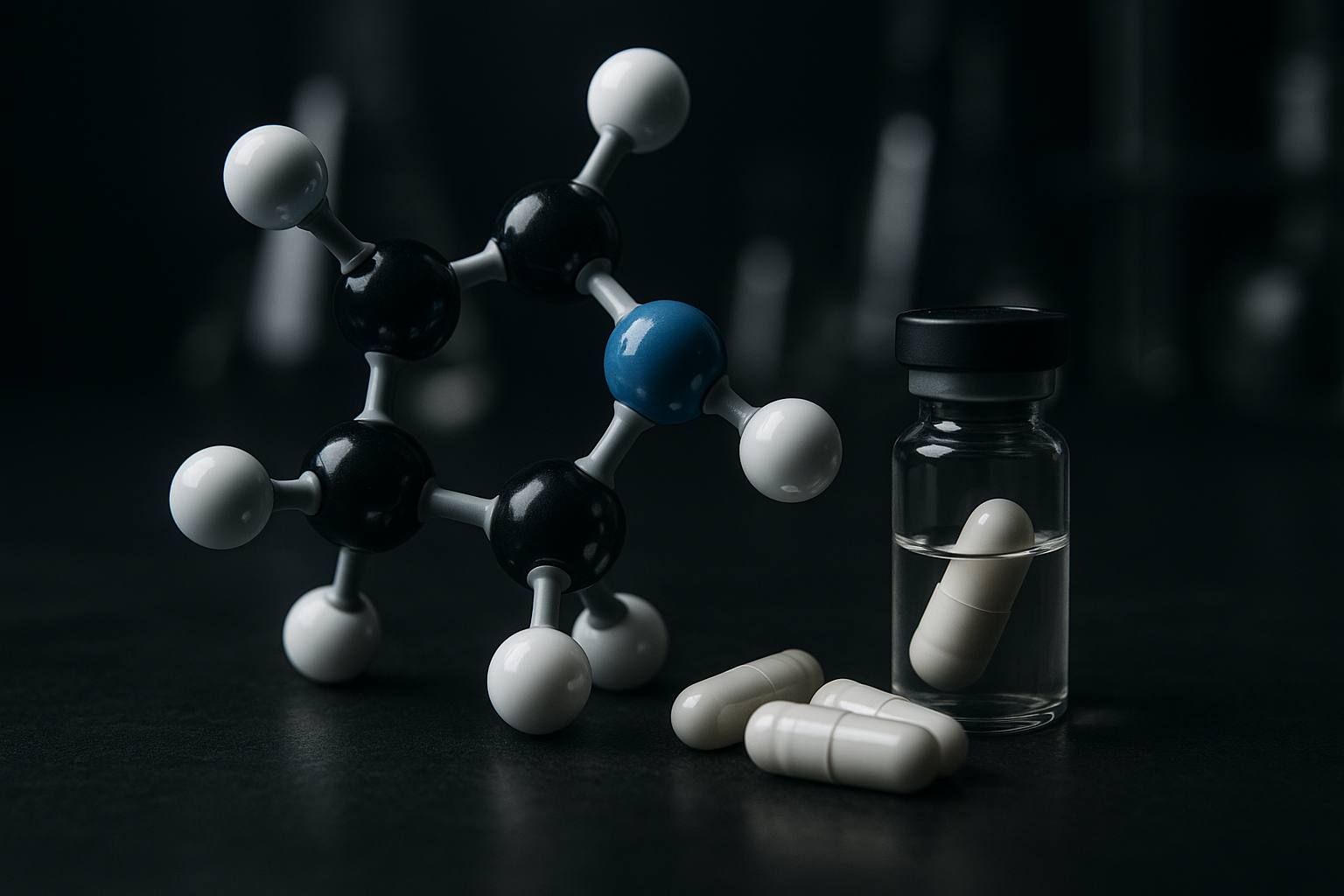
Nmn (nicotinamide mononucleotide)
Nicotinamide mononucleotide (NMN) is a nucleotide naturally present in cells and an intermediate in the niacin salvage pathway that leads to the synthesis of NAD+ (nicotinamide adenine dinucleotide). NAD+ is an essential cofactor for redox reactions, energy production, and the activity of enzymes such as sirtuins and PARPs. Interest in NMN stems from the observation that NAD+ levels tend to decline with age and in some metabolic conditions; clinical studies evaluate whether NMN supplementation can increase NAD+ biomarkers and influence metabolic and functional parameters.
A precursor of NAD+ studied in the context of “longevity” and energy metabolism
Nicotinamide mononucleotide (NMN) is a nucleotide naturally present in cells and an intermediate in the niacin salvage pathway that leads to the synthesis of NAD+ (nicotinamide adenine dinucleotide). NAD+ is an essential cofactor for redox reactions, energy production, and the activity of enzymes such as sirtuins and PARPs. Interest in NMN stems from the observation that NAD+ levels tend to decline with age and in certain metabolic conditions; clinical studies are evaluating whether NMN supplementation can increase NAD+ biomarkers and influence metabolic and functional parameters.
Mechanism of action
After intake, NMN may help increase the NAD+ pool through the salvage pathway. An increase in NAD+ may: (1) support redox reactions and ATP production; (2) modulate the activity of sirtuins (SIRT1/3) and other NAD+-dependent deacetylases, with potential effects on mitochondrial biogenesis, lipid metabolism, and the stress response; (3) influence the activity of PARPs (DNA repair) and CD38 (NAD+ consumption). The translation of these mechanisms into clinical benefits in humans is still under investigation and may depend on age, metabolic status, dose, duration, and product quality.
Supported benefits
- Increase in NAD+-related biomarkers (NAD+ and/or metabolites such as NMN/NAM/MeNAM and derivatives) in the blood after oral intake (moderate)
- Improvement in some parameters of insulin sensitivity or glucose metabolism in subgroups (e.g. postmenopausal women with prediabetes/insulin resistance) in some studies (limited)
- Possible improvements in aerobic capacity/efficiency of oxygen utilization or performance in specific protocols (often in combination with exercise), with inconsistent results (emerging)
- Possible effects on markers of endothelial function or arterial stiffness in some small studies (emerging)
- No solid clinical evidence that NMN prolongs life or prevents disease in humans (limited)
Safety & side effects
- Gastrointestinal disturbances (nausea, bloating, diarrhea) reported in some individuals
- Headache or a feeling of restlessness/insomnia in some cases (anecdotal reports; not always confirmed in studies)
- Possible changes in certain blood chemistry parameters (generally within physiological ranges in short-term studies), to be monitored in clinical settings
FAQ
Does NMN really increase NAD+ in humans?
Several clinical studies show increases in NAD+-related biomarkers in the blood after oral intake of NMN. However, the relationship between these increases and robust clinical benefits is still uncertain.
Is NMN better than NR (nicotinamide riboside)?
Both are NAD+ precursors with human evidence showing increases in NAD metabolites. There is no definitive consensus on superiority; they differ in pharmacokinetics, metabolism, and the quantity/quality of studies in specific populations.
Is NMN “anti-aging”?
Animal models have shown interesting results regarding metabolism and some age-related phenotypes, but in humans there is no solid evidence that NMN slows aging or prolongs life. Current clinical evidence mainly concerns biomarkers and some intermediate endpoints.
What are the main limitations of the current evidence?
Often small samples, short duration, heterogeneous endpoints, selected populations, and product variability. Large, long-term studies on major clinical outcomes are lacking.
Are there theoretical risks related to increasing NAD+?
NAD+ supports fundamental cellular processes, including metabolism and DNA repair. In contexts such as oncology or therapies that act on oxidative stress/DNA repair, there are theoretical considerations regarding interactions; for this reason, particular caution and clinical supervision are required in these populations.
The information provided is for informational and educational purposes only. It does not constitute medical advice. Use should be evaluated and authorized by a qualified healthcare professional.
Mechanism of action
After intake, NMN may help increase the NAD+ pool through the salvage pathway. The increase in NAD+ may: (1) support redox reactions and ATP production; (2) modulate the activity of sirtuins (SIRT1/3) and other NAD+-dependent deacetylases, with potential effects on mitochondrial biogenesis, lipid metabolism, and stress response; (3) influence the activity of PARPs (DNA repair) and CD38 (NAD+ consumption). The translation of these mechanisms into clinical benefits in humans is still under study and may depend on age, metabolic status, dose, duration, and product quality.
Scientific benefits
Contraindications
- Pregnancy and breastfeeding: insufficient safety data
- Pediatric age: insufficient data
- Active cancer or recent history of cancer: caution due to uncertainty about the role of NAD+ in cellular metabolism and tumor biology (this does not imply that NMN causes cancer, but the evidence is insufficient to rule out risks in these populations)
- Significant liver or kidney disease: limited data; professional evaluation required
Side effects
- Gastrointestinal disturbances (nausea, bloating, diarrhea) reported in some individuals
- Headache or a feeling of restlessness/insomnia in some cases (anecdotal reports; not always confirmed in studies)
- Possible changes in some blood chemistry parameters (generally within physiological ranges in short studies), to be monitored in clinical settings
Interactions
- Cancer therapies (chemotherapy/radiotherapy) and drugs that affect DNA repair or redox metabolism: potential theoretical interactions; limited specific clinical evidence
- Glucose-lowering medications: if NMN modifies insulin sensitivity in some individuals, it could theoretically influence glycemic control; clinical supervision is required
- High-dose niacin/NR supplements: overlap of NAD+ metabolic pathways; combined effects and tolerability are not well defined
Regulatory status
The regulatory status of NMN is dynamic and depends on the jurisdiction. In some countries it is marketed as a dietary supplement; in others it may be subject to restrictions (e.g. due to classification as a substance under pharmaceutical evaluation or because of novel food issues). Always check updated official local regulatory sources.
Supplements and peptides
 Longevity
Apigenin
Apigenin (4′,5,7-trihydroxyflavone) is a flavone found in various food and medicinal plants. In human biology, it is…
 Longevity
Astaxanthin
Astaxanthin is a carotenoid from the xanthophyll family (a red-orange pigment) produced mainly by microalgae (e.g.…
 Longevity
Berberine
Berberine is a plant alkaloid found in various plants (e.g. Berberis spp.) and traditionally used in the…