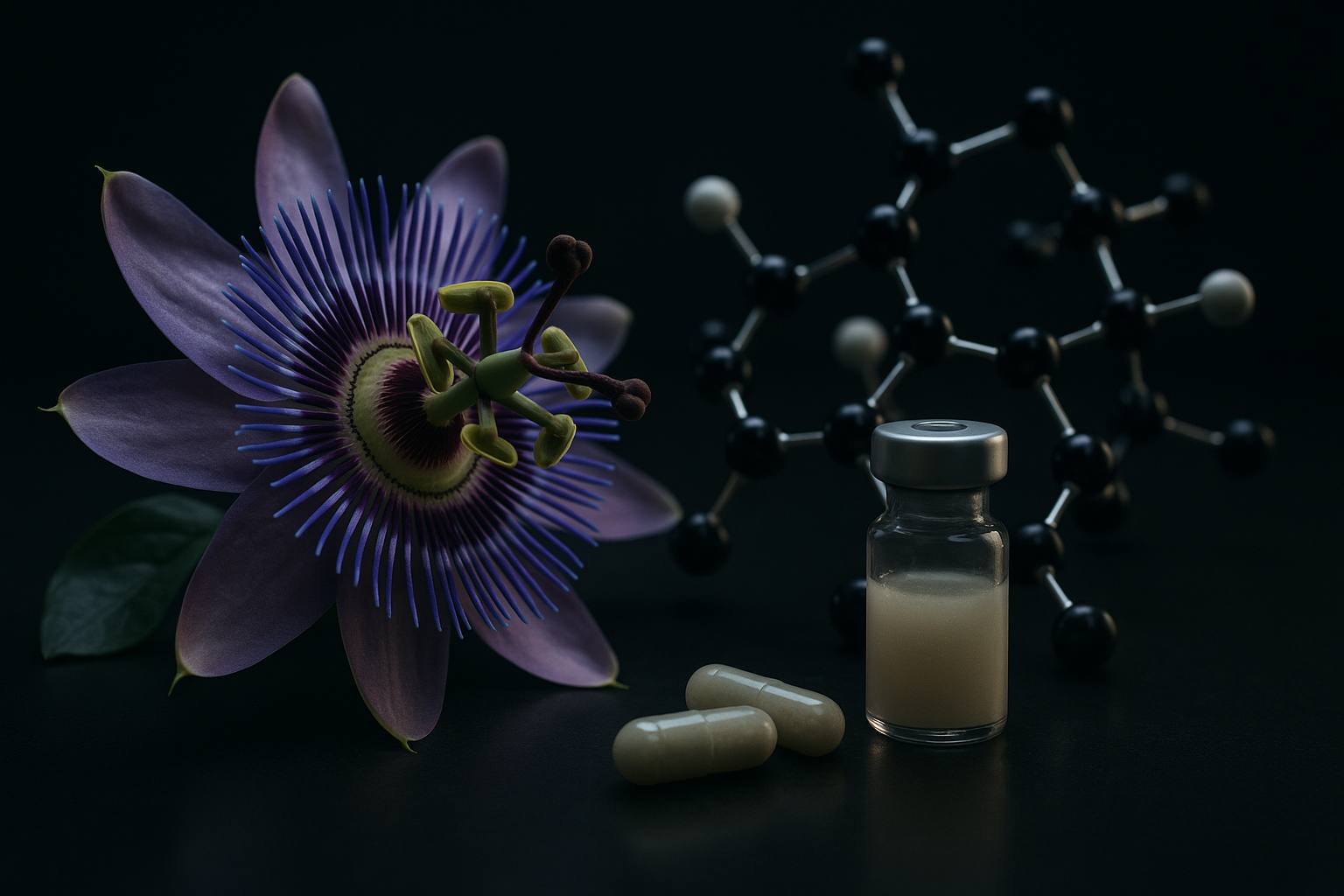
Passiflora
Passionflower is a medicinal plant traditionally used for states of mild anxiety and sleep disturbances. Extracts contain flavonoids (e.g. vitexin, isovitexin) and other constituents that may modulate neurotransmission in a sedative/anxiolytic direction. Clinical evidence suggests benefits especially for mild anxiety and subjective sleep quality, with variability related to species, plant part, standardization, and dose.
Phytoactive compound for Sleep & Recovery: support for relaxation and sleep quality
Passionflower is a medicinal plant traditionally used for mild anxiety states and sleep disorders. Extracts contain flavonoids (e.g. vitexin, isovitexin) and other constituents that may modulate neurotransmission in a sedative/anxiolytic direction. Clinical evidence suggests benefits especially for mild anxiety and subjective sleep quality, with variability related to species, plant part, standardization, and dose.
Mechanism of action
Proposed mechanisms (not all confirmed in humans): (1) modulation of the GABAergic system: some constituents may increase GABA-A transmission or influence central inhibitory tone, contributing to sedation/anxiolysis; (2) effects on stress and arousal circuits (reduction of sympathetic activation in preclinical models); (3) antioxidant/anti-inflammatory activity of polyphenols, potentially relevant to oxidative stress associated with stress and sleep disorders; (4) possible multi-component synergy typical of plant extracts. The intensity of the effect depends on standardization and dose.
Supported benefits
- Improvement in subjective sleep quality (particularly in mild insomnia or disturbed sleep) (moderate)
- Reduction in state anxiety (mild, situational anxiety) with a possible positive impact on sleep (moderate)
- Reduction in sleep onset latency in some studies (results are not consistent) (limited)
- Support for sleep in combination with other plants/herbs (e.g. valerian) or behavioral interventions (emerging)
Safety & side effects
- Drowsiness, sedation, reduced alertness
- Dizziness, asthenia
- Gastrointestinal disturbances (nausea, abdominal discomfort) in some individuals
- Headache (occasionally reported)
- Allergic reactions (rare, possible with phytoactive compounds)
FAQ
Does passionflower “make you sleep” like a hypnotic?
No. Studies suggest a mild-to-moderate sedative/anxiolytic effect in some individuals, closer to a reduction in hyperarousal than to a strong hypnotic action. The response is variable and depends on the extract and dose.
Is tea or extract better?
Standardized extracts allow greater reproducibility of active compound content compared with herbal teas, which may vary in raw material quality and infusion method. However, direct comparative data are limited.
Can it cause dependence or tolerance?
There is no solid evidence of dependence as with some pharmacological hypnotics. However, robust long-term studies are lacking; it is prudent to avoid prolonged continuous use without supervision.
How quickly can it work?
In some studies, the effect on relaxation/sleep was observed even with acute administration (within the same evening), but other studies report benefits after days or weeks. Individual variability is high.
Is it safe if taken with other sleep products?
Combinations may increase sedation and psychomotor impairment. Safety depends on the individual ingredients and doses; caution and professional evaluation are recommended.
The information provided is for informational and educational purposes only. It does not constitute medical advice. Use should be evaluated and authorized by a qualified healthcare professional.
Mechanism of action
Proposed mechanisms (not all confirmed in humans): (1) modulation of the GABAergic system: some constituents may increase GABA-A transmission or influence central inhibitory tone, contributing to sedation/anxiolysis; (2) effects on stress and arousal circuits (reduction of sympathetic activation in preclinical models); (3) antioxidant/anti-inflammatory activity of polyphenols, potentially relevant for oxidative stress associated with stress and sleep disorders; (4) possible multi-component synergy typical of plant extracts. The intensity of the effect depends on standardization and dose.
Scientific benefits
Contraindications
- Pregnancy and breastfeeding: avoid due to insufficient safety data and possible effects on the nervous/uterine system reported in traditional use
- Pediatric age: use is not recommended without clinical supervision due to the lack of robust data
- Conditions requiring high alertness (e.g. driving, operating machinery): risk of sedation
- History of hypersensitivity to Passiflora or other components of the formulation
Side effects
- Drowsiness, sedation, reduced alertness
- Dizziness, asthenia
- Gastrointestinal disturbances (nausea, abdominal discomfort) in some individuals
- Headache (occasionally reported)
- Allergic reactions (rare, possible with phytocompounds)
Interactions
- CNS depressants (benzodiazepines, Z-drugs, barbiturates, some sedating antihistamines, opioids): possible additive sedation and increased risk of psychomotor impairment
- Alcohol: increased risk of sedation and reduced alertness
- Antidepressants/anxiolytics: potential additive sedation; monitor adverse effects
- Anticoagulants/antiplatelet agents: limited evidence; general caution with polyphenolic phytocompounds and multi-ingredient products (especially if combined with other herbs with hemostatic effects)
Regulatory status
In the EU and other markets, passionflower is commonly available as a dietary supplement and/or traditional herbal medicinal product, with indications that may include relief of mild stress and mild sleep disturbances; classification and authorized indications vary by country and dosage form.
Supplements and peptides
 Sleep & Recovery
5-HTP (5-hydroxytryptophan)
5-HTP is a metabolic intermediate between L-tryptophan and serotonin (5-HT). Because it crosses the blood-brain barrier…
 Sleep & Recovery
Ashwagandha ksm-66
KSM-66 is a Withania somnifera root extract standardized in withanolides, studied primarily for modulation of the…
 Sleep & Recovery
Ashwagandha sensoril
Sensoril® is a patented extract of Withania somnifera (ashwagandha), typically standardized to withanolides and…