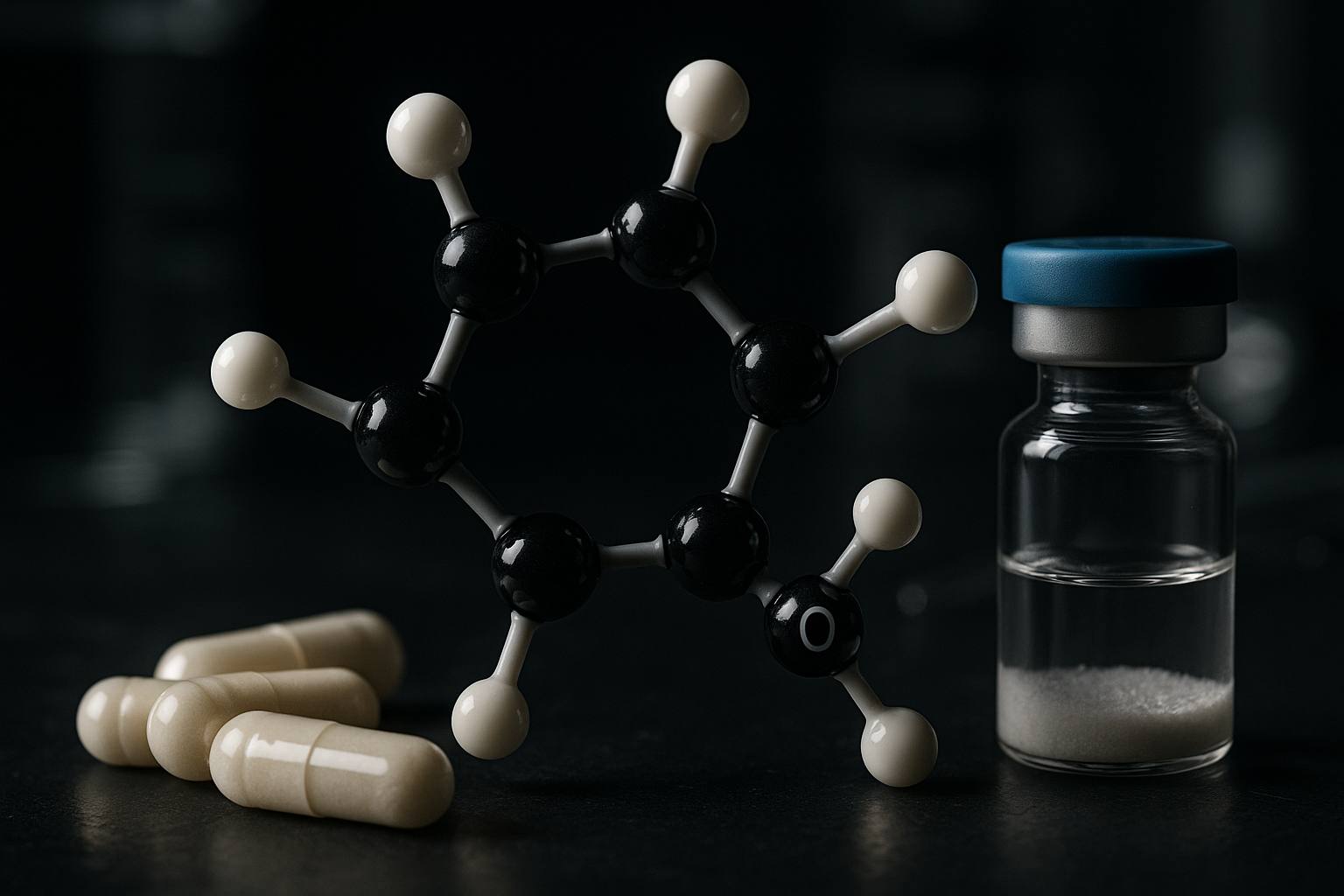
Pterostilbene
Pterostilbene (trans-3,5-dimethoxy-4′-hydroxystilbene) is a structural analogue of resveratrol with greater lipophilicity, a characteristic that may favor absorption and systemic persistence. Evidence in humans is still limited compared with preclinical data; available clinical studies suggest potential effects on some cardiometabolic markers, but with results that are not always consistent and with signals of a possible increase in LDL cholesterol in some contexts.
A polyphenolic phytocompound from the stilbene family, studied in the “longevity” field for its effects on oxidative stress, inflammation, and metabolism
Pterostilbene (trans-3,5-dimethoxy-4′-hydroxystilbene) is a structural analogue of resveratrol with greater lipophilicity, a characteristic that may promote absorption and systemic persistence. Evidence in humans is still limited compared with preclinical data; available clinical studies suggest potential effects on certain cardiometabolic markers, but with results that are not always consistent and with signals of a possible increase in LDL cholesterol in some contexts.
Mechanism of action
Proposed mechanisms (mainly from in vitro/animal data): (1) Activation of endogenous antioxidant responses (e.g. via Nrf2) with increased detoxifying/antioxidant enzymes; (2) Modulation of AMPK and potential cross-talk with SIRT1, with effects on mitochondrial biogenesis and energy metabolism; (3) Interaction with PPARs (especially PPAR-α/γ in some models), influencing fatty acid oxidation and insulin sensitivity; (4) Inhibition of pro-inflammatory signaling (e.g. NF-κB) and reduction of inflammatory mediators; (5) Effects on the endothelium and vascular function in experimental models. In humans, the mechanisms are inferred indirectly from biomarkers and have not been fully confirmed.
Supported benefits
- Possible improvement in some metabolic markers (e.g. fasting glucose or insulin sensitivity) in specific populations and experimental contexts (limited)
- Possible reduction in some inflammatory/oxidative markers in small or short-duration studies (emerging)
- Effects on the lipid profile: mixed results; in some studies, an increase in LDL cholesterol was observed, a relevant factor for evaluating the risk/benefit balance (moderate)
- Support for endothelial/vascular function: evidence is predominantly preclinical, with little indirect clinical data (emerging)
- Neuroprotection and cognitive support: strong preclinical rationale, but robust clinical confirmation is lacking (emerging)
Safety & side effects
- Gastrointestinal disturbances (e.g. nausea, dyspepsia, diarrhea) reported occasionally
- Headache or nonspecific sensations (nonspecific reports and not always attributable)
- Possible increase in LDL cholesterol in some studies: a clinically relevant adverse event for individuals at cardiovascular risk
FAQ
Is it “better” than resveratrol?
It is more lipophilic and is often described as having more favorable pharmacokinetics, but this does not automatically imply greater clinical efficacy. Evidence in humans for both is limited and depends on the endpoint considered.
Is there solid evidence for longevity in humans?
No. There are biological rationales and preclinical data, but long-term clinical studies with longevity endpoints or reduction in major clinical events are lacking.
Can it affect cholesterol?
Yes: some studies have reported an increase in LDL cholesterol. This is an important safety consideration, especially for those at cardiovascular risk.
How long has it been studied in humans?
Mainly in short- to medium-term studies (weeks). Data on prolonged use are insufficient for robust conclusions.
Is it present in foods in significant amounts?
It is present in some plant sources (e.g. blueberries) but generally in low amounts compared with the doses used in supplement studies.
The information provided is for informational and educational purposes only. It does not constitute medical advice. Use should be evaluated and authorized by a qualified healthcare professional.
Mechanism of action
Proposed mechanisms (mainly from in vitro/animal data): (1) Activation of endogenous antioxidant responses (e.g. via Nrf2) with increased detoxifying/antioxidant enzymes; (2) Modulation of AMPK and potential cross-talk with SIRT1, with effects on mitochondrial biogenesis and energy metabolism; (3) Interaction with PPARs (especially PPAR-α/γ in some models), influencing fatty acid oxidation and insulin sensitivity; (4) Inhibition of pro-inflammatory signaling (e.g. NF-κB) and reduction of inflammatory mediators; (5) Effects on endothelium and vascular function in experimental models. In humans, the mechanisms are inferred indirectly from biomarkers and not fully confirmed.
Scientific benefits
Contraindications
- Pregnancy and breastfeeding: insufficient safety data, high caution advised
- Pediatric age: adequate data are lacking
- Uncontrolled dyslipidemia or high cardiovascular risk: caution due to the possible increase in LDL in some trials
- Significant liver or kidney disease: limited clinical data, professional evaluation required
Side effects
- Gastrointestinal disturbances (e.g. nausea, dyspepsia, diarrhea) occasionally reported
- Headache or nonspecific sensations (nonspecific reports and not always attributable)
- Possible increase in LDL cholesterol in some studies: a clinically relevant adverse event for individuals at cardiovascular risk
Interactions
- Lipid-lowering therapies (e.g. statins): potential indirect interference through changes in lipid profile; appropriate clinical monitoring if used
- Antidiabetic drugs: possible additive effects on glucose/insulin in some contexts; theoretical risk of hypoglycemia in combination (depends on therapy and clinical status)
- Anticoagulants/antiplatelet agents: by analogy with other polyphenols there is a theoretical risk of hemostatic interactions, but specific evidence is limited
- Drugs metabolized by liver enzymes: in vitro data suggest possible enzymatic modulation, but the clinical relevance is uncertain
Regulatory status
In many jurisdictions it is sold as a dietary supplement; it is not approved as a drug for the prevention or treatment of diseases. Health claims are subject to local regulations and are often not authorized as therapeutic claims.
Supplements and peptides
 Longevity
Apigenin
Apigenin (4′,5,7-trihydroxyflavone) is a flavone found in various food and medicinal plants. In human biology, it is…
 Longevity
Astaxanthin
Astaxanthin is a carotenoid from the xanthophyll family (a red-orange pigment) produced mainly by microalgae (e.g.…
 Longevity
Berberine
Berberine is a plant alkaloid found in various plants (e.g. Berberis spp.) and traditionally used in the…