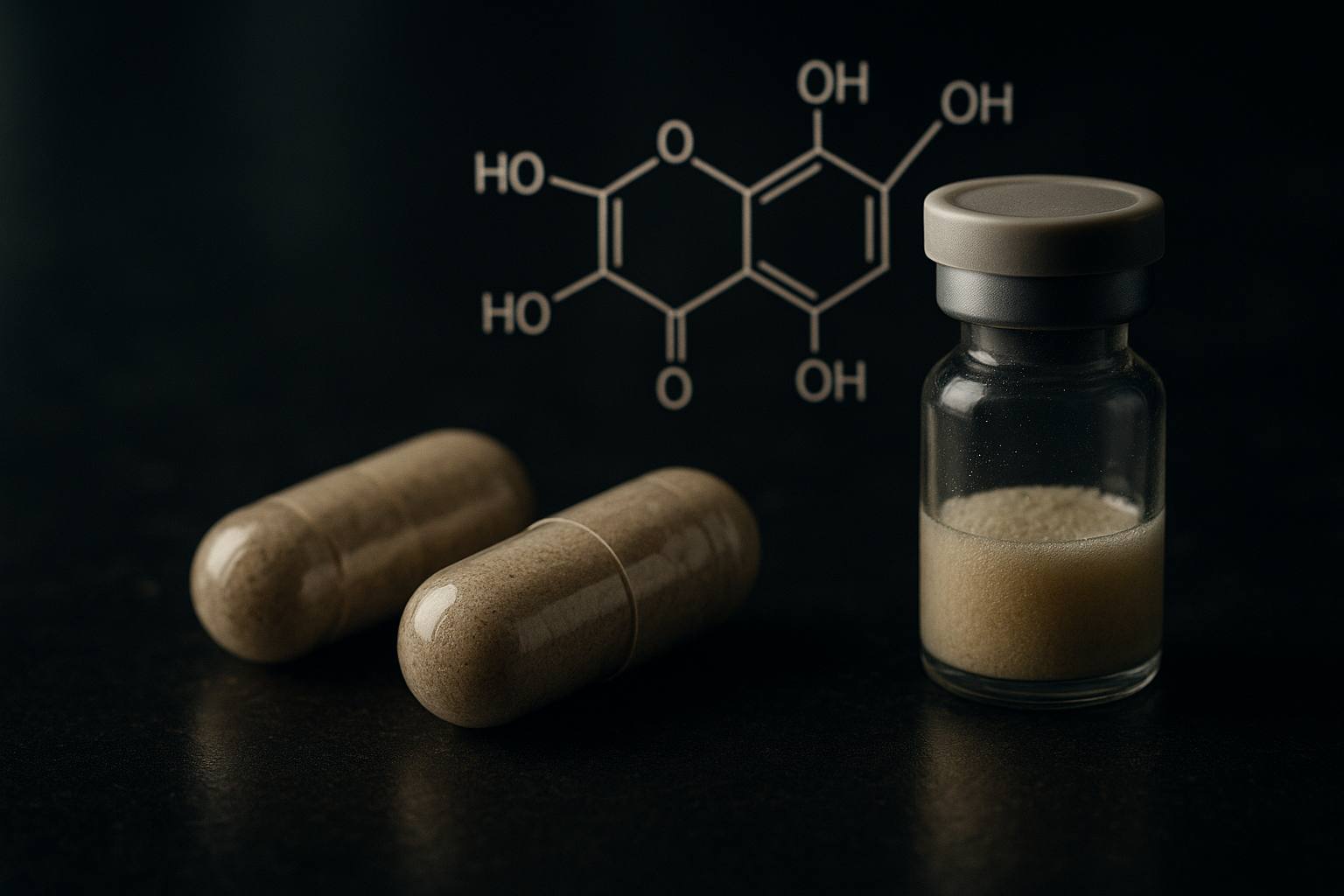
Quercetin
Quercetin is a flavonol found in many plant foods. In the “longevity” field it is studied for its ability to modulate signaling pathways involved in inflammation, oxidative stress response, endothelial function, and metabolism. Clinical evidence in humans is heterogeneous: some outcomes (e.g. inflammatory markers or blood pressure in specific subgroups) show promising results, while others (performance, body composition, disease prevention) remain uncertain.
A polyphenolic phytocompound studied for inflammation, oxidative stress, and cellular signaling linked to aging
Quercetin is a flavonol found in many plant foods. In the “longevity” field, it is studied for its ability to modulate signaling pathways involved in inflammation, the oxidative stress response, endothelial function, and metabolism. Clinical evidence in humans is heterogeneous: some outcomes (e.g. inflammatory markers or blood pressure in specific subgroups) show promising results, while others (performance, body composition, disease prevention) remain uncertain.
Mechanism of action
Proposed mechanisms (mainly from preclinical studies and human biomarkers): (1) Direct antioxidant activity (scavenging) and above all indirect activity through modulation of endogenous systems (e.g. the Nrf2/ARE axis), with increased expression of defense enzymes (HO-1, NQO1, SOD, catalase) in specific contexts. (2) Modulation of inflammation: inhibition of pro-inflammatory signaling (e.g. NF-κB) and reduction of mediators such as TNF-α, IL-6, and CRP in some studies. (3) Vascular/endothelial effects: possible increase in NO bioavailability and improvement in endothelial function; potential reduction in blood pressure in subgroups. (4) Interactions with energy pathways and cellular stress responses (e.g. AMPK, sirtuins) reported in experimental models; clinical relevance remains unconfirmed. (5) Senescence: quercetin has also been studied in combination with dasatinib as an experimental “senolytic” approach; the senolytic effect of quercetin alone in humans has not been robustly demonstrated.
Supported benefits
- Modest reduction in blood pressure (especially in subjects with elevated values or in specific clinical contexts), with variable results across studies (moderate)
- Improvement in some inflammatory/oxidative markers (e.g. CRP or indicators of oxidative stress) in subgroups; high heterogeneity (moderate)
- Possible support for endothelial function (measures such as FMD) in some studies; results are not consistent (limited)
- Effects on lipid and glycemic profile: conflicting results, with small or absent benefits on average across studies (limited)
- Implications for “longevity” (senescence, mitochondrial health, proteostasis): evidence is mainly preclinical; hard clinical endpoints in humans are lacking (emerging)
Safety & side effects
- Gastrointestinal disturbances (nausea, dyspepsia, diarrhea), more likely at high doses
- Headache in some individuals
- Possible laboratory changes (e.g. liver enzymes) rarely reported; interpretation depends on the clinical context
- Hypersensitivity reactions are possible but uncommon
FAQ
Is quercetin really “anti-aging”?
The biological rationale comes mainly from preclinical studies on oxidative stress, inflammation, and senescence. In humans, solid evidence on clinical longevity endpoints (reduction in mortality or disease incidence) is lacking, and biomarker results are variable.
Why are the effects so variable between people?
It depends on the chemical form and formulation, intestinal absorption, hepatic metabolism (conjugation), microbiota, diet, baseline inflammatory status, and use of medications that share enzymes/transporters.
Is it better to take it from foods or as a supplement?
Foods provide quercetin together with other phytocompounds and nutrients, with a generally favorable safety profile. Supplementation can increase exposure but introduces greater variability in dose, bioavailability, and risk of interactions.
Is quercetin a senolytic?
In research, the dasatinib+quercetin combination has been studied as an experimental senolytic approach. It has not been shown that quercetin alone has a clinically relevant senolytic effect in humans.
Are there more bioavailable forms?
Yes, some formulations (e.g. phospholipid/phytosome complexes or delivery systems) show greater systemic exposure compared with standard quercetin. Greater bioavailability may also increase the likelihood of adverse effects or interactions.
The information provided is for informational and educational purposes only. It does not constitute medical advice. Use must be evaluated and authorized by a qualified healthcare professional.
Mechanism of action
Proposed mechanisms (mainly from preclinical studies and human biomarkers): (1) Direct antioxidant activity (scavenging) and above all indirect activity through modulation of endogenous systems (e.g. the Nrf2/ARE axis) with increased defense enzymes (HO-1, NQO1, SOD, catalase) in specific contexts. (2) Modulation of inflammation: inhibition of pro-inflammatory signaling (e.g. NF-κB) and reduction of mediators such as TNF-α, IL-6, and CRP in some studies. (3) Vascular/endothelial effects: possible increase in NO bioavailability and improvement in endothelial function; potential reduction in blood pressure in subgroups. (4) Interactions with energy pathways and cellular stress (e.g. AMPK, sirtuins) reported in experimental models; clinical relevance not definitive. (5) Senescence: quercetin has also been studied in combination with dasatinib as an experimental “senolytic” approach; the senolytic effect of quercetin alone in humans has not been robustly demonstrated.
Scientific benefits
Contraindications
- Pregnancy and breastfeeding: insufficient safety data for routine supplemental use
- Liver or kidney disease: caution due to metabolism/excretion and the use of high doses
- History of allergic reactions to flavonoids or formulation components
- Concomitant use of drugs with a narrow therapeutic index: requires professional evaluation due to risk of interactions
Side effects
- Gastrointestinal disturbances (nausea, dyspepsia, diarrhea), more likely at high doses
- Headache in some subjects
- Possible laboratory changes (e.g. liver enzymes) rarely reported; interpretation depends on the clinical context
- Hypersensitivity reactions are possible but uncommon
Interactions
- Anticoagulants/antiplatelets (e.g. warfarin, DOACs, aspirin, clopidogrel): possible increased bleeding risk or alterations in effect, due to pharmacodynamic interactions and/or effects on enzymes/transporters
- Drugs metabolized by CYP enzymes and transporters (e.g. P-gp, OATP): quercetin may modulate enzymes/transporters in vitro; clinical relevance varies and may be significant in some cases
- Antibiotics/chemotherapeutics: possible theoretical interactions (transporters, metabolism, oxidative stress); caution and clinical supervision are necessary
- Antidiabetics and antihypertensives: possible additive effect on blood glucose or blood pressure in some subjects
Regulatory status
In many countries it is sold as a dietary supplement; it is not approved as a drug for anti-aging/longevity indications. Permitted health claims depend on local regulations and often do not include claims for the prevention or treatment of diseases.
Supplements and peptides
 Longevity
Apigenin
Apigenin (4′,5,7-trihydroxyflavone) is a flavone found in various food and medicinal plants. In human biology, it is…
 Longevity
Astaxanthin
Astaxanthin is a carotenoid from the xanthophyll family (a red-orange pigment) produced mainly by microalgae (e.g.…
 Longevity
Berberine
Berberine is a plant alkaloid found in various plants (e.g. Berberis spp.) and traditionally used in the…