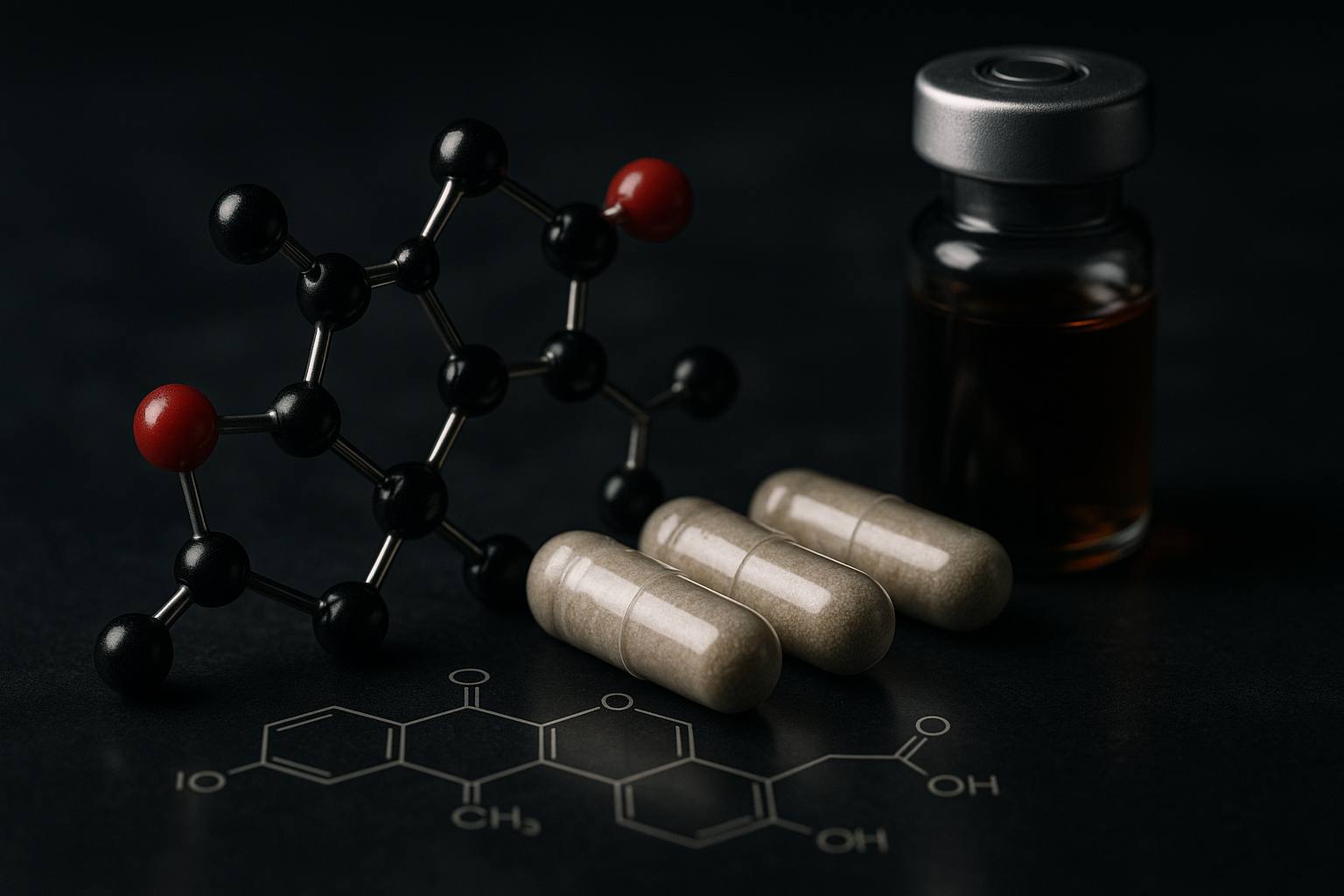
Resveratrol
Resveratrol (3,5,4'-trihydroxystilbene) is a polyphenol found in some plants (e.g. grape skin) and produced as a phytoalexin. In cellular and animal models, it modulates signaling pathways associated with stress, energy metabolism, and inflammatory response. In humans, the clinical evidence is heterogeneous: some cardiometabolic endpoints show improvement in specific contexts, but there is no solid evidence of lifespan extension or definite prevention of disease.
A polyphenolic phytocompound studied in the “longevity” field for effects on inflammation, oxidative stress, and metabolic signaling
Resveratrol (3,5,4'-trihydroxystilbene) is a polyphenol found in some plants (e.g. grape skin) and produced as a phytoalexin. In cellular and animal models, it modulates signaling pathways associated with stress, energy metabolism, and the inflammatory response. In humans, the clinical evidence is heterogeneous: some cardiometabolic endpoints show improvements in specific contexts, but there is no solid evidence of lifespan extension or reliable prevention of disease.
Mechanism of action
Proposed mechanisms (not all clinically confirmed): - Modulation of energy-sensing pathways: indirect activation of AMPK and interaction with SIRT1/PGC-1α axes in some models, with effects on mitochondrial biogenesis and metabolism. - Effects on inflammation: inhibition of pro-inflammatory signals (e.g. NF-κB) and reduction of inflammatory mediators in some contexts. - Oxidative stress and redox response: limited direct antioxidant action in vivo; more relevant is the modulation of antioxidant enzymes and stress-response pathways. - Endothelial function: possible increase in NO bioavailability and improvement in vascular markers in some studies. - Interactions with the microbiota: biotransformation into metabolites (e.g. dihydroresveratrol) that may contribute to biological effects. - Effects on platelet aggregation/coagulation: potential antiplatelet activity in vitro and indirect clinical signals, with implications for bleeding risk in predisposed individuals.
Supported benefits
- Improvement in some cardiometabolic markers (e.g. insulin sensitivity/fasting glucose) in subgroups with insulin resistance or type 2 diabetes (moderate)
- Possible reduction in blood pressure (especially systolic) in some studies, with inconsistent results (limited)
- Improvement in some inflammation/oxidation markers (e.g. CRP, oxidative stress) in specific contexts, with high heterogeneity (limited)
- Improvement in endothelial function (e.g. FMD) reported in some trials, not always replicated (limited)
- Evidence of lifespan extension in humans or reliable prevention of age-related diseases (emerging)
Safety & side effects
- Gastrointestinal disturbances (nausea, diarrhea, abdominal pain), more common at high doses
- Headache in some individuals
- Possible changes in liver enzymes in rare cases or with high doses (caution is needed in individuals with liver disease or taking hepatotoxic medications)
- Possible increase in bleeding tendency in predisposed individuals (proposed antiplatelet/vascular mechanisms)
FAQ
Does resveratrol “activate sirtuins” and therefore slow aging?
In preclinical models, interactions with SIRT1/AMPK pathways and signals associated with energy stress have been observed. In humans, however, there is no solid evidence that taking resveratrol slows aging or increases longevity; the clinical effects observed mainly concern some cardiometabolic markers in specific contexts.
Is it better to take it from red wine?
Red wine contains resveratrol, but in variable and generally low amounts compared with the doses used in studies. In addition, alcohol is associated with documented risks; therefore, wine is not an ideal “functional” source for achieving exposures similar to those used experimentally.
What is the difference between resveratrol and trans-resveratrol?
They are isomers: trans-resveratrol is the most studied form and is often considered more stable/biologically relevant. Many supplements specify the percentage of trans-resveratrol.
Why are study results so variable?
The differences depend on the population studied (healthy vs metabolically impaired), dose and formulation, duration, measured endpoints, adherence, diet, and microbiota, in addition to the low bioavailability of the free compound.
Can it interfere with training?
Some studies have hypothesized that high doses of antioxidants/polyphenols may blunt certain exercise adaptations in specific contexts, but the evidence is not conclusive and depends on dose, population, and training protocol.
The information provided is for informational and educational purposes only. It does not constitute medical advice. Use must be evaluated and authorized by a qualified healthcare professional.
Mechanism of action
Proposed mechanisms (not all clinically confirmed): - Modulation of energy-sensing pathways: indirect activation of AMPK and interaction with SIRT1/PGC-1α axes in some models, with effects on mitochondrial biogenesis and metabolism. - Effects on inflammation: inhibition of pro-inflammatory signals (e.g. NF-κB) and reduction of inflammatory mediators in some contexts. - Oxidative stress and redox response: limited direct antioxidant action in vivo; more relevant is the modulation of antioxidant enzymes and stress-response pathways. - Endothelial function: possible increase in NO bioavailability and improvement of vascular markers in some studies. - Interactions with the microbiota: biotransformation into metabolites (e.g. dihydroresveratrol) that may contribute to biological effects. - Effects on platelet aggregation/coagulation: potential antiplatelet activity in vitro and indirect clinical signals, with implications for bleeding risk in predisposed individuals.
Scientific benefits
Contraindications
- Pregnancy and breastfeeding: insufficient safety data
- Bleeding disorders or a history of significant bleeding: caution due to possible effects on platelet aggregation
- Planned surgical procedures: caution due to potential increased bleeding risk (clinical evaluation required)
- Significant liver disease: caution due to hepatic metabolism and reports of enzyme alterations at high doses
- Allergy/hypersensitivity to product components (e.g. excipients, plant extracts)
Side effects
- Gastrointestinal disturbances (nausea, diarrhea, abdominal pain), more common at high doses
- Headache in some individuals
- Possible changes in liver enzymes in rare cases or at high doses (caution is required in individuals with liver disease or receiving hepatotoxic drugs)
- Possible increased tendency to bleed in predisposed individuals (proposed antiplatelet/vascular mechanisms)
Interactions
- Anticoagulants/antiplatelet agents (e.g. warfarin, DOACs, aspirin, clopidogrel): possible increased bleeding risk; professional evaluation is required.
- NSAIDs: potential additive gastrointestinal bleeding risk in susceptible individuals.
- Drugs metabolized by hepatic enzymes/transporters: resveratrol may modulate CYPs and transporters in vitro; clinical relevance varies and depends on dose/formulation and the specific drug.
- Alcohol: wine contains resveratrol, but alcohol carries its own risks; it is not an advisable strategy to increase intake.
Regulatory status
Marketed as a dietary supplement in many regions (e.g. EU/USA) without approved therapeutic indications; health claims are regulated and often limited. It is not an approved drug for “longevity” indications.
Supplements and peptides
 Longevity
Apigenin
Apigenin (4′,5,7-trihydroxyflavone) is a flavone found in various food and medicinal plants. In human biology, it is…
 Longevity
Astaxanthin
Astaxanthin is a carotenoid from the xanthophyll family (a red-orange pigment) produced mainly by microalgae (e.g.…
 Longevity
Berberine
Berberine is a plant alkaloid found in various plants (e.g. Berberis spp.) and traditionally used in the…