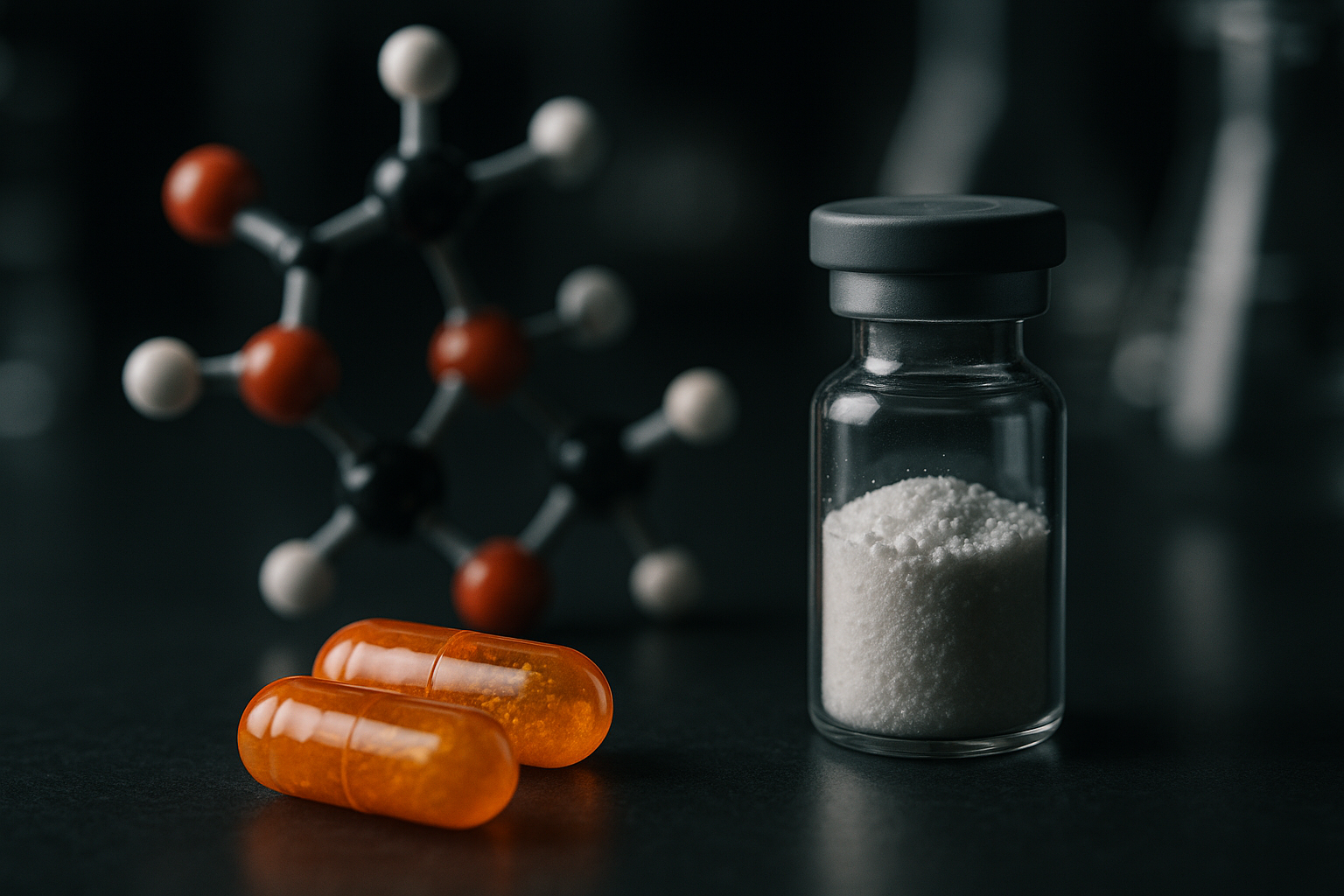
Vitamin C ascorbic acid
Vitamin C (L-ascorbic acid) is an essential micronutrient for humans (not endogenously synthesized) with key roles in collagen synthesis, immune function, and as an enzymatic cofactor in various metabolic pathways. In sports, it is studied mainly for supporting the immune system during periods of high load and for modulating oxidative stress; however, high and chronic doses may interfere with some training adaptations mediated by redox signals.
Essential water-soluble antioxidant: collagen, immunity, and management of oxidative stress with implications for performance and longevity
Vitamin C (L-ascorbic acid) is an essential micronutrient for humans (it cannot be synthesized endogenously) with key roles in collagen synthesis, immune function, and as an enzymatic cofactor in several metabolic pathways. In sports, it is studied primarily for supporting the immune system during periods of high training load and for modulating oxidative stress; however, high and chronic doses may interfere with some training adaptations mediated by redox signaling.
Mechanism of action
1) Enzymatic cofactor: it keeps iron in its reduced state (Fe2+) for the activity of prolyl/lysyl hydroxylase in collagen synthesis; it supports enzymes involved in carnitine synthesis and certain neurotransmitter biosynthesis pathways. 2) Antioxidant/redox buffer: it donates electrons by neutralizing reactive oxygen species (ROS) and regenerates other antioxidants (e.g. vitamin E) in specific contexts. 3) Immune modulation: it supports barrier functions, chemotaxis, and leukocyte activity; it may reduce the impact of oxidative stress associated with infections and high physical loads. 4) Non-heme iron absorption: it reduces Fe3+ to Fe2+ in the intestinal lumen, increasing the bioavailability of dietary iron.
Supported benefits
- Reduced duration of common cold symptoms in the general population (modest average effect) and reduced incidence in individuals exposed to intense physical stress (e.g. endurance athletes, military personnel) in some studies (strong)
- Prevention and treatment of vitamin C deficiency (scurvy) and support for collagen synthesis with improvement in signs/symptoms related to deficiency (strong)
- Increased absorption of non-heme iron when taken with meals rich in plant-based iron (useful in specific dietary contexts) (moderate)
- Reduction in markers of oxidative stress and inflammation in some contexts (variable results; depends on nutritional status, dose, and population) (moderate)
- Support for endothelial function/blood pressure with small average effects in some meta-analyses (high heterogeneity) (limited)
- Muscle recovery/DOMS: possible small effects on soreness or damage markers in some studies, but inconsistent results and potential interference with training adaptations if used chronically at high doses (limited)
Safety & side effects
- Dose-dependent gastrointestinal disturbances: nausea, cramps, diarrhea, heartburn
- Increased urinary oxalate in some individuals (relevant to stone risk in predisposed people)
- Possible interference with some laboratory tests (e.g. capillary blood glucose with certain glucometers, tests based on redox reactions)
- In individuals with G6PD deficiency: high doses (especially parenteral) have been associated with a risk of hemolysis; with oral use the risk is lower, but caution is still warranted
FAQ
Does vitamin C directly improve athletic performance?
Direct effects on performance (time, power, VO2max) are generally small or inconsistent. The main interest in sports concerns immune support during periods of stress and its role in collagen, especially if dietary intake is insufficient.
Are megadoses of vitamin C always better for immunity?
No. Absorption is saturable and the excess is eliminated. High doses increase the risk of gastrointestinal disturbances and, in predisposed individuals, kidney problems. In addition, a chronic excess of antioxidants can interfere with adaptive training signals in some contexts.
Does it make sense to take it only when you get sick?
In studies on the common cold, regular intake tends to reduce the duration of symptoms; starting only at onset may have more variable benefits. In any case, the average effect is modest and depends on the context.
Vitamin C and collagen: is it a useful combination?
There is a biochemical rationale because vitamin C is necessary for collagen synthesis. The evidence on structural improvements (tendons/ligaments) with supplementation in non-deficient individuals is still heterogeneous; adequate dietary intake remains central.
Can it increase the risk of kidney stones?
In some predisposed people, high doses can increase urinary oxalate and the risk of stones. The risk depends on clinical history, hydration, diet, and kidney function.
The information provided is for informational and educational purposes only. It does not constitute medical advice. Use must be evaluated and authorized by a qualified healthcare professional.
Mechanism of action
1) Enzymatic cofactor: maintains iron in the reduced state (Fe2+) for the activity of prolyl/lysyl hydroxylase in collagen synthesis; supports enzymes involved in carnitine synthesis and some neurotransmitter biosynthesis pathways. 2) Antioxidant/redox buffer: donates electrons by neutralizing reactive oxygen species (ROS) and regenerates other antioxidants (e.g. vitamin E) in specific contexts. 3) Immune modulation: supports barrier functions, chemotaxis, and leukocyte activity; may reduce the impact of oxidative stress associated with infections and high physical loads. 4) Non-heme iron absorption: reduces Fe3+ to Fe2+ in the intestinal lumen, increasing the bioavailability of dietary iron.
Scientific benefits
Contraindications
- History of calcium oxalate kidney stones or hyperoxaluria (caution with high doses)
- Moderate to severe kidney failure (risk of oxalate accumulation and complications; professional evaluation required)
- Hemochromatosis or conditions of iron overload: vitamin C may increase iron absorption
- G6PD deficiency (caution, especially with high doses or unsupervised use)
Side effects
- Dose-dependent gastrointestinal disturbances: nausea, cramps, diarrhea, heartburn
- Increased urinary oxalate in some subjects (relevant to stone risk in predisposed individuals)
- Possible interference with some laboratory tests (e.g. capillary blood glucose with some glucometers, tests based on redox reactions)
- In subjects with G6PD deficiency: high doses (especially parenteral) have been associated with a risk of hemolysis; with oral use the risk is lower but caution remains
Interactions
- Iron: increased absorption of non-heme iron; potential issue in iron overload
- Warfarin/anticoagulants: evidence of a clinically relevant interaction is inconsistent, but high doses may alter parameters in some cases; clinical monitoring if undergoing treatment
- Chemotherapy and radiotherapy: the use of high-dose antioxidants is controversial because it could interfere with therapeutic oxidative mechanisms; the decision should be left to the oncology team
- Aluminum (aluminum-containing antacids): vitamin C may increase aluminum absorption; caution in kidney failure
- Statins/niacin and other drugs: significant clinical interactions are generally not common, but the use of high doses may influence some biomarkers
Regulatory status
In the European Union, vitamin C is authorized as a vitamin in supplements and fortified foods; specific approved health claims are permitted (e.g. contribution to the normal function of the immune system, collagen formation, protection from oxidative stress) in compliance with the conditions of use. It is not a prohibited substance in anti-doping.
Supplements and peptides
 Longevity
Apigenin
Apigenin (4′,5,7-trihydroxyflavone) is a flavone found in various food and medicinal plants. In human biology, it is…
 Longevity
Astaxanthin
Astaxanthin is a carotenoid from the xanthophyll family (a red-orange pigment) produced mainly by microalgae (e.g.…
 Longevity
Berberine
Berberine is a plant alkaloid found in various plants (e.g. Berberis spp.) and traditionally used in the…